





Selecting Automated Sheet Metal Bending Equipment: A Comparison Between Bending Robots and Bending Centers
Bending is a core forming process in sheet metal fabrication, accounting for a significant portion of daily production in most sheet metal factories. Traditional manual bending methods struggle to meet modern demands for high-intensity, long-duration, and high-volume production. To reduce labor input and enhance automation, the sheet metal industry currently relies on two main types of automated bending equipment: bending robot workstations and fully automatic bending centers. While both can replace manual labor for bending tasks, they differ significantly in structure, performance, and application scenarios; enterprises must select the equipment that best matches their specific operational conditions.
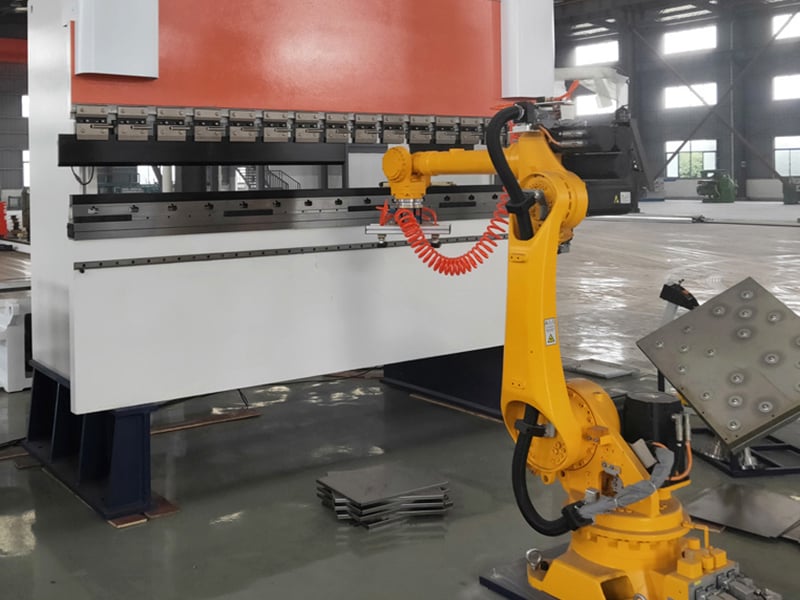
A bending robot workstation typically consists of a standard bending machine paired with an industrial robot. Its operating logic is straightforward: the robot takes over tasks such as picking up, feeding, flipping, and unloading the sheet metal, enabling a fully unmanned process. Implementing this system maximizes labor cost savings while eliminating errors and safety risks associated with manual operation. However, the system has clear drawbacks: switching to a different product requires changing the robot's specialized gripper and reprogramming or recalibrating the system. This changeover process is time-consuming and prevents rapid product switching, making the equipment unsuitable for high-mix, low-volume production models.
The bending center is a newer type of integrated bending machine. In recent years, domestic sheet metal equipment manufacturing technology has matured; more companies have mastered bending center production processes, and market prices have dropped, resulting in a higher cost-performance ratio and widespread adoption across various sheet metal factories.
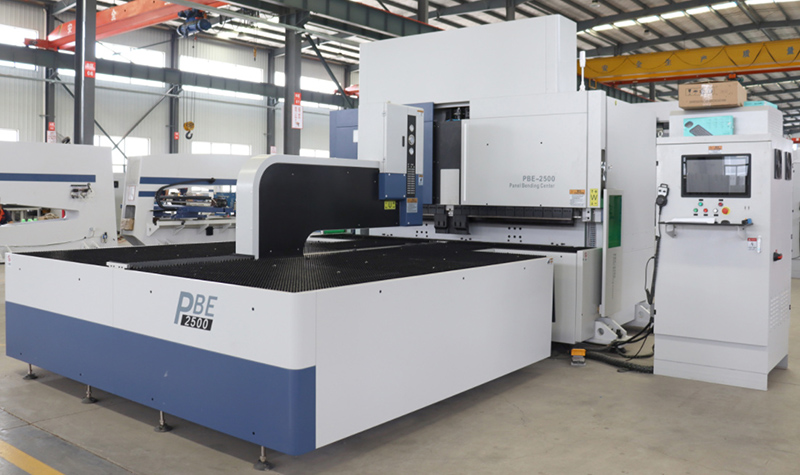
The core advantages of bending centers lie in processing efficiency and changeover capabilities. They offer faster bending speeds and significantly higher production throughput compared to traditional robotic bending systems. Product changeovers are simple and quick, allowing for flexible adaptation to high-mix, low-volume orders. However, bending centers do have distinct limitations: they cannot perform bending operations involving certain special angles, and there are strict constraints regarding the dimensions of the sheet metal being processed. There are clear, generally recognized technical limitations within the industry regarding bending centers: they are typically restricted to processing sheet metal with a maximum thickness of 2.5 mm and a length of 2.5 meters, rendering them unable to handle workpieces that exceed these parameters.
When choosing between these two types of equipment, a company's decision should be primarily based on the characteristics of its products. If a company mainly processes thin, short sheets—particularly for products requiring four-sided, unidirectional bending—the bending center offers distinct advantages; its efficiency and flexibility are perfectly suited to such production needs.
Conversely, if the products involve sheet thicknesses exceeding 2.5 mm or lengths greater than 2.5 meters, and require complex bending sequences (such as alternating positive and negative bends) or high-volume batch processing, a robotic bending workstation is the more suitable choice. Robotic bending systems can reliably execute complex bending operations on large, thick sheets and effectively boost production efficiency for high-volume runs.
From an industry-wide perspective, robotic bending workstations and bending centers are not mutually exclusive alternatives but rather complementary technologies. When implementing automated bending lines, companies should avoid blindly following trends; instead, they must clearly assess key operational factors such as product specifications, processing types, and batch sizes. Selecting equipment based on actual production requirements ensures that automation delivers maximum value, effectively reducing costs and increasing production capacity.

