





Maximizing Manufacturing Precision: The Role of Punching Machines in Modern Agricultural Machinery
Contemporary agricultural engineering demands an unprecedented balance between rugged structural integrity and tight manufacturing tolerances. Punching machines dedicated to agricultural equipment fabrication serve as the cornerstone of this standard, guaranteeing that every slot, aperture, and mounting hole complies strictly with design specifications. By standardizing hole generation and structural cuts, these machines reduce assembly friction, minimize manual fitting, and prevent structural failures in heavy machinery. In this comprehensive guide, we examine the technical advantages, setup workflows, practical applications, and routine upkeep required to maximize punching efficiency in agricultural machinery production.
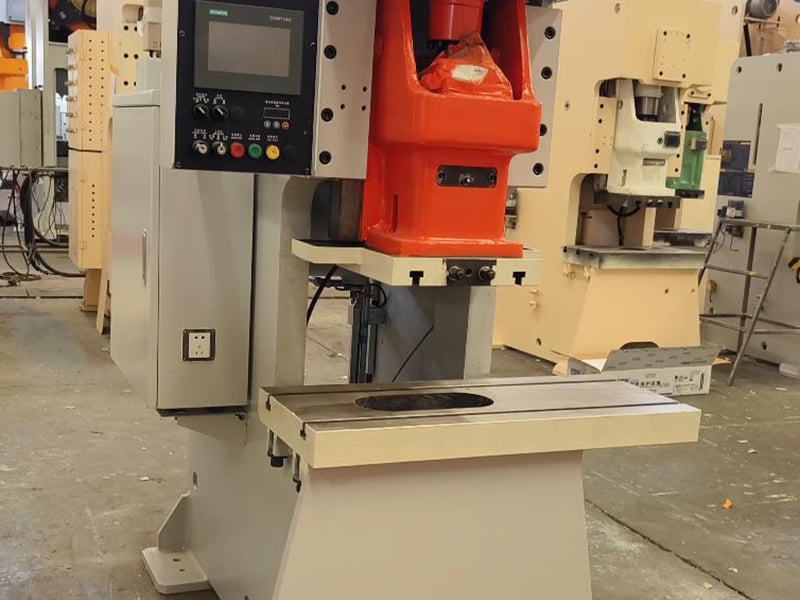
Why Agricultural Equipment Manufacturing Requires High-Precision Punching
Heavy-duty farming implements—ranging from combines and grain carts to tillage equipment and motorized tractors—rely on intricately fabricated steel frameworks. Generating clean, accurate cutouts across thick sheet metals is essential for seamless alignment and structural durability. Advanced CNC punching equipment eliminates human variance, allowing fabricators to achieve sub-millimeter tolerances across massive production batches.
Repeatable Operational Exactness
Components such as heavy-duty support brackets, chassis plates, and hitch connections depend on uniform hole positions. High-precision punching guarantees that hole patterns match engineering schematics identically across thousands of cycles. This absolute repeatability prevents mechanical stress concentration and prevents loose fitments when equipment operates under punishing field workloads.
Throughput Acceleration and Productivity Gains
Mass manufacturing in the agricultural sector demands high cycle speeds without compromising dimensional accuracy. Modern automated punching platforms execute complex multi-tool hole patterns at rapid stroke rates. By completing punching operations in seconds, manufacturers achieve substantial cost reductions per unit while dramatically boosting overall factory output.
Step-by-Step Setup Standard for Agricultural Metal Punching
Phase 1: Workspace Organization & Sheet Inspection
Before initiating any production cycle, clear the processing table of debris, metallic scale, and stray cutouts. Ensure incoming metal sheets are flat and free of heavy oil film or surface corrosion, as clean work surfaces safeguard both the material finish and the clamping mechanisms.
Phase 2: Die Selection and Tooling Calibration
Choose the exact punch-and-die configuration dictated by the work plan. Securely clamp the punch holder, evaluate the cutting edge for micro-wear or dullness, and verify correct die clearance based on sheet thickness. Proper tooling setup avoids burr formation and reduces mechanical strain on the machine ram.
Phase 3: Operational Axis Alignment and Depth Parameterization
Accurate zero-point calibration is crucial. Utilize digital positioning gauges to align the punch center with the die cavity precisely. Adjust stroke depth parameters to match material gauges exactly, preventing over-travel that damages tooling or shallow penetration that leaves incomplete cutouts.
Key Industrial Applications in Farming Equipment Fabrication
Structural Framing and Chassis Components
Punching systems process heavy structural plates and tubular frames used in tractor support structures and plow beds. Precise hole placement ensures high-strength fasteners sit flush and bear loads evenly.
Ventilation and Filtration Screens
Combines, harvesters, and grain dryers rely heavily on perforated metal sheets for airflow management and grain separation. High-speed punching creates uniform matrix patterns efficiently across expansive surface areas.
Heavy-Duty Mounting Assemblies and Brackets
From hydraulic line mounts to implement attachment arms, punching machinery delivers clean, burr-free brackets ready for immediate welding or bolting into sub-assemblies without requiring manual deburring.
Essential Maintenance Strategies for Peak Efficiency
Scheduled Visual Inspections: Examine punch tips, die edges, and alignment guides before every shift. Early detection of tool wear preserves punch quality and avoids costly machine downtime.
Surface Maintenance and Daily Lubrication: Apply recommended industrial lubricants to guide posts, hydraulic rams, and sliding beds daily. Keep working surfaces free of metal dust to prevent mechanical abrasion.
Systematic Preventive Maintenance Protocols: Execute a thorough technical inspection after every 500 operating hours. Check hydraulic pressures, verify CNC axis calibration, and replace worn bushings proactively before component failure occurs.
Frequently Asked Questions (FAQs)
How do punching machines boost efficiency in agricultural manufacturing?
Punching machines automate multi-hole pattern processing, drastically reduce scrap rates, eliminate manual layouts, and accelerate downstream assembly through perfect part fitment.
Which raw materials can be processed using industrial punching machines?
They process a wide range of structural materials including carbon steel, stainless steel, aluminum sheets, and specialized structural alloys common in farm equipment fabrication.
What is the recommended frequency for machine calibration?
Calibration checks should be performed weekly during standard operations and immediately following any tooling changeover to ensure consistent tolerance control.
Can these punching systems accommodate custom agricultural equipment specs?
Yes, CNC-controlled punching machines can be programmed dynamically to execute custom hole patterns, specialized geometries, and short-run custom fabrications with minimal setup time.
Conclusion
Industrial punching machines are foundational tools for delivering speed, structural precision, and manufacturing reliability in modern agricultural machinery production. Whether punching heavy chassis frameworks or forming perforated screen arrays, implementing disciplined setup workflows and preventive maintenance regimes guarantees long-term operational success.
If you want to discover more technical insights or require expert assistance in selecting the ideal punching solution, please contact the engineering team at JUGAO. We are dedicated to providing advanced machinery tailored to your specific agricultural manufacturing demands.

