





Is your pipe bending machine vibrating abnormally? Don’t just push through it—check these areas instead
When a pipe bending machine starts to shake, it becomes impossible to get the job done. You end up with "fish-scale" patterns on the pipe surface, inconsistent bending angles, and accelerated wear on guide rails and bearings. I’ve seen many operators try to fix the vibration by constantly tweaking speeds or adjusting parameters—all to no avail. In reality, the root cause often lies in one of the following areas.
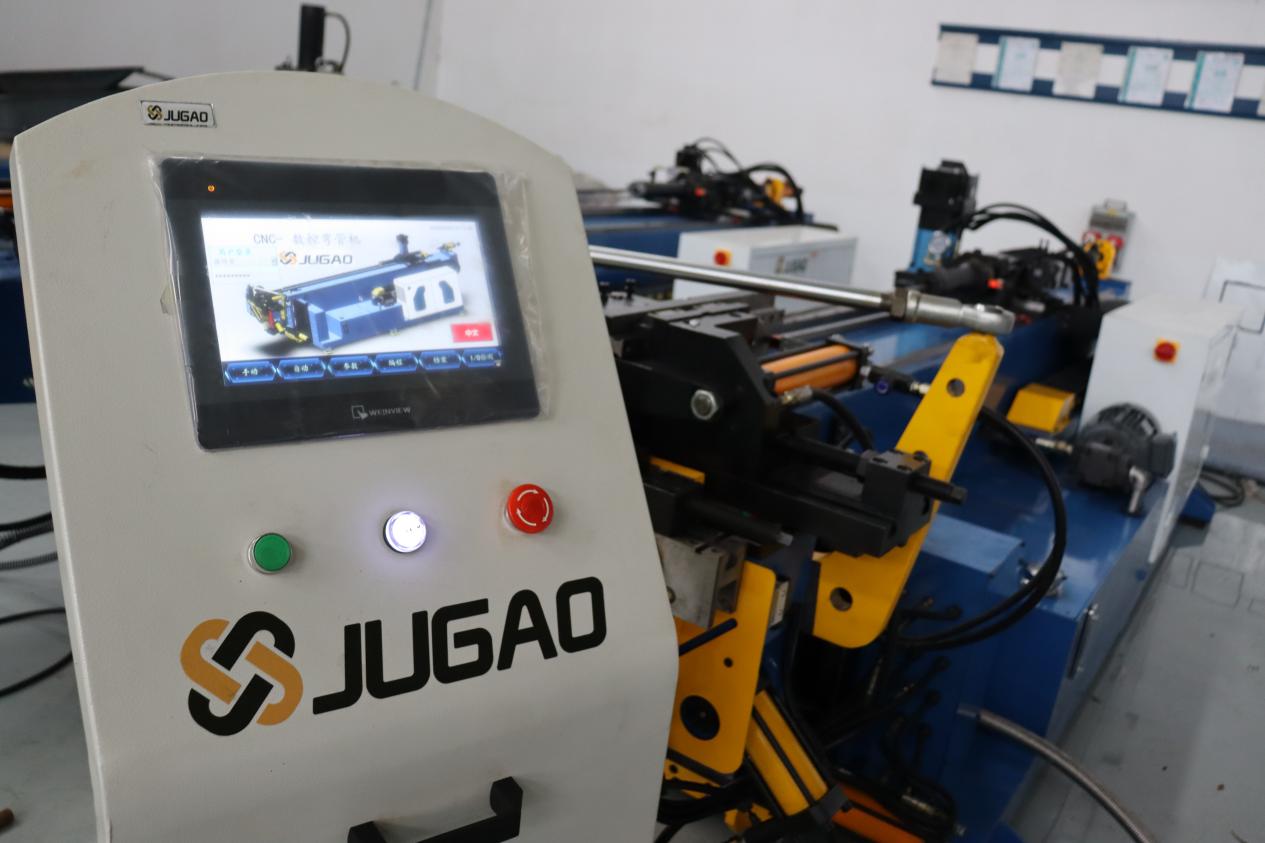
1. Air has entered the hydraulic system
This is the most common cause of vibration. If the oil level is too low or the suction pipe fitting is loose, the pump may draw in air; this causes the pressure gauge needle to fluctuate and the bending arm to shudder. How can you diagnose this? Listen for a "hissing" sound (cavitation) from the oil pump, and check the oil sight glass for foam. To resolve this, fill the oil tank to the indicated level, open the air bleed valve at the top of the hydraulic cylinder, and cycle the pressure up and down several times to purge the air. Also, check the suction pipe fittings for any looseness.
2. Improper clearance between the anti-wrinkle die and the bending die
If the clearance is too large, the tubing may shift or "clatter" against the die during the bending process, causing vibration. You can test this by inserting a sheet of A4 paper into the gap; it should fit with slight resistance. The ideal clearance allows the die to fit snugly against the tubing while still permitting smooth movement without sticking.
3. Bending speed is too high
If the bending speed is set too high, the material cannot deform quickly enough to keep up, causing the bending arm to jerk or stutter. Try reducing the bending speed to 30%–50% of its rated value; if the vibration stops, this is the cause. This is especially important for small-radius bends, where slower speeds are preferable.
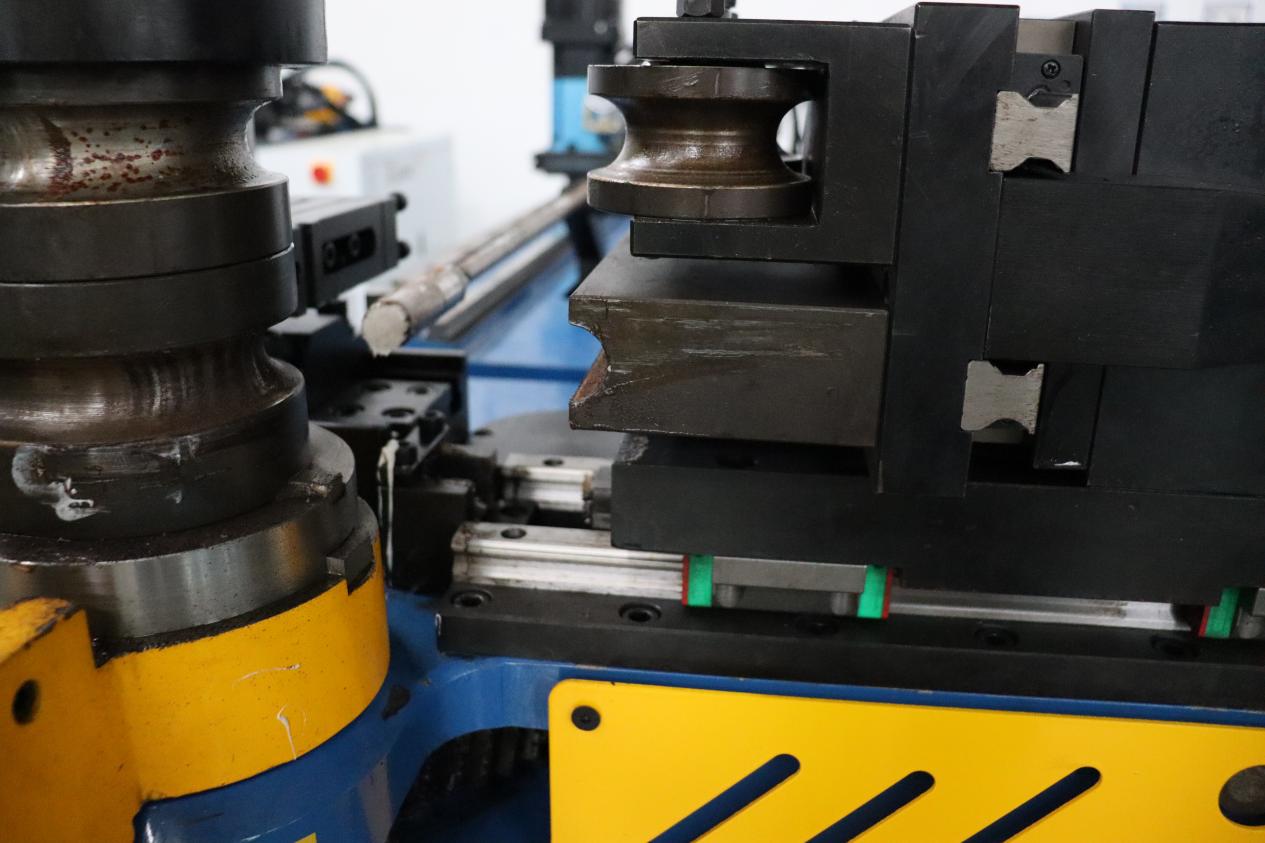
4. Loose mechanical connections
Given the constant vibration during operation, bolts on a pipe-bending machine will inevitably loosen over time. Check for play in the locking nut on the main bending arm spindle, the key connections between gears and shafts, and the couplings on lead screws. Any looseness here creates gaps, leading to repetitive impacts and vibration. When the machine is shut down, use a wrench to check all fasteners—pay particular attention to the encoder coupling, as any looseness there can cause the bending angle to drift.
5. Anchor bolts are not tightened or the machine is not leveled
If the machine itself is unstable, the bending arm will naturally shake. Use a spirit level to verify that the machine frame is level. Tighten the anchor bolts using a torque wrench; placing rubber vibration-damping pads under the machine can also be very effective. If the floor is uneven, ensure that shims are placed securely to provide a stable base.
6. Hard friction between the mandrel and the inner wall of the tube
If the mandrel ball head becomes jammed or extends too far, pressing firmly against the inner wall of the tube, it will cause periodic frictional vibration during the bending process. Check whether the mandrel joint can rotate freely, adjust the extension length so that it sits 0.5–1.5 mm before the tangent point, and apply more tube-bending lubricant to the mandrel.
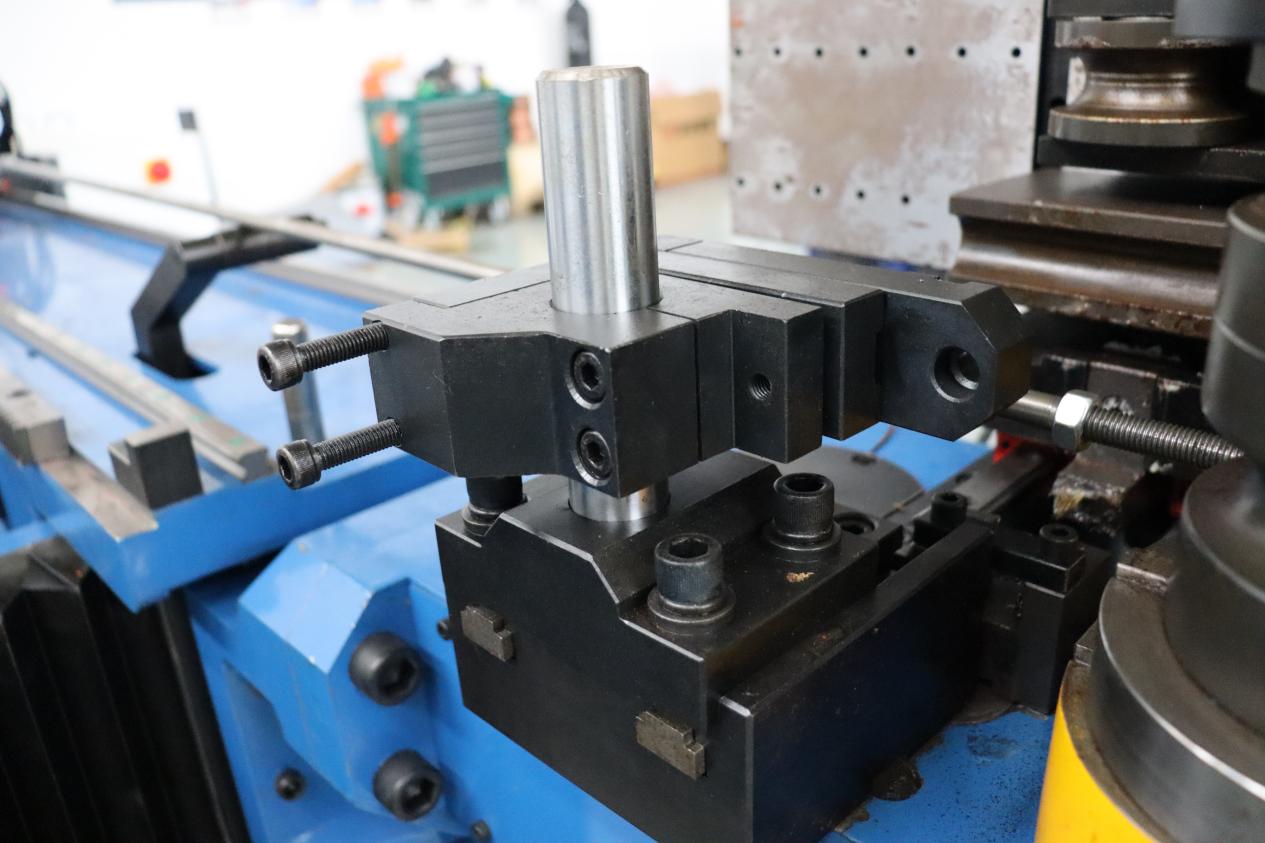
7. Vibration originating from the oil pump or motor
Severe wear in the oil pump or a faulty motor bearing can cause the entire machine to vibrate. Run the oil pump independently (without performing any bending) and listen: if the pump itself emits a metallic "clattering" sound or the motor produces an abnormal "humming" noise, the source of the problem lies within the power unit.
Recommended troubleshooting sequence: Do not start by dismantling the equipment. First, try reducing the operating speed (to rule out speed-related issues) → then bleed the system and adjust the pressure (to rule out air ingress in the hydraulic system) → next, tighten all bolts (to rule out mechanical looseness) → and finally, adjust the tooling and mandrel (to rule out process-related issues). By following these steps, you can identify the cause of most vibrations.
Vibration is a piece of equipment crying out in pain. If you ignore it, your gears, bearings, and guide rails will all suffer the consequences. Spend half an hour today getting to the root of the problem, and you’ll save yourself the cost of replacing major components tomorrow.

