




Industrial Welding Robot Maintenance
Industrial Welding Robot Maintenance
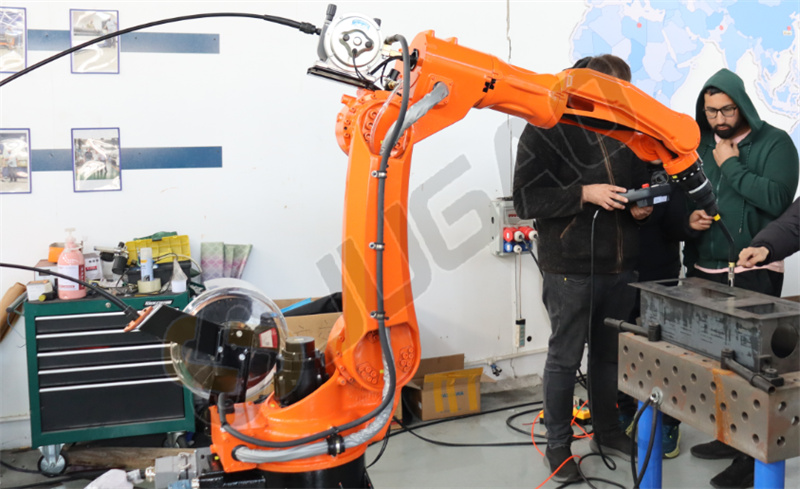
I. Daily Inspection and Maintenance of Industrial Welding Robots
1. Wire Feeding Mechanism. This includes checking if the wire feeding torque is normal, if the wire feeding guide is damaged, and if there are any abnormal alarms;
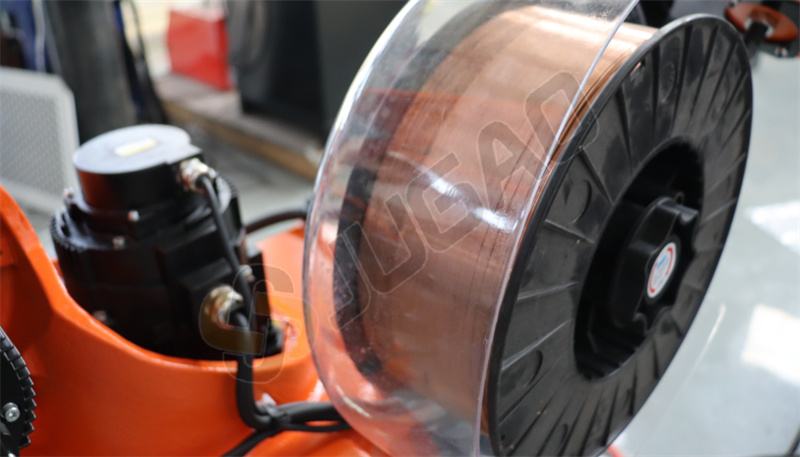
Inspection Items: Check if the wire feeding torque is normal, if the wire feeding guide is damaged, and if there are any abnormal alarms.
Operating Points: Manually jog the wire feed to feel if the wire feeding resistance is uniform; visually inspect the wire feeding tube for obvious bends or wear.
Abnormal Handling: If poor wire feeding or abnormal response is detected, immediately stop the machine and check the wire feeding wheel clamping force and the condition of the wire guide tube.
2. Gas Flow Rate.
Inspection Items: Check if the protective gas flow rate is stable within the set value (usually 15-25 L/min).
Operating Points: Observe the flow meter float position to confirm no fluctuation; check for leaks at the gas line connections (can be tested with soapy water).
Troubleshooting: If the flow rate is abnormal, check the gas cylinder pressure, the status of the pressure reducing valve, and the pipeline sealing.
3. Welding Torch Safety Protection and Anti-collision System. Do not disable the welding torch safety protection function;
Inspection Items: Whether the welding torch safety protection and anti-collision system is functioning properly.
Operating Points: It is strictly forbidden to disable the welding torch safety protection function; manually trigger the anti-collision switch to confirm that the system can alarm and stop the machine in a timely manner.
Troubleshooting: If the safety protection fails, stop using the torch immediately and contact maintenance.
4. Cooling Water Circulation System.
Inspection Items: Check the water circulation system for proper operation and leaks.
Operating Points: Observe the cooling water flow indicator and check for leaks at pipe joints; after winter operation, blow dry any residual cooling water in the pipes to prevent freezing and cracking.
Troubleshooting: If insufficient cooling or leaks are found, check the water pump, pipes, and joints.
5. Test TCP (Power Control Cable) operation.
Inspection Content: Test whether the TCP (tool center point) is working properly.
Operational Points: It is recommended to develop a dedicated test program and run it after each shift handover; verify TCP accuracy through fixed-point rotation.
Anomaly Handling: If the TCP deviation exceeds the limit, recalibration is required.
II. Weekly Inspection and Maintenance of Industrial Welding Robots
1. Wipe down all axes of the industrial welding robot body;
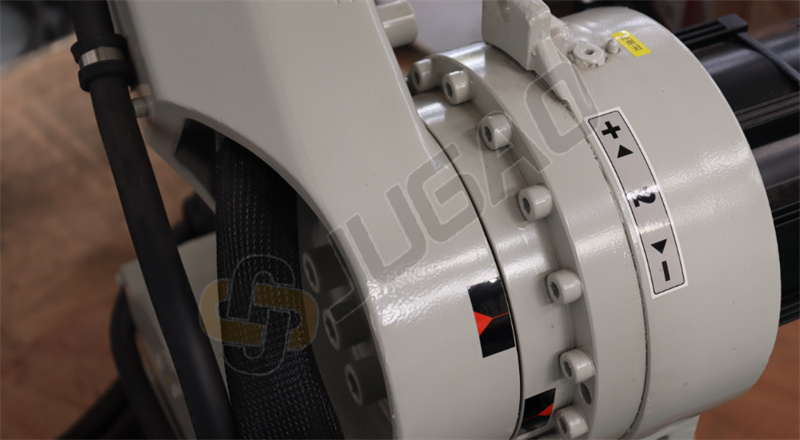
Inspection Items: Wipe all axes of the robot body, removing splashes, dirt, and dust.
Operating Points: Use a soft cloth to wipe the surface of each axis, paying special attention to cleaning splashes from the drive wheels, support rollers, and motor guide rods; avoid collisions or abrasions on the mating surfaces of the sliding guides.
2. Check the accuracy of the TCP (Anti-spatter Agent);
Inspection Content: Check if the TCP accuracy is within the allowable range.
Operating Points: Use a pointed needle or dedicated calibration tool to verify using the four-point or six-point method; the accuracy deviation should be ≤0.5mm.
Abnormal Handling: If the deviation exceeds the limit, recalibrate the tool coordinate system.
3. Check the anti-spatter agent level;
4. Check the accuracy of the zero position of each axis of the industrial welding robot;
Inspection Content: Check the accuracy of the zero position of each robot axis.
Operating Points: Move each robot axis to its mechanical origin position and observe whether the zero position marks on the axis are aligned.
Troubleshooting: If there is a zero position deviation, recalibration is required. If encoder data loss is involved, the battery must be replaced and the origin reset.
5. Clean the filter screen behind the welding machine's cooling water circulation system;Clean the filter screen at the compressed air inlet;
Inspection Items: Clean the filter screen behind the welding machine's water tank and the filter screen at the compressed air inlet.
Operating Instructions: Remove the filter screen and use compressed air to blow it from the inside out to remove accumulated dust.
Troubleshooting: Replace damaged filter screens promptly.
6. Clean the welding torch nozzle;
Inspection Items: Clean impurities from the welding torch nozzle to prevent blockage of water circulation.
Operating Points: Remove spatter adhering to the inner and outer walls of the nozzle; check the wear condition of the contact tip.
Troubleshooting: Replace the contact tip if it is severely worn (usually check every 20 hours).
7. Clean the wire feeding mechanism, including the wire feed roller, wire pressure roller, and wire guide tube;
Inspection Items: Clean the wire feeding mechanism, including the wire feeding roller, pressure roller, and guide tube.
Operating Points: Open the cover of the wire feeding mechanism and remove accumulated dust and metal shavings; blow the guide tube with compressed air.
8. Check the hose bundle and wire guide hose for damage or breakage;
Inspection Items: Inspect the hose bundle and guide wire hose for damage or breakage.
Operating Points: It is recommended to remove the entire hose bundle and clean it with compressed air; check each pipeline for cracks and wear.
Abnormal Handling: Replace any damaged parts immediately to prevent gas or cooling water leakage.
9. Check the welding torch safety anti-collision system and external emergency stop button for proper functioning.
Inspection Item: Check if the external emergency stop button is functioning correctly.
Operating Instructions: Press the emergency stop button to confirm that the robot immediately stops moving and triggers an alarm; reset to normal operation.
Troubleshooting: Do not operate the equipment if the emergency stop function fails.
III. Monthly Inspection and Maintenance
1. Lubricate all axes of the industrial welding robot body, adding the appropriate amount of grease.
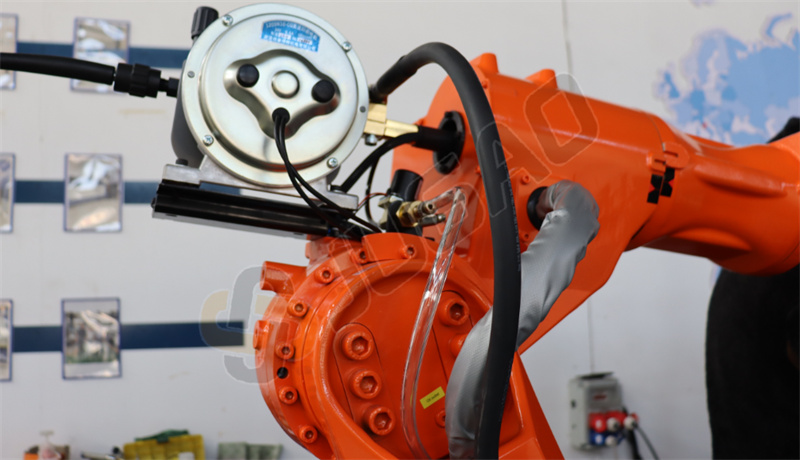
Inspection Items: Lubricate all axes of the robot and replenish the appropriate amount of grease.
Operating Points:
Add the specified grade of lubricating oil (e.g., 86E006 white lubricating oil) to axes 1-6.
Add through the grease fittings on each axis until old grease overflows from the seals.
After adding grease, run each axis to ensure even distribution.
Grease Selection: Only use the grease specified by the equipment manufacturer. Mixing different brands and models is strictly prohibited.
2. Add the appropriate amount of grease to the RP positioner and RTS track.Add the appropriate amount of conductive grease to the RP positioner.
Inspection Items: Grease the grease fittings on the RP positioner and RTS track.
Operating Instructions: Apply regular grease (e.g., 86K007) to the red grease fitting; continue greasing until the old grease is squeezed out.
Conductive Grease Application: Apply gray conductive grease (e.g., 86K004) to the blue grease fitting on the RP positioner to ensure grounding continuity.
3. Add the appropriate amount of lubricating oil to the wire feed roller needle bearings.
Inspection Item: Lubricate the needle roller bearing of the wire feed wheel.
Operating Points: Use only a small amount of grease; too much will contaminate the wire feed wheel.
4. Clean the torch cleaning device and add the appropriate amount of lubricating oil to the pneumatic motor.
Inspection Items: Clean the torch cleaning device and add lubricating oil to the pneumatic motor.
Operating Points: Remove weld slag buildup inside the torch cleaning device; add ordinary machine oil to the specified level.
Inspection Items: Ensure the torch cleaning station's oil spray nozzle is unblocked and that the oil bottle contains oil.
5. Clean and blow-dry the control cabinet and the inside and outside of the welding machine with dry compressed air.
6. Check the coolant level of the welding machine's cooling water circulation system and replenish the coolant as needed.
Inspection Items: Check the coolant level in the welding machine's cooling water circulation system and replenish coolant as needed.
Operating Points: The coolant should be pure water with a small amount of industrial alcohol (for antifreeze), or a dedicated coolant should be used; the coolant level should be maintained between the upper and lower limits.
8. Perform all items from the weekly inspection.
IV. Annual Inspection and Maintenance
1. Inspect all axes of the industrial welding robot and replace all grease with the corresponding type.
Inspection Items: Inspect all axes of the robot body and completely replace with the corresponding type of grease.
Operating Points: Thoroughly drain the old grease, clean the oil chambers, and inject new grease to the specified amount.
Replacement Cycle: The reducer lubricant typically needs to be replaced every 3 years. Refer to the accompanying machine maintenance manual for details.
2. Inspect all programs in the industrial welding robot control cabinet and replace all batteries with the corresponding type.
Inspection Content: Check all programs in the control cabinet and completely replace the corresponding battery model.
Operating Points: Lithium batteries are used for servo motor encoder data backup and typically need to be replaced every 2 years. Before replacement, back up the teach program and data to prevent data loss.
Notes: The location and model of the battery vary between different robot brands (brands such as FANUC require annual replacement of the main battery).
3. Inspect the industrial welding robot body, ensure positioning accuracy, and replace all drive belts with the corresponding type.
Inspection Content: Check the robot's positioning accuracy and replace the corresponding model drive belt completely.
Operating Points: Check the tension and wear of the timing belt; adjust or replace it if necessary. The chain is a wear part and should be disassembled and inspected at least once a year.
Accuracy Testing: Use a laser interferometer to test the positioning accuracy and repeatability, and compare it with the factory specifications.
4. Perform all items from the monthly inspection.
V. The maintenance of the industrial welding robot is the responsibility of the operator. Personnel allocation is as follows:
Each maintenance session must be carefully completed and a maintenance record kept. Any equipment malfunctions must be reported promptly, with a detailed description of the equipment's condition and the operations performed before the malfunction occurred. Operators must actively cooperate with maintenance personnel to ensure a smooth resumption of production. The company will conduct random checks on equipment maintenance. Operators are advised to carefully check the equipment's condition at the end of each shift and record the equipment's operating status for future reference.

