





How pipe bending machines support modern manufacturing
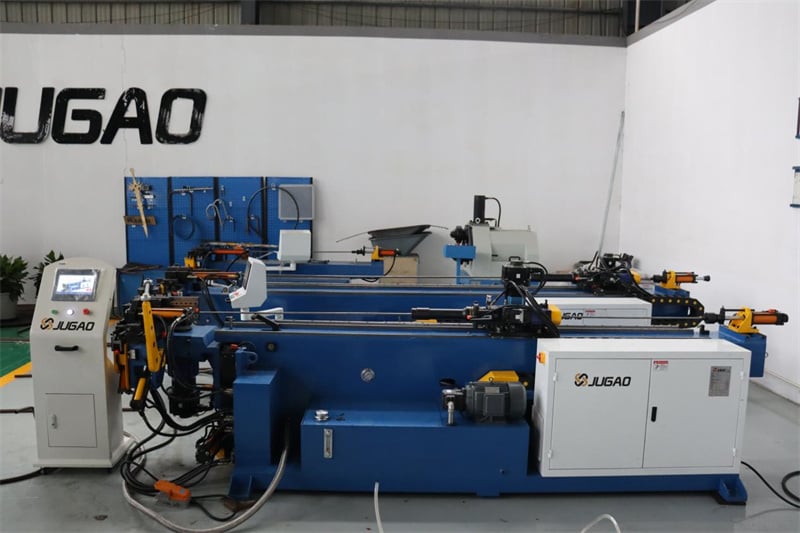
When you pass by a gym and see those rows of gleaming handrails, or sit in your car and grab the door handle, do you ever have that professional instinct that kicks in like I do? Three questions automatically pop into your head: What size is that pipe? How thick is the wall? How was the bending radius achieved?
Today, I want to set aside those obscure instruction manuals and talk to you from a "craftsman's" perspective about our old friend in the workshop—the pipe bending machine. It's more than just a machine that bends pipes; in modern manufacturing, it's an absolutely underrated "sculpting master."
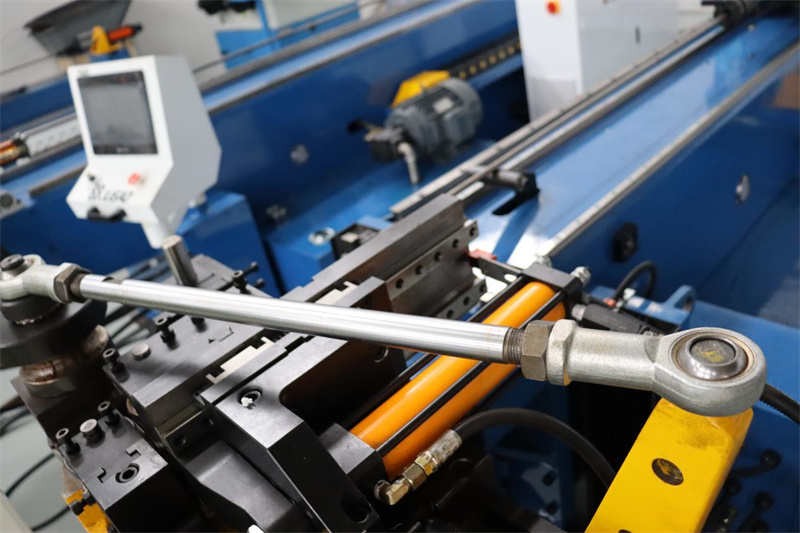
It's not just about "bending," it's about making the metal "obey."
Many people who see a pipe bending machine operating for the first time think it's like a strongman bending a steel pipe with a snap. In reality, it involves precise calculations about "plastic deformation."
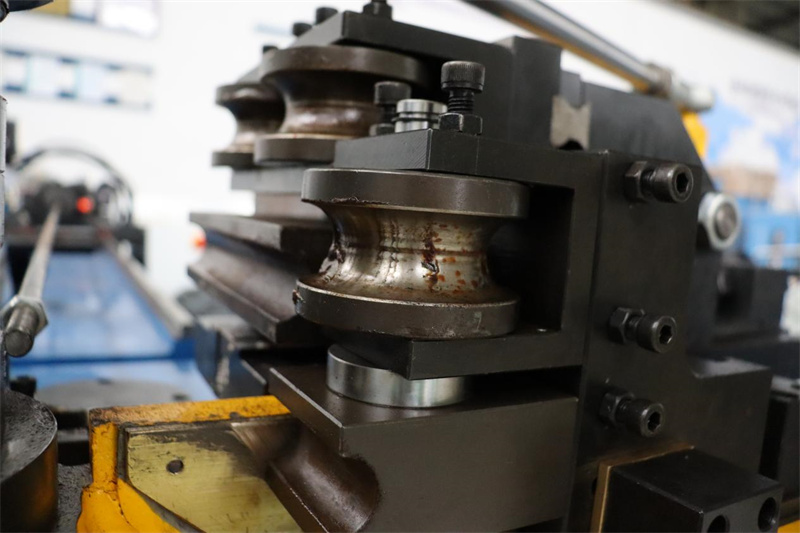
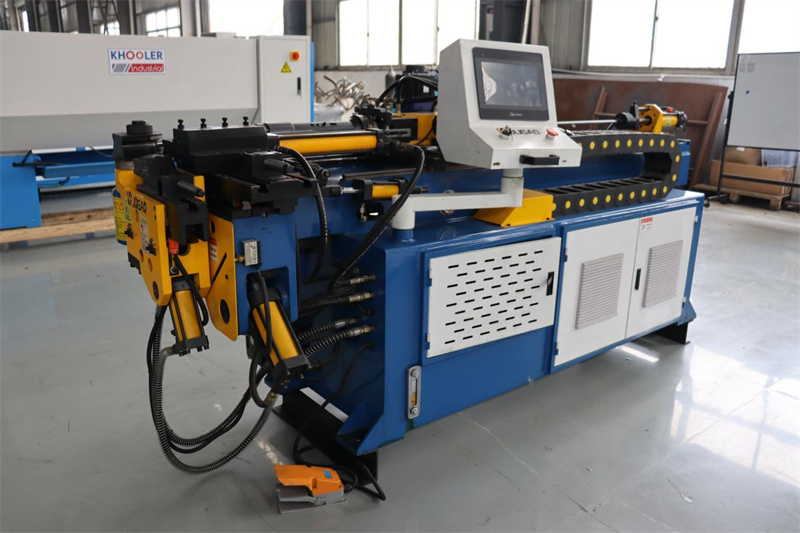
Whether it's the common hydraulic pipe bending machine or the increasingly mainstream CNC pipe bending machine, their function is the same: to guide metal pipes along a pre-defined path. In the past, skilled workers relied on their eyesight and experience; now, things are different. Modern equipment, especially fully electric CNC pipe bending machines, is like having a "brain." We only need to input the angle and coordinates, and the machine can precisely control each bend via servo motors, with an error margin within ±0.1°. This is not just an improvement in efficiency, but also an exploration of the limits of materials.
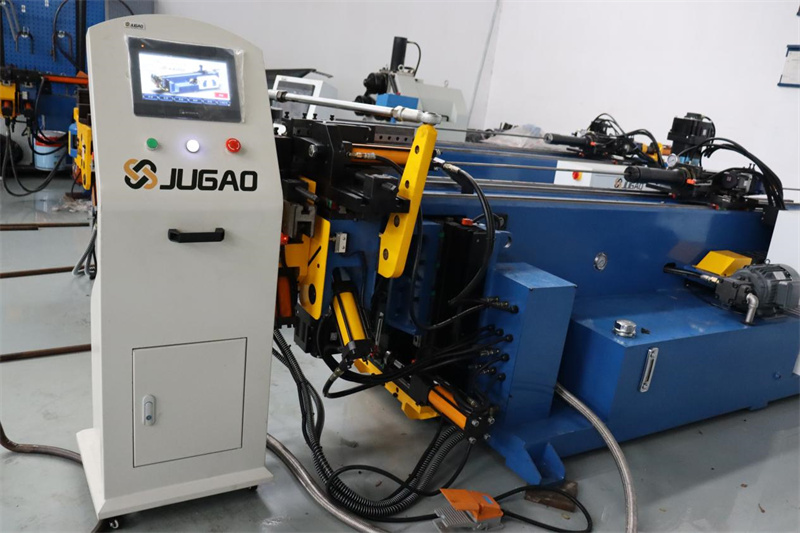
Its "works" are everywhere in your life.
Automotive Industry: Balancing Safety and Aesthetics
If you think pipe bending machines are only used for exhaust pipes, you're underestimating them. Modern cars, to improve body strength, often use high-strength steel tubing for front crossbeams, roll cages, and headrest supports. These components involve large-angle bends of 180°, and sometimes even bends in two different directions on the same pipe. Previously, this might have required welding, but now high-end pipe bending machines (such as those with left and right bending capabilities) can form the pipe in one go, resulting in higher strength and a smoother appearance. The complex spatial curves of dashboard frames in some high-end models are the work of CNC pipe bending machines.
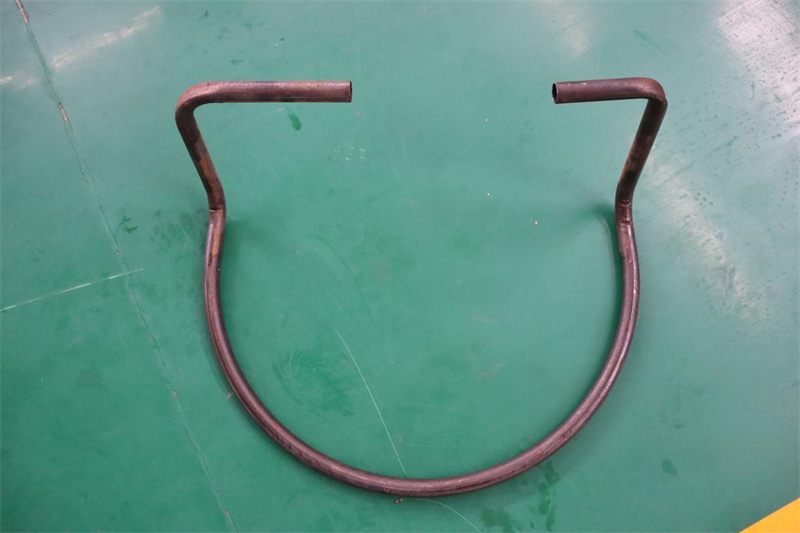
Fitness and Outdoor Equipment: Balancing Load-Bearing Capacity and Aesthetics
Our factory has received numerous orders for fitness equipment. Don't underestimate the handrails of a treadmill or the rails of a rowing machine. These tubing components typically require extremely high surface treatments (such as electroplating or powder coating), and even the slightest wrinkle or indentation during the bending process will be very noticeable under light. Therefore, pipe bending machines need to be equipped with anti-wrinkle molds and mandrels to ensure that the inner wall of the pipe does not wrinkle and the outer wall does not thin when bent under stress. This tests the rigidity and stability of the equipment.
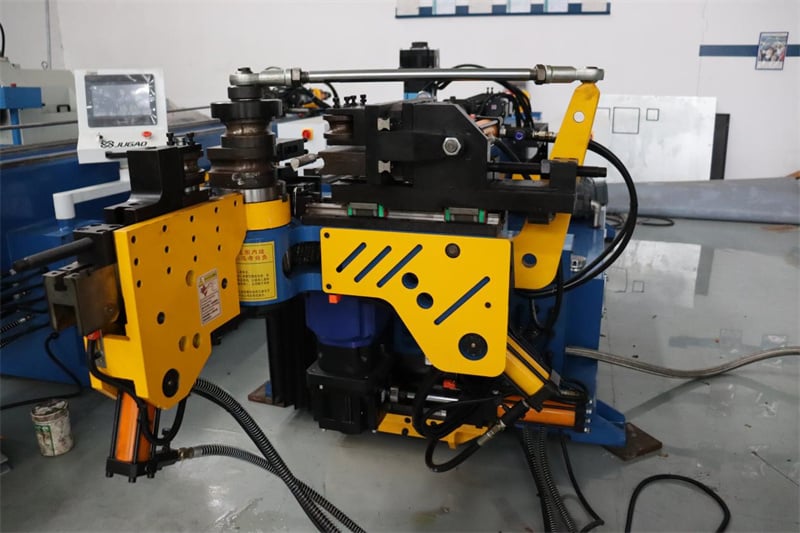
Furniture and HVAC: The Unseen Details From the spiral staircase handrails in hotel lobbies to the copper pipes of central air conditioning systems overhead, pipe bending machines are quietly improving our quality of life. Especially in the furniture industry, designs are becoming increasingly bold, with S-shapes, U-shapes, and even irregular elliptical arcs. Through 3D simulation programming, even the most complex shapes can become a reality.
The "new weapon" of the tech-savvy: What are we talking about?
In recent years, conversations with colleagues have revealed a shift in focus.
Previously, the question was, "What's the tonnage of your machine?"
Now, the questions are, "How many minutes does it take to change the mold? Can it connect to a robotic arm? Can it be integrated with an MES (Manufacturing Execution System)?"
Indeed, pipe bending machines are no longer just lonely iron lumps. We've observed several interesting trends:
Integrated bending and forming: Advanced E-TURN series machines can bend a single pipe in both left and right directions without reversing its direction. This is a game-changer for producing complex automotive rear axles or space frames, effectively doubling efficiency.
Intelligent compensation and alignment: Pipes have stress and will spring back after bending—a physical law we can't change. But modern machines can "learn." By identifying pipe seams with lasers or cameras, or automatically compensating for springback through software algorithms, the first piece is a qualified product, eliminating the need for manual mold adjustments and trial and error.
Data-driven production: Young workers today are reluctant to tighten screws covered in oil stains. Using offline programming software, we can simulate complex pipe shapes while sipping coffee in the office, detect collisions, and then transmit the data directly to the factory via the network. This is not just automation, but also digitalization.
In conclusion
As someone who has worked in this industry for many years, my biggest takeaway is that while technology is constantly evolving, our pursuit of precision remains unchanged.
Whether you're a small workshop looking to purchase your first pipe bending machine or a large factory upgrading its automated production line, understanding your product materials, precision requirements, and production volume needs is always the first step in choosing the right equipment.

