





Essential Considerations Before Purchasing a Punching Machine
Upgrading your sheet metal department with the right punching press can fundamentally elevate shop throughput, part repeatability, and profit margins. Selecting a machine wisely goes far beyond comparing sticker prices or brand logos—it requires aligning mechanical capabilities with your exact daily workflow. In this procurement guide, we examine the core criteria every fabricator should weigh before committing capital, walking through press architectures, tonnage sizing, control interfaces, safety compliance, and long-term maintenance planning.
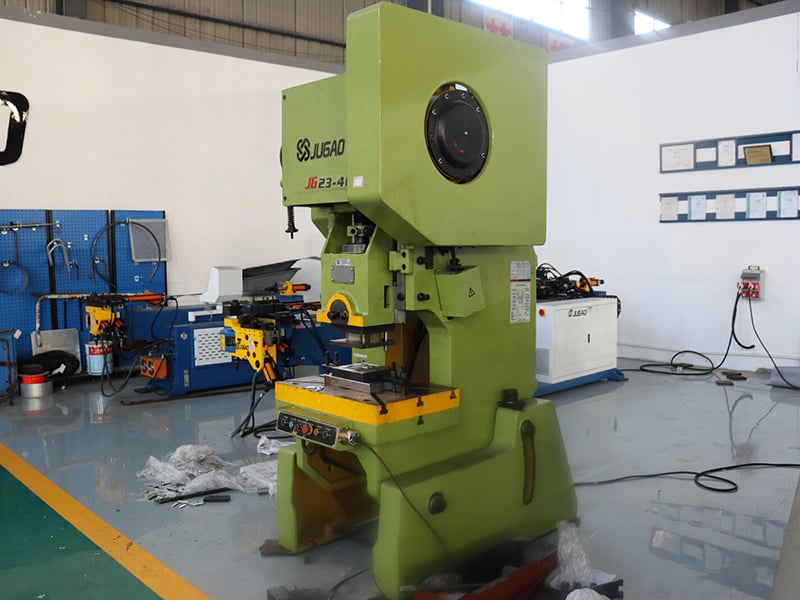
1. Press Architectures and Production Use Cases
Choosing Between Mechanical and Hydraulic Drive Systems
Your primary hardware choice centers on mechanical versus hydraulic actuation. Mechanical presses generate rapid, uniform ram cycles ideally suited for high-speed stamping of thinner gauges. Conversely, hydraulic punching systems provide programmable, full-tonnage force throughout the entire stroke, giving fabricators superior control when shearing thicker plates or running diverse part families. Matching drive technology to your predominant sheet thickness and order volume is the foundation of a sound purchase.
· Continuous High-Volume Stamping: Facilities producing thousands of thin-sheet blanks per shift achieve peak output from high-SPM mechanical presses.
· Variable-Gauge Mixed Batch Runs: Job shops handling smaller quantities across shifting material thicknesses benefit from hydraulic presses that adjust pressure on demand without straining the frame.
Capabilities of CNC Punching Systems for Intricate Sheet Metalwork
When component designs feature dense hole arrays, louver forming, or automated multi-tool sequences, CNC punching presses pair servo-driven positioning tables with programmable controllers to execute complex geometries effortlessly. Modern offline CAM nesting suites further allow engineers to maximize raw sheet yield and simulate tool paths on a PC before any metal reaches the shop floor.
2. Core Engineering Specifications to Verify
Determining Accurate Forming Tonnage Requirements
Properly sizing press tonnage prevents stall-outs on tough alloys while avoiding unnecessary wear on drive components. Required shearing force depends on three primary inputs: sheet gauge, material tensile strength, and total cut perimeter. Always verify your maximum workload against official OEM tonnage charts or engineering force calculators prior to finalizing equipment specs.
Assessing Ram Stroke Travel, Hit Rate, and Worktable Envelope
Vertical stroke length governs forming depth, whereas strokes per minute (SPM) directly determine shift productivity. High-output lines benefit from programmable stroke limits and rapid-return hydraulics that trim non-cutting travel time. Equally critical are worktable dimensions and throat depth—confirm the bed area accommodates your standard full-size sheets without requiring time-consuming manual reclamping.
3. Operator Ergonomics, Controls, and Compliance
Intuitive CNC Software and Shop-Floor Interfaces
Contemporary punching centers streamline setup via industrial touchscreen HMIs, direct USB/Ethernet program loading, and networked production tracking. Clean, visual operator interfaces shorten onboarding curves and minimize setup mistakes across multi-shift teams. Prioritize controllers equipped with graphical dry-run verification and automated turret indexing.
Integrated Safety Safeguards and Global Certifications
Operator protection must be engineered directly into the press rather than treated as an optional add-on. Confirm that any candidate machine incorporates photoelectric light curtains, accessible dual-hand or E-stop controls, and hydraulic/mechanical overload protection. Internationally recognized markings such as CE or ISO compliance further validate adherence to rigorous structural and electrical safety benchmarks.
4. Preventive Care, Technical Service, and Warranty Coverage
Scheduled Upkeep Practices for Sustained Press Reliability
Disciplined preventive care preserves dimensional accuracy and prevents costly unscheduled stoppages. Establish a routine shop checklist covering daily hydraulic oil level checks, weekly punch-to-die concentricity inspections, and thorough chassis lubrication every 500 operating hours. Presses built with centralized auto-lubrication systems and onboard fault diagnostics further simplify technician upkeep.
OEM Technical Support and Replacement Component Availability
Responsive aftermarket engineering support is just as vital as machine hardware. Before signing a purchase order, verify local spare-parts inventory for standard punches, dies, seals, and control modules, alongside clear warranty terms. Rapid parts fulfillment ensures minor wear items never turn into multi-week production bottlenecks.
5. Frequently Asked Questions (FAQs)
Q1: How do I calculate the exact punching tonnage needed for different metals?
Multiply the perimeter of the cutout by the sheet thickness and the material's shear strength, then apply a safety factor. Cross-checking your figures with an OEM tonnage chart or digital force calculator guarantees accurate press sizing.
Q2: Does investing in a CNC punching machine make financial sense for small batch production?
Yes—whenever tight dimensional tolerances and fast changeover are required. CNC presses store part programs for instant recall and slash manual layout time, delivering strong payback even on recurring low-volume orders.
Q3: How frequently should hydraulic oil be replaced in a punching press?
To maintain stable pressure and protect servo/proportional valves, replace hydraulic fluid every 1,000 operating hours or once every 12 months—whichever milestone arrives first—while monitoring filter condition regularly.
6. Conclusion & Partnering with JUGAO
Acquiring the ideal punching machine demands a holistic evaluation beyond initial purchase price. From choosing between mechanical, hydraulic, and CNC platforms to verifying tonnage capacity, safety certifications, software usability, and service support, every specification shapes your long-term shop efficiency. By aligning machine capabilities with your real-world fabrication demands, you secure a reliable, high-ROI production asset. Ready for tailored engineering guidance or a live demonstration of JUGAO punching machines? Contact the JUGAO team today to discuss your project requirements.

