





Why Does Press Brake Motor Overheating Happen?
Overheating Happen?
Table of contents
• Understanding the Motor’s Function in a Hydraulic Press Brake
• Common Triggers for Press Brake Motor Overheating
○ Hydraulic System Overload
○ Inadequate Cooling or Blocked Ventilation
○ Electrical Voltage Instability
○ Sustained High-Load Working Conditions
• Diagnostic Steps for Press Brake Motor Overheating
○ Step 1: Measure Motor Surface Temperature
○ Step 2: Check Hydraulic Pressure and Fluid Status
○ Step 3: Inspect Power Supply and Wiring Connections
• Preventive Maintenance for Avoiding Motor Overheating
○ Regular Cleaning and Cooling System Checks
○ Hydraulic System Upkeep
○ Electrical System Routine Inspection
• Frequently Asked Questions
○ Is motor overheating normal during high-intensity production?
○ What temperature range is risky for a press brake motor?
○ How to avoid press brake motor overheating in daily use?
• Conclusion
Overheating of the press brake motor is a common fault that operators may encounter, marked by abnormal motor heat and a slight smell of burnt insulation around the equipment. This issue never occurs randomly; it always signals excessive stress on certain components of the machine system. Based on long-term practice with hydraulic and CNC press brakes, motor overheating is mostly linked to mechanical resistance, hydraulic pressure anomalies, electrical phase imbalance, or inadequate routine maintenance. This guide elaborates on the typical causes of press brake motor overheating, on-site diagnostic methods, and practical preventive measures to protect the motor from damage and ensure stable operation of the press brake.
Understanding the Motor’s Function in a Hydraulic Press Brake
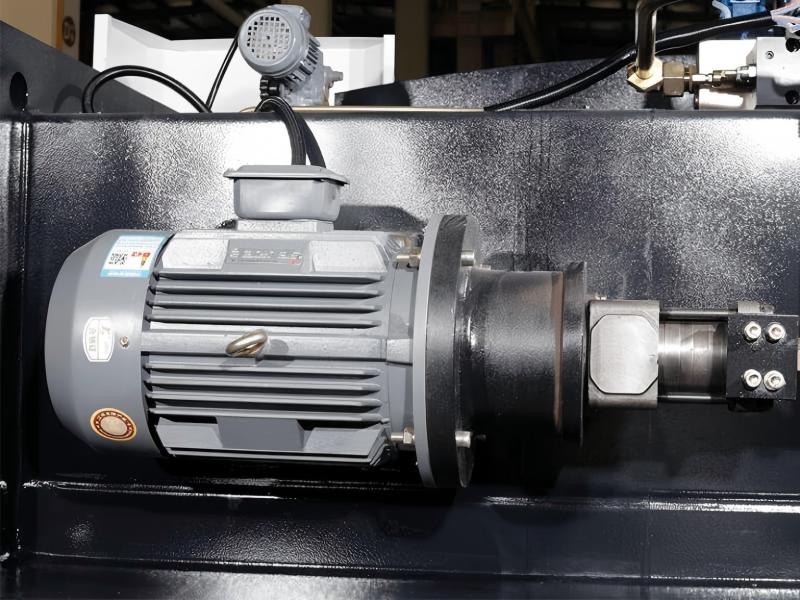
Before troubleshooting overheating faults, it is essential to clarify the motor’s core role in the equipment. The electric motor powers the hydraulic pump, which builds pressure to drive the ram and complete sheet metal bending tasks.
Under normal working conditions, the motor runs within its rated temperature range. However, when mechanical resistance or electrical imbalance occurs, the motor has to exert extra effort to maintain system pressure. This heightened workload directly leads to press brake motor overheating, particularly during long continuous production runs.
Ignoring overheating problems can result in severe consequences:
• Damage to motor insulation layers
• Shortened service life of the motor
• Sudden unplanned equipment downtime
• Reduced efficiency of the hydraulic system
This makes early detection and root-cause identification extremely crucial.
Common Triggers for Press Brake Motor Overheating
Based on practical maintenance experience, multiple common faults can trigger press brake motor overheating, most of which can be spotted during routine equipment checks.
Hydraulic System Overload
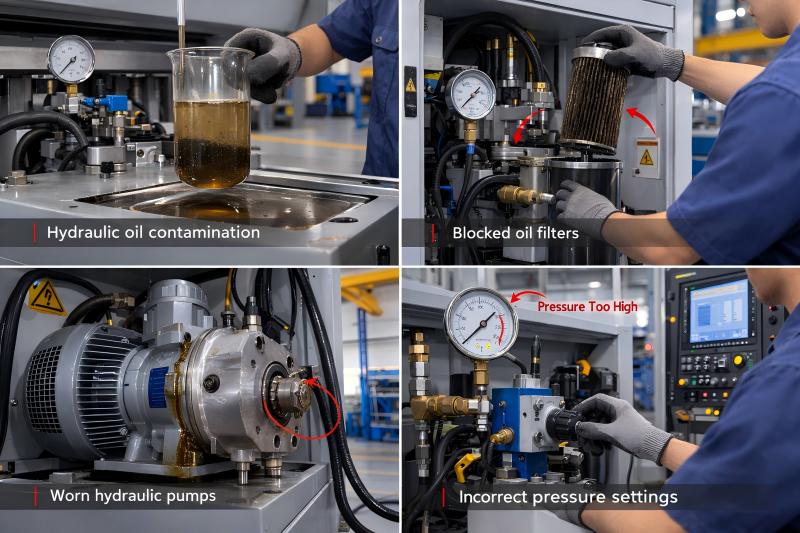
Excessive hydraulic load is one of the most prevalent causes of motor overheating. When the hydraulic system faces unexpected resistance, the motor needs to output extra torque to keep the system running.
Typical contributing factors include:
• Contaminated hydraulic fluid
• Clogged oil filters
• Worn-out hydraulic pumps
• Incorrectly adjusted pressure parameters
Restricted hydraulic flow forces the motor to stay under high load for a long time, causing a rapid temperature rise.
Regular maintenance of the hydraulic system is the most effective way to prevent this issue.
Inadequate Cooling or Blocked Ventilation
Press brake motors depend on smooth air flow to dissipate operating heat. Many overheating cases are simply caused by poor ventilation around the motor compartment.
This usually happens when:
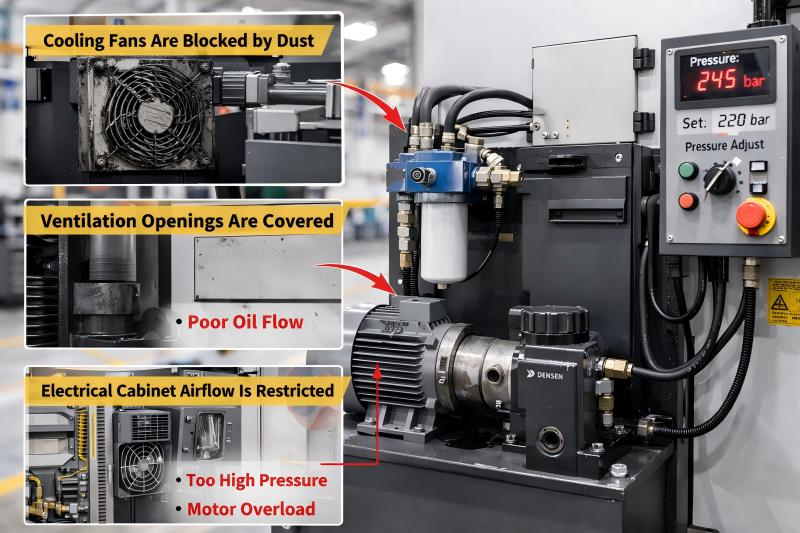
• Cooling fans are covered with dust and debris
• Ventilation ports are blocked
• Air circulation inside the electrical cabinet is limited
In workshops with heavy dust or metal shavings, cooling components are prone to clogging. Cleaning cooling fans and ensuring unobstructed air flow can greatly lower the risk of overheating.
Electrical Voltage Instability
Unstable power supply is another key factor leading to press brake motor overheating.
Phase voltage imbalance will make the motor draw excessive current, which further causes:
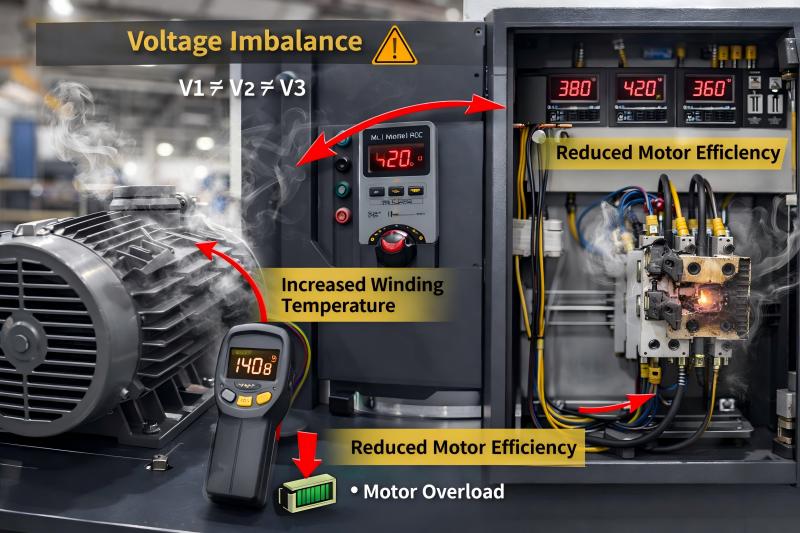
• Elevated temperature of motor windings
• Declined motor operating efficiency
• Early electrical component failure
Whenever troubleshooting overheating motors, I always prioritize checking power supply voltage and phase balance.
Sustained High-Load Working Conditions
Press brakes used for heavy-duty bending tasks often run continuously near their maximum tonnage rating.
Though the motor is designed to bear high loads, prolonged non-stop operation will lead to continuous heat accumulation.
This situation commonly arises when:
• Production schedules are overly intensive
• The machine runs without scheduled cooling breaks
• An undersized tonnage model is used for thick workpieces
If the equipment is constantly operating beyond its recommended capacity, consider upgrading the machine or optimizing production arrangements.
Diagnostic Steps for Press Brake Motor Overheating
When inspecting an overheating press brake motor, I follow a standardized and efficient diagnostic process.
Step 1: Measure Motor Surface Temperature
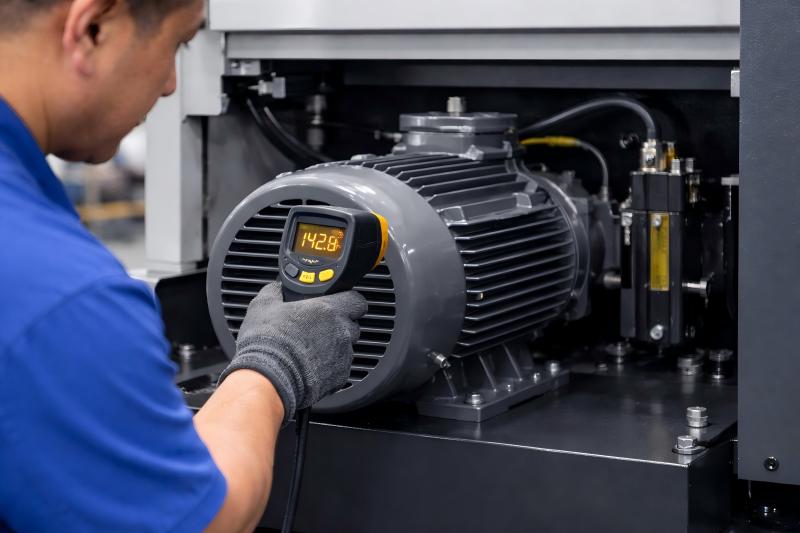
First, use an infrared thermometer to test the motor’s surface temperature. Normal operating temperatures vary by motor design, but a sharp temperature surge during operation clearly indicates abnormal load.
A rapid temperature climb during working usually points to hydraulic or electrical resistance issues.
Step 2: Check Hydraulic Pressure and Fluid Status
Next, conduct a thorough inspection of the hydraulic system. Contaminated fluid or blocked filters often create resistance for the pump unit.
Key check items include:
• Cleanliness of hydraulic fluid
• Condition of oil filters
• Accuracy of pressure settings
• Abnormal noise or vibration of the pump
Replacing contaminated hydraulic fluid often resolves the overheating problem directly.
Step 3: Inspect Power Supply and Wiring Connections
Electrical system inspection is an indispensable part of diagnosis.
Key verification items include:
• Phase voltage balance
• Tightness of wiring terminals
• Motor operating current
• Cooling condition of the electrical cabinet
Loose electrical connections increase circuit resistance and generate extra heat, worsening overheating.
Preventive Maintenance for Avoiding Motor Overheating
Preventive maintenance is the most reliable solution to stop press brake motor overheating.
In practice, a simple and consistent maintenance routine can drastically reduce the probability of overheating failures.
Regular Cleaning and Cooling System Checks
Keep the motor surrounding area clean and ensure ventilation openings are completely unobstructed. Clean cooling fans and air ducts regularly to maintain smooth air flow.
Hydraulic System Upkeep
Maintain the hydraulic system with these measures:
• Replace oil filters at fixed intervals
• Monitor the quality of hydraulic fluid
• Calibrate pressure settings regularly
• Inspect pumps and valves for wear and tear
A well-maintained hydraulic system reduces motor load and prevents overheating at the source.
Electrical System Routine Inspection
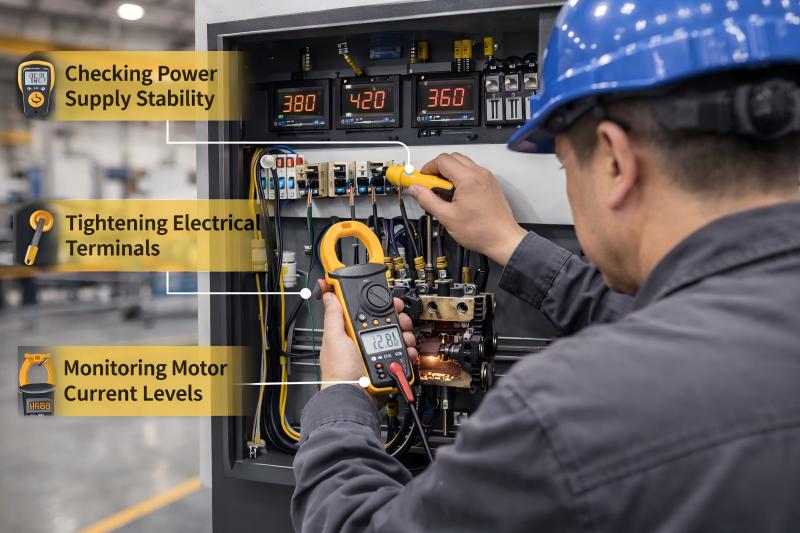
Electrical maintenance should cover:
• Checking stability of power supply
• Retightening all electrical terminals
• Monitoring real-time motor current
A stable power supply guarantees the motor runs at optimal efficiency.
Frequently Asked Questions
Is motor overheating normal during high-intensity production?
A mild temperature rise is normal, but excessive heat nearly always indicates hydraulic resistance, electrical imbalance, or insufficient cooling.
What temperature range is risky for a press brake motor?
Most industrial motors should operate below 80–90°C. Temperatures exceeding this range may damage insulation and shorten the motor’s service life.
How to avoid press brake motor overheating in daily use?
Regular maintenance, proper ventilation, clean hydraulic fluid, and stable power supply are the most effective preventive steps.
Conclusion
Press brake motor overheating is typically a warning that the hydraulic, electrical, or cooling system is malfunctioning. By checking hydraulic pressure, monitoring power supply, and maintaining proper cooling conditions, most overheating faults can be fixed before major damage occurs.
In my experience, consistent preventive maintenance is the key to keeping press brake motors running efficiently and safely. If you notice frequent overheating or abnormal motor performance, inspect the equipment right away. For professional technical support or detailed maintenance guidance, feel free to reach out to our technical team for assistance.

