When it comes to safety standards for pipe bending machines, many buyers only focus on the bending radius and level of automation when looking at the specifications, quickly glancing over the safety certifications. I understand; after all, production efficiency and precision directly generate profits, and safety seems like something "useless unless something goes wrong." But frankly, equipment safety compliance isn't just about passing inspections; it directly relates to the safety of operators and the long-term reliability of the equipment.
CE Certification: A Strict Barrier to the European Market
If you want your pipe bending machine to enter the European market, the CE marking is mandatory. It signifies that the machine meets EU health, safety, and environmental requirements. CE-certified machines undergo a series of checks, including electrical safety testing, emergency stop function verification, and mechanical structure evaluation. Equipment without the CE marking cannot enter Europe, and even when used in other regions, CE-certified machines are generally more compliant with safety design standards.

ISO 12100: The Foundation of Machinery Safety
ISO 12100 outlines the fundamental principles of machinery safety. It requires manufacturers to identify all potential hazards during the design phase and implement corresponding protective measures on the machine. For example, whether clamping points are protected, whether the machine structure is stable enough, and whether the control panel markings are clear. The core logic of this standard is "intrinsic safety"—it's better to avoid hazards during design than to add protection afterward.

NR12: A Mandatory Requirement for the Brazilian and Latin American Markets
If your equipment is intended for sale in Brazil or surrounding markets, NR12 is a standard you need to understand. It sets forth detailed requirements for the safety protection of mechanical equipment—protective barriers, interlocked safety doors, two-hand controls, clear safety warning labels, etc. Pipe bending machines that comply with NR12 typically achieve a relatively high level of safety protection.
OSHA and ANSI: Fundamental Requirements for the North American Market
Pipe bending machines in the North American market typically need to comply with OSHA and ANSI regulations. OSHA primarily governs operational safety, such as operator training and lockout/tagout procedures; ANSI focuses on the safety standards of the equipment itself and mechanical protection requirements. If you are operating in North America, you need to ensure that your equipment meets or exceeds these standards.
Several key safety features must be carefully checked before purchase:
The location and function of the emergency stop button must be tested. The emergency stop button should be installed within easy reach of the operator, and all movement should stop immediately upon being pressed, without any delay. Reset should also be manual, not automatic.
Protective and interlocking devices are essential. When the machine is running, the operating area should have physical barriers or safety doors. The machine should automatically stop operating when the door is opened. These devices should not be omitted or short-circuited.
A two-hand control system is used in operating scenarios requiring special attention to safety. The operator needs to press the button with both hands simultaneously to start the bending cycle, thus preventing hands from entering the danger zone. The foot switch should also have a protective cover to prevent accidental triggering.
Regarding overload protection, confirm that the machine has an overload sensor or hydraulic pressure relief valve. When the bending force exceeds the set value, the system should automatically release pressure or stop the machine to prevent damage to the equipment and mold.
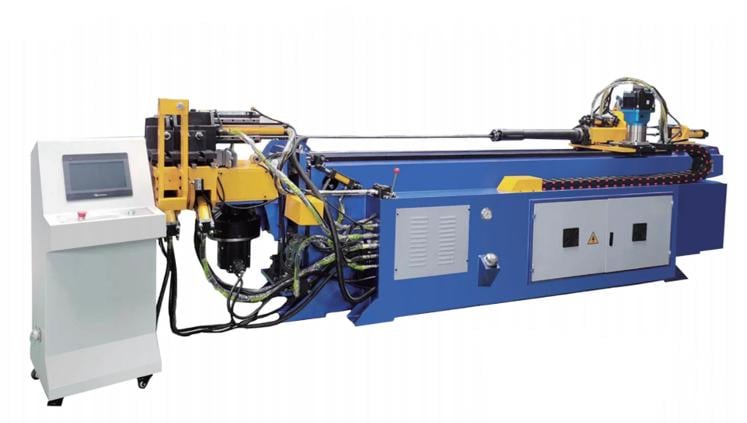
Operator training and daily inspections are equally important.
No matter how sophisticated the safety equipment, it's practically useless if the operator doesn't know how to use it. Safety operating procedures should be repeatedly emphasized as a key focus every time an operator changes or during regular retraining. Developing habits such as daily pre-start visual inspections, regular sensor function tests, and verification of the integrity and reliability of protective devices can prevent many accidents.
Ultimately, checking safety standards isn't just a formality.
Good safety design reflects the manufacturer's commitment to product design and quality control. Machines that meet safety standards usually perform well in other areas as well.