





Welding Robot Programming Techniques
Robot programming directly impacts product repeatability. Therefore, during the programming and teaching process, it's crucial to determine the robot's working trajectory step-by-step based on actual production conditions to improve product quality.
In industry, welding is used in many fields, especially in the automotive manufacturing industry, where the requirements for welding operations are extremely high. Through continuous research and development by scientists, new welding robots have been unveiled and launched into the market. The application of welding robots has become an important indicator of automation upgrades in modern manufacturing. However, the equipment itself is only the foundation; the quality of programming technology directly determines the stability of welding quality and the level of production efficiency. Many companies have purchased welding robots, but due to insufficient programming skills, they experience low equipment utilization and frequent welding defects. This article will systematically summarize the core techniques of welding robot programming from a practical application perspective to help operators and programming engineers improve their programming skills. Below are some welding robot programming techniques. Let's take a look.
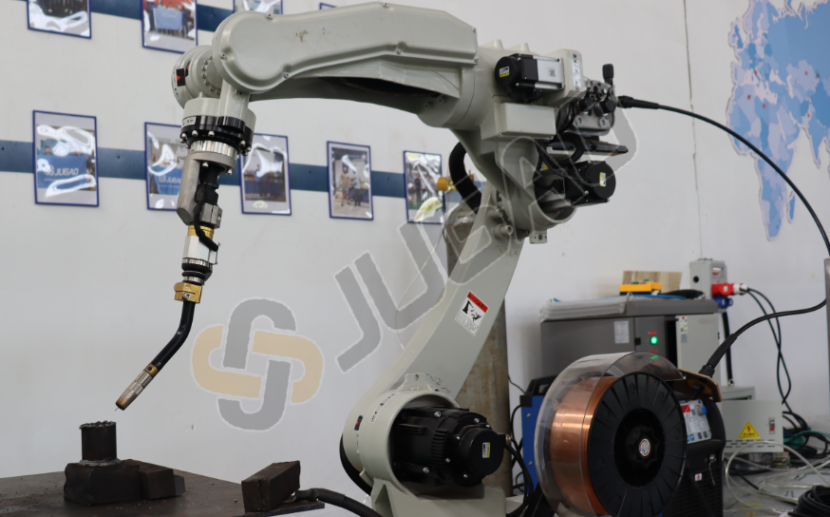
Welding Robot Programming Techniques:
1. Choose a reasonable welding sequence. The welding sequence should be determined to minimize welding deformation and the length of the welding torch's travel path.
Proper welding path planning can effectively improve quality and efficiency:
l Shortest path principle: Minimize non-welding movement paths to reduce idle travel time.
l Obstacle avoidance priority: The welding torch movement path should avoid interference from fixtures, locating pins, and other obstacles.
l From inside to outside: When welding multiple layers and passes, fill each layer from the deepest point outwards.
l Symmetrical welding: For symmetrical structures, use alternating or symmetrical welding sequences to control deformation.
2. Welding torch spatial transitions require short, smooth, and safe movement trajectories.
3. Optimize welding parameters. To obtain optimal welding parameters, create workpieces for welding tests and process evaluation.
4. Reasonable positioner position, welding torch posture, and welding torch position relative to the joint. After the workpiece is fixed on the positioner, if the weld seam is not in the ideal position and angle, the positioner must be continuously adjusted during programming to ensure the weld seam reaches a horizontal position sequentially. Simultaneously, the robot's axis positions must be continuously adjusted to reasonably determine the welding torch's position, angle, and wire extension length relative to the joint. After the workpiece position is determined, the position of the welding torch relative to the joint is observed visually by the programmer, which is quite difficult. This requires programmers to be adept at summarizing and accumulating experience.
The welding torch posture has a significant impact on weld formation and penetration depth:
l Extension length: Usually controlled within 10-15mm, kept constant.
l Working angle: 90° for butt welds, 45° for fillet welds, with a deviation not exceeding ±5°.
l Travel angle: Push welding (5-15°) for thin plates, pull welding (0-5°) for thick plates.
l Posture transition: Posture changes between adjacent teach points should be smooth, avoiding abrupt changes.
5. Insert torch cleaning programs promptly. After writing a welding program of a certain length, a torch cleaning program should be inserted promptly to prevent welding spatter from clogging the welding nozzle and contact tip, ensuring torch cleanliness, extending nozzle life, ensuring reliable arc ignition, and reducing welding spatter.
6. Programming generally cannot be completed in one step. It requires continuous testing and modification during robotic welding, adjusting welding parameters and torch posture, etc., to create a good program.
Welding robot programming is a technical skill that requires a close integration of theory and practice. Excellent programming not only demands mastery of teach pendant operation but also an understanding of the essence of welding processes, familiarity with equipment characteristics, and accumulated field experience. The techniques mentioned above cover the complete process from preparation, teaching, debugging to optimization, and are intended to inspire and assist engineering technicians engaged in welding robot programming.
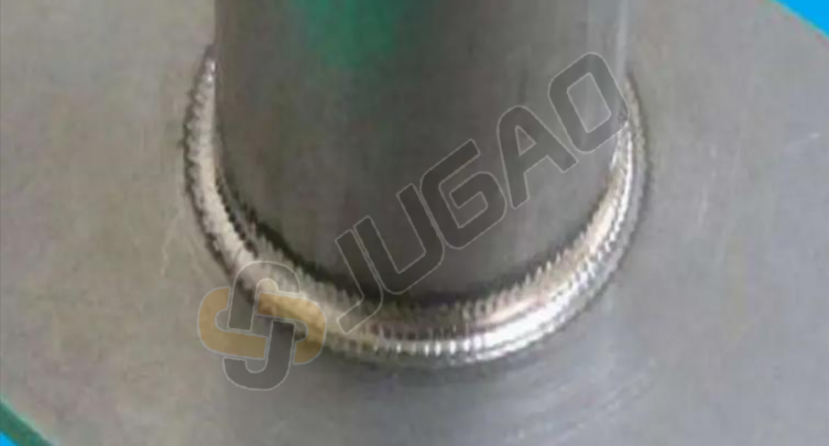
These welding robot programming techniques have been introduced. Welding robots can ensure consistent production quality from start to finish, improve production efficiency, and protect people from the harmful effects of light. Companies also do not need to spend large sums of money training workers, which is crucial for their development.

