Preventative maintenance of pipe bending machines is most vulnerable to two tendencies: one is applying equal pressure to all components, checking everything but nothing thoroughly; the other is focusing solely on the die and hydraulic system, completely neglecting other areas. After the equipment has been running for a while, you'll find that the real factors affecting accuracy and reliability are concentrated in just a few key areas. Below, we'll discuss these key components by system.
First, examine the mechanical transmission system. Wear in gears and bearings can introduce backlash, directly compromising positional precision. Regular lubrication and tension checks are essential to maintain smooth operation. Second, consider the electrical control units. Signal interference or aging sensors may cause erratic behavior, leading to inconsistent output. Ensuring proper grounding and replacing worn components promptly can mitigate these risks. By addressing these often-overlooked areas, you enhance overall equipment stability and extend its service life significantly.
I. Die System: Directly Determines the Pipe's Bending Shape
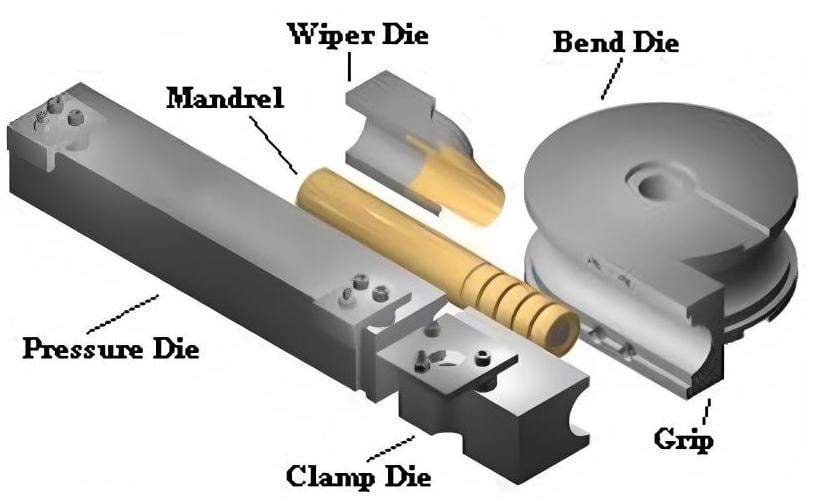
The bending die and clamping die are the components that directly contact the pipe material, and their condition directly reflects the bending quality. Worn die grooves will cause the pipe to slip; scratches or material buildup on the surface will leave marks; decreased hardness will accelerate wear.
Inspection frequency depends on production volume. In high-volume production workshops, die wear occurs faster than expected. Regularly checking whether the die groove dimensions are still within tolerance and whether the surface finish meets standards directly determines the accuracy of the bent pipe's angle and the quality of its surface finish.
II. Mandrel System: A Key Factor Affecting the Quality of the Tube Inner Wall
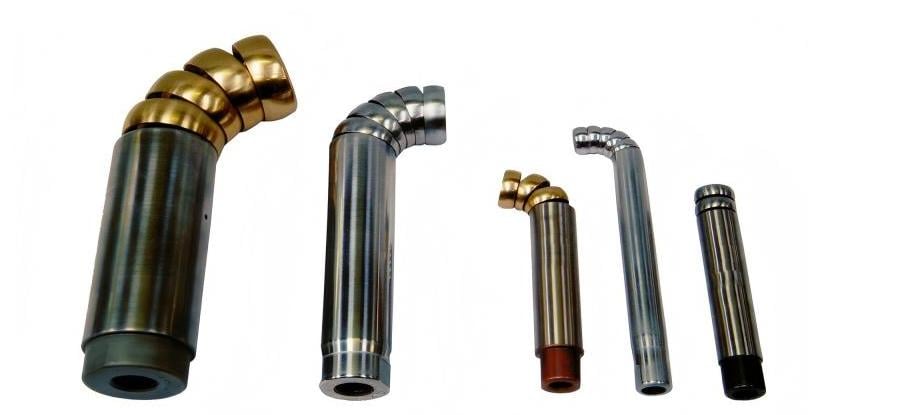
The wear degree of the mandrel ball end, the presence of bending or deformation of the mandrel rod, and the proper lubrication—these factors directly determine whether the inner wall of the tube will be scratched or whether bent sections will collapse.
The mandrel ball end will wear down over time, and once it wears to a certain extent, it can no longer be used. If the mandrel rod is bent, it will rub against the inner wall of the tube with each movement, eventually scratching the inner wall. If the lubrication system does not supply oil to the mandrel, its lifespan will be significantly shortened under dry running conditions. Using the wrong mandrel model will also cause problems—different tube diameters and wall thicknesses require different mandrel specifications; a general-purpose configuration may not be suitable.
III. Servo Motors and Drive Systems: Ensuring Precision
Servo motors and drives are essential for the precision of CNC pipe bending machines. Dust accumulation on the motor surface can affect heat dissipation; high temperatures may cause the servo system to slow down or trigger an alarm. Unstable encoder feedback signals will cause the bending angle to fluctuate. Loose couplings will prevent the motor's rotation angle from matching the actual bending arm's rotation angle.
Regularly cleaning the motor heat sink, checking the coupling's tightness, and confirming normal encoder feedback—these maintenance tasks are crucial for maintaining consistent bending precision.
IV. Sensors and Limit Switches: Easily Overlooked but Significantly Impactful
If the sensor surface is covered in oil, the signal will weaken or become intermittent. If the limit switch position shifts, the machine may not be able to find a reference point. These situations often don't immediately stop the machine, but prolonged exposure to these conditions will gradually decrease bending quality.
Daily inspections, such as wiping the sensor surface with a dry cloth, checking for loose limit switch screws, and inspecting signal cables for wear, can prevent many problems.
V. Hydraulic System: Pressure and Sealing
Hydraulic cylinders and seals are the weakest links in a hydraulic system. Aging seals lead to internal leaks, making it impossible to maintain pressure. Scoring of the cylinder's inner wall will hinder piston movement. These small problems won't immediately stop the machine, but they will gradually affect the stability of bending forces.
Regularly checking the hydraulic system for normal pressure, external leaks in the cylinders, and signs of aging in the seals—these checks can detect many problems early.
VI. Guide Rails and Lubrication System: The Foundation of Moving Components
Inadequate lubrication of linear guide rails and slides increases friction, hinders smooth movement, and naturally reduces precision. Excessive lubrication or using unsuitable oil can attract dust, forming sludge and accelerating wear.
Checking for scratches on the guide rail surface, ensuring the slider movement is not stuck, and verifying the unobstructed oil passages of the automatic lubrication system—these checks are simple, but their significance is substantial.
VII. Electrical Cabinet and Control System: Environmental Factors to Consider
The internal temperature of the electrical cabinet affects the lifespan and stability of electronic components. Dust accumulation on the cooling fan reduces ventilation efficiency; loose wiring terminals cause unstable signal transmission; clogged filters increase the internal temperature of the cabinet.
Regularly cleaning dust from the electrical cabinet, checking the tightness of wiring terminals, and ensuring the cooling fan is functioning properly—these details impact long-term reliability.
These key components are distributed across different systems within the pipe bending machine, each playing a different role. Maintenance needs to be planned and cover all critical parts, rather than checking them only when you remember and ignoring them altogether. The inspection cycle and standards for each component are specified in the equipment manual; following the manual will ensure that no maintenance is overlooked.