





How to solve the problems encountered in aluminum profile bending?
The basic principle of aluminum profile bending is that the profile is stretched at both ends by clamps, and rotated around the bending die. Under the action of tension and bending moment, the profile undergoes plastic deformation, gradually conforming to the die to obtain the desired shape.
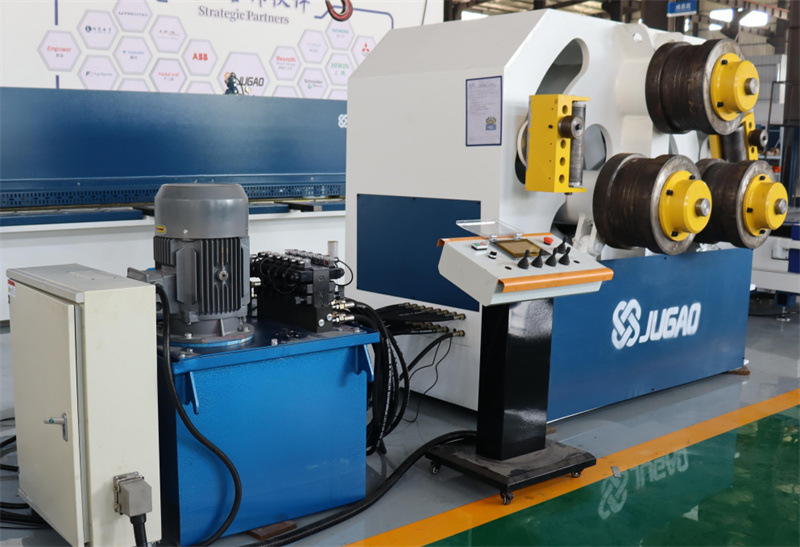
Bending parts are characterized by a relatively large radius of curvature, large springback, and curvature variation along the axial direction. Aluminum profile bending is widely used in the aerospace, automotive, building door and window curtain wall, and high-speed rail industries for forming bent parts, such as fuselage, wing stiffeners and frames, curved house frames, curved doors and windows, curtain wall buildings, train heads, roof contour supports, and window frames, etc.
Aluminum bent profile parts play an important role in my country's machinery production and modern construction. With the widespread application of aluminum bent profiles, the problems exposed in the production of industrial aluminum profiles are gradually increasing. To ensure the pass rate of parts and the stability of production, this study mainly investigates common problems and related solutions in the aluminum profile bending process.
Many problems exist in the aluminum profile bending process, which seriously affect product qualification rate and production efficiency. Simultaneously, production costs significantly impact the normal operation and production of enterprises. Given the need for the industrialization of aluminum profile bending, and considering the current situation of aluminum profile bending, this paper effectively analyzes common problems in aluminum profile bending and proposes several relevant improvement measures, hoping to provide effective reference for aluminum profile bending.
I. Existing Problems
(1) Deviation in Outline
Outline refers to the degree of conformity between the changed outline of the profile after bending and the outline template or inspection mold. The main factors causing deviations in outline are:
① Incorrect bending mold radius;
② Unstable material properties in different batches of extruded profiles, resulting in uneven hardness in local areas of each material;
③ Excessive variation in bending radius;
④ Uneven profile cross-sectional area.
(2) Surface Defects
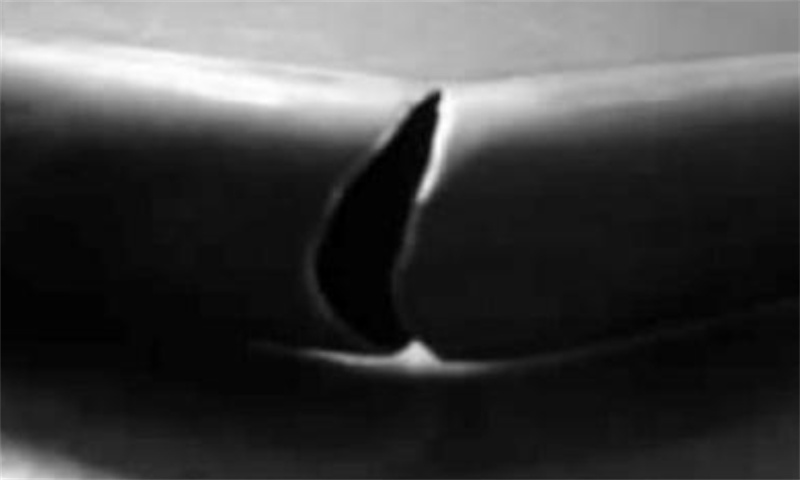
Surface defects include cracks, shrinkage wrinkles, surface depressions, and side sagging after bending.
(3) Twisting after bending
The causes of twisting after bending are:
1. Uneven template;
2. Insufficient tension;
3. Inadequate shims;
4. Extremely small bending radius;
5. Insufficient levelness of the equipment itself.
(4) Verticality deviation
Verticality refers to the angular deviation between the profile cross-sectional area perpendicular to the reference datum (perpendicular to the curvature radius of the mold) and the inspection platform after bending.
(5) Safety in production
Safety is a critical issue in industrial production. During profile bending, accidental breakage and outward springing may occur, causing equipment damage and personnel injuries, which can severely impact the company's development.
II. Solutions
(1) Adjusting the curvature of the mold outline
Based on theoretical analysis and calculation of the springback amount, a corrected approximate value is obtained through tensile testing to correct the mold, ensuring that the profile outline matches the template or inspection mold as closely as possible after bending. Considering the instability of the profile, it can be slightly over-bent as needed for later correction.
During mold making, the cross-sectional area of the profile and the thickness of each part must be considered. For asymmetry in the profile cross-sectional area, deviations caused by unbalanced stress between the edge closing and opening of the profile can be addressed by appropriately increasing the tensile force during pre-stretching.
(2) Surface Defect Treatment
Cracks after profile bending are caused by excessive tensile force or problems with the material itself. Inadequate edge closing of the profile will cause shrinkage and wrinkling. This can be resolved by replacing the profile or adjusting the tensile force.
Surface depressions mainly occur on hollow profiles. Before bending these profiles, the hollow bent parts need to be filled with filler. Open cavities can be filled with PP board, while closed cavities are usually filled with sand.
Adjusting the mold clearance appropriately according to the location of side sags and changing the mold material can effectively prevent the profile from being scratched.
(3) Twisting Treatment After Bending
The main causes of twisting after bending are uneven mold, insufficient tensile force, and improperly placed shims. Therefore, corresponding methods can be adopted to improve this problem. In addition, minor deformations caused by instability in extruded profiles require post-processing correction.
(4) Handling Verticality Deviations
After bending, verticality deviations are also caused by asymmetrical cross-sectional areas and unbalanced stress between the edge closing and opening of the profile. This can be improved by adjusting the bending die. Minor deformations caused by instability in extruded profiles require post-processing correction.
(5) Safety in Production
Safety is the primary concern in industrial production. Therefore, protective devices should be added to the profile operating table during production, corresponding regulations should be established, and comprehensive technical operators should be trained. Furthermore, during profile stretching, operators are strictly prohibited from standing in front of the equipment.
III. Conclusion
In summary, when designing the cross-sectional area of profiles requiring bending, the extension force of each section should be calculated. When designing bending dies, industrial aluminum profiles should consider curvature springback changes and pre-deformation for post-processing correction to minimize the workload of the correction process. In batch production, reducing the workload of the correction process and ensuring safety in production are the primary concerns for cost reduction. When extruded profiles are unstable, a small number of defects such as deviations in profile, excessive torsion, and excessive perpendicularity may occur. These defects can be corrected and remedied later.

