





How Do Robotic Laser Welding Systems Automatically Identify Weld Seams?
As the manufacturing sector shifts toward intelligence and automation, robotic laser welding systems are increasingly being adopted across industries such as automotive manufacturing, new energy, sheet metal processing, and the production of precision components.
Traditional robotic welding typically requires a pre-set, fixed path, placing high demands on the positioning accuracy of the workpiece. If issues such as assembly errors, workpiece deformation, or shifts in the weld seam location occur, it often leads to problems like welding misalignment or inconsistent weld beads.
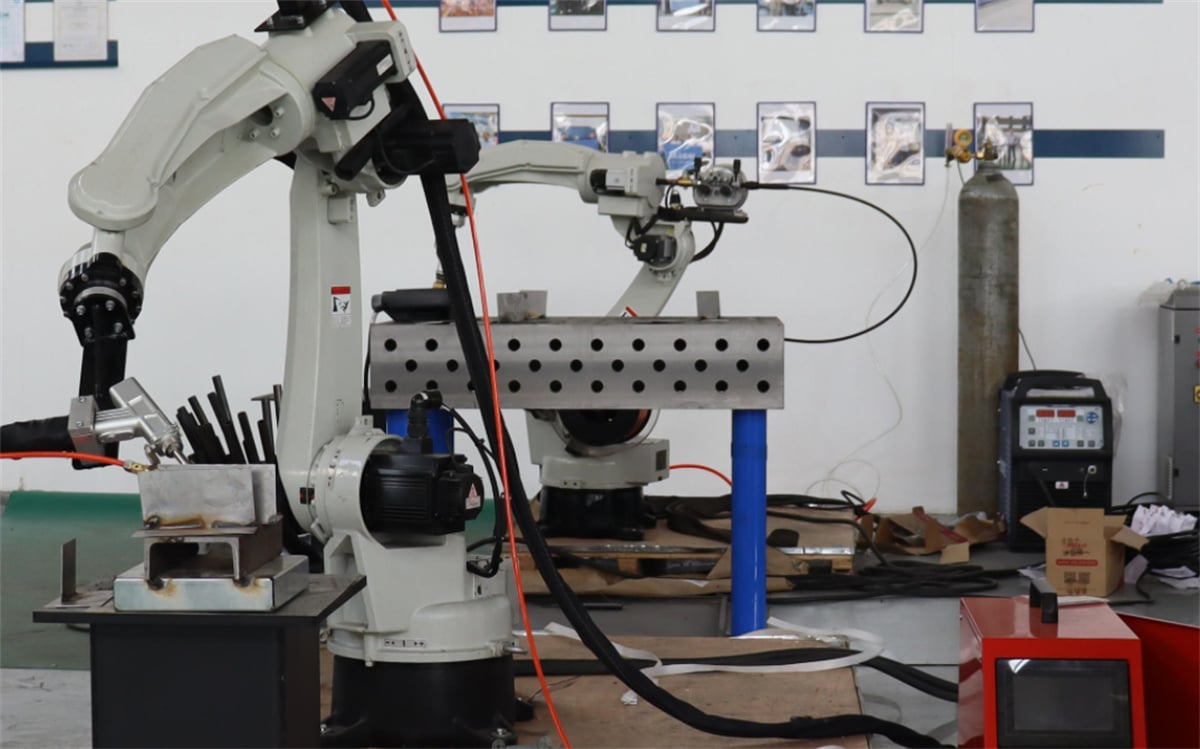
In recent years, advancements in AI, machine vision, and intelligent control technologies have endowed robotic laser welding equipment with enhanced capabilities for automatic identification and real-time adjustment, helping enterprises improve both welding precision and production stability.
So, how exactly do robotic laser welding systems automatically identify weld seams?
I. Why Does Traditional Robotic Welding Require Precise Positioning?
In standard robotic welding processes, the robot typically follows a pre-programmed path.
This approach is suitable when:
The product structure is fixed;
Workpiece dimensions are consistent;
Fixturing provides precise positioning;
Production runs are stable and uniform.
However, in actual production environments, workpieces may be subject to:
Dimensional errors from machining;
Assembly deviations;
Positional shifts prior to welding;
Thermal deformation of the material.
Any of these factors can cause the actual weld seam location to deviate from the pre-programmed path.
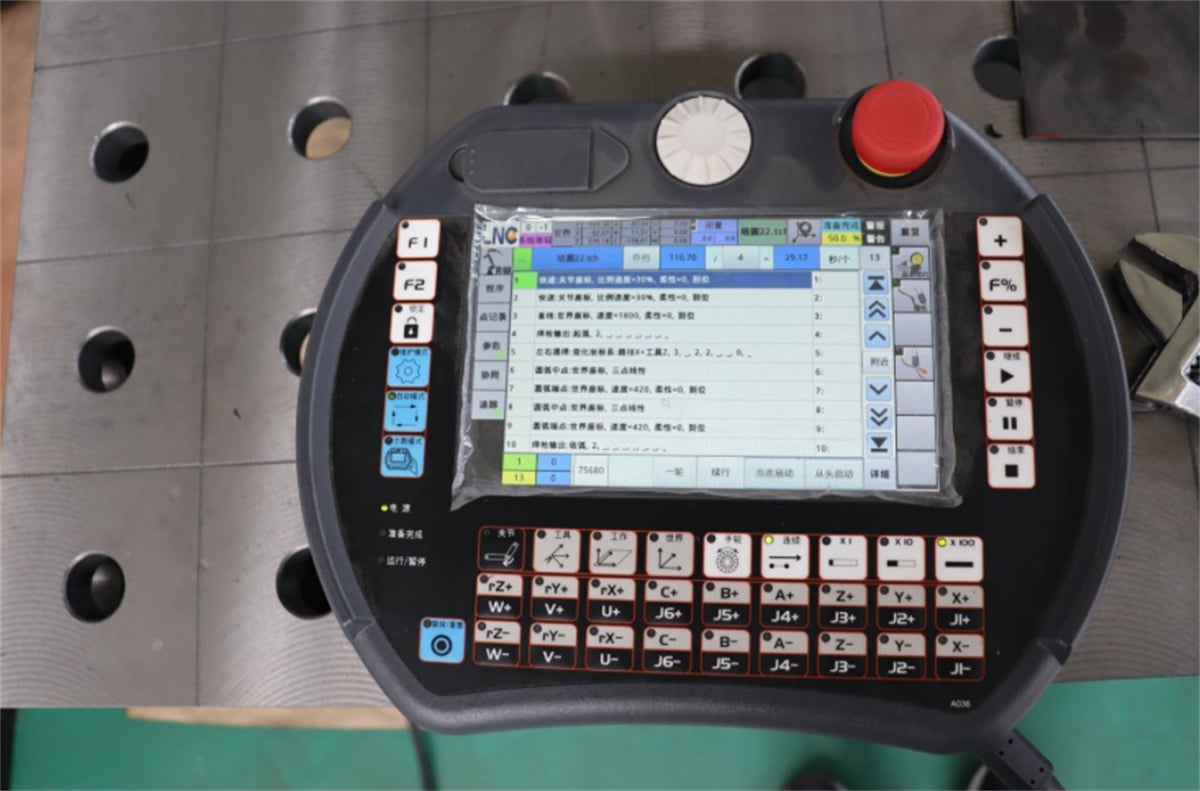
If the robot cannot make timely adjustments, it may result in:
The laser beam deviating from the weld seam;
Insufficient weld strength;
Inconsistent weld appearance;
An increase in the need for product rework.
Consequently, the automatic identification of weld seams has become a key focus in the development of intelligent welding.
II. How Is Automatic Weld Seam Identification Achieved in Robotic Laser Welding?
Robotic laser welding systems achieve automatic identification primarily through the use of vision systems, sensor technology, and intelligent algorithms.
Common methods include:
1. CCD-Based Visual Positioning and Identification
CCD vision systems utilize industrial cameras to capture images of the workpiece and analyze the welding zone.
The workflow is as follows:
① The camera captures the position of the workpiece;
② The system identifies the features of the weld seam;
③ The system automatically calculates the coordinates of the weld seam;
④ The robot adjusts its welding path accordingly;
⑤ The laser head completes the weld by following the corrected trajectory.
This method is well-suited for:
Precision components;
Sheet metal structural parts;
Products with high requirements for visual appearance.
2. Laser-Based Vision Tracking for Weld Seams
A laser tracking system detects the position of a weld seam in real time by projecting a laser line.
During the welding process, the system can detect:
The center position of the weld seam;
Any deviation in the weld seam;
Changes in the height of the workpiece.
When a change in the weld seam position is detected, the control system automatically adjusts the robot’s motion trajectory, ensuring the laser remains precisely aligned with the intended welding path.
This method is particularly well-suited for:
Long weld seams;
Curved or contoured welds;
Large structural components.
3. AI-Assisted Decision Making
The integration of AI technology provides welding equipment with enhanced data analysis capabilities.
By training on vast amounts of welding data, the system can identify:
Various weld seam shapes;
Different workpiece structures;
Anomalous welding conditions.
AI-assisted functions enable the equipment to:
Improve recognition accuracy;
Optimize welding paths;
Reduce the need for manual adjustments;
Enhance production consistency.
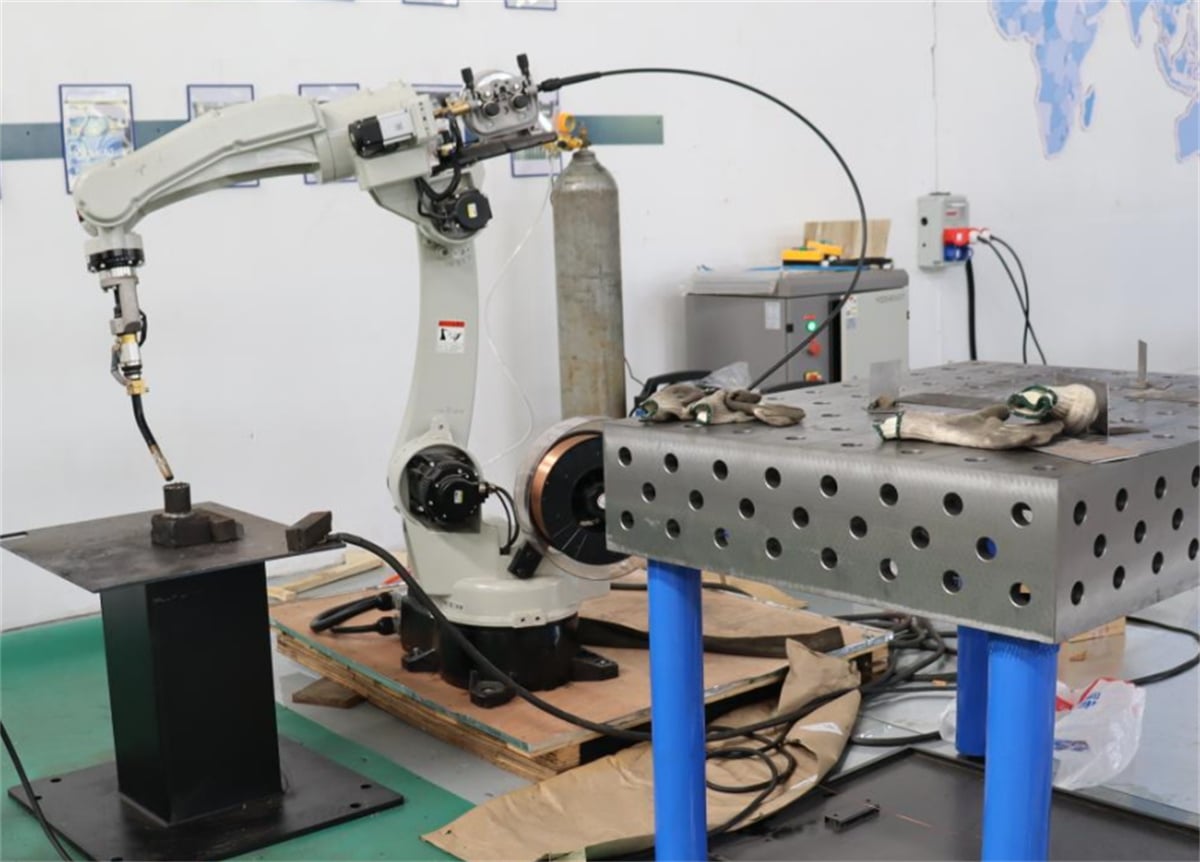
III. What Are the Advantages of Automated Weld Seam Recognition in Robotic Laser Welding?
1. Reduced Requirements for Workpiece Positioning
Traditional welding often requires high-precision fixtures for positioning; however, intelligent recognition systems can compensate for positional errors within a certain range.
This allows companies to lower costs associated with fixture adjustments and increases production flexibility.
2. Improved Welding Consistency
Manual welding is often subject to the operator's level of experience.
Through programmed control and vision-based detection, robotic laser welding ensures:
Stable welding speeds;
Consistent welding trajectories;
Uniform weld quality.
This is especially beneficial for mass production scenarios.
3. Reduced Setup and Adjustment Time
In traditional robotic welding, switching to a different product often requires re-teaching the robot’s path.
With a vision-based recognition system, the time spent on manually locating points and adjusting trajectories is significantly reduced, leading to greater efficiency during production line changeovers.
4. Lower Defect Rates
Automated weld seam recognition helps minimize:
Missed welds;
Off-center welds;
Incomplete welds;
Incorrect welding positions.
This helps companies improve their product pass rates.
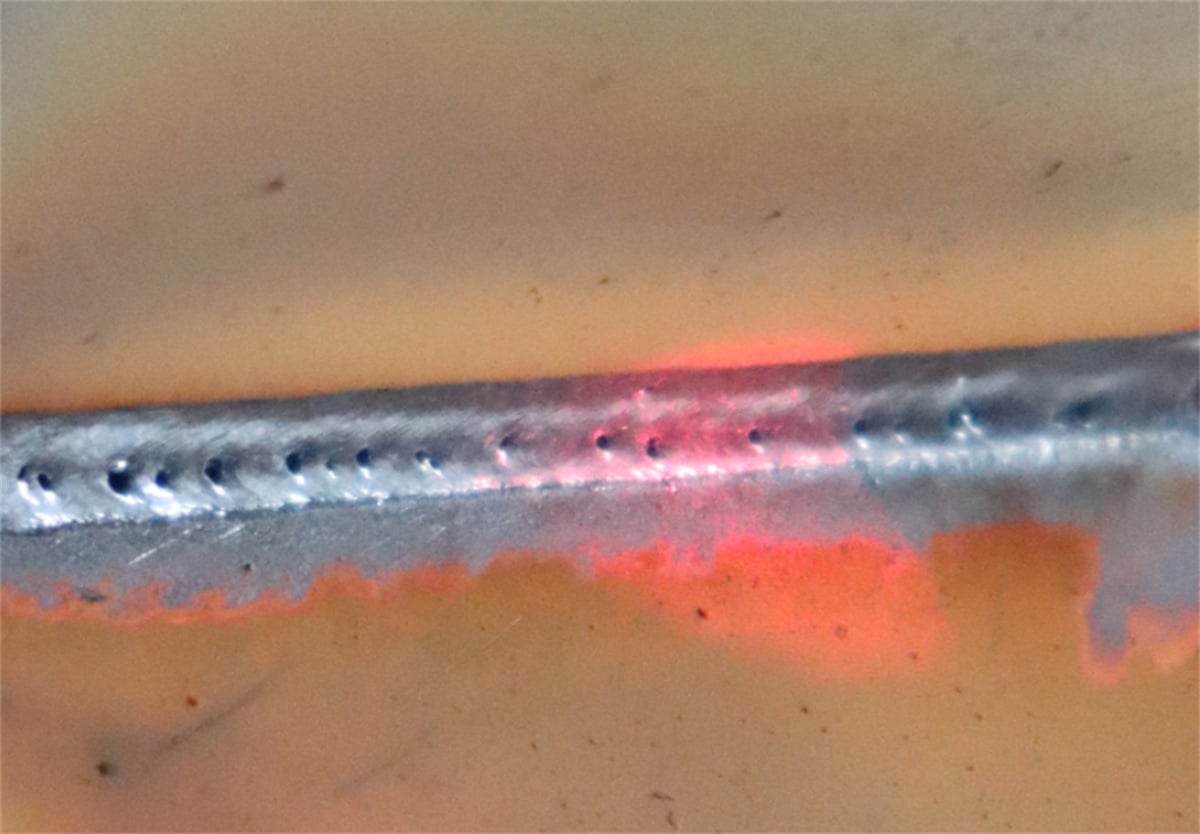
IV. Which Industries Benefit from Intelligent Robotic Laser Welding?
Robotic laser welding, combined with vision-based recognition technology, is suitable for a wide range of manufacturing applications.
New Energy Industry
Applications include:
Battery enclosures;
Energy storage cabinets;
Structural components for new energy products. For products with larger dimensions that require consistent weld seams, automatic identification can enhance production uniformity.
Automotive Manufacturing Industry
Applications:
Automotive components;
Metal structural parts;
Precision assemblies.
Robotic laser welding meets the automotive industry's stringent requirements for efficiency and quality.
Hardware and Sheet Metal Industry
Applications:
Enclosures and cabinets;
Equipment frames;
Metal boxes/cases.
Vision-assisted systems reduce manual positioning errors and improve the efficiency of batch processing.
Precision Manufacturing Industry
Applications:
Medical devices;
Electronic components;
Precision hardware.
High-precision identification capabilities ensure that products meet specific appearance and dimensional requirements.
V. Does AI-powered intelligent welding eliminate the need for human intervention?
Currently, AI technology is primarily used to assist the welding process and enhance equipment automation; it cannot entirely replace all human involvement.
In actual production, the following roles remain essential:
Process engineers for parameter configuration;
Technicians for equipment commissioning and debugging;
Operators for production management.
The role of AI and robotics is to reduce repetitive tasks, improve welding stability, and make the production process more efficient.
VI. What factors should be considered when choosing robotic laser welding systems?
When selecting robotic laser welding equipment, companies should look beyond the robot brand and laser power, and also consider:
Compatibility with specific welding processes;
Precision of the vision system;
Equipment stability;
Software control capabilities;
Technical support provided by the manufacturer.
Different product structures and production requirements necessitate tailored automation solutions.
Conclusion
The integration of AI, machine vision, and robotic control systems equips laser welding machinery with intelligent weld-seam identification and path-adjustment capabilities. Through automatic positioning, real-time tracking, and intelligent correction, robotic laser welding enhances welding precision, lowers the costs associated with manual setup, and meets the demands of modern manufacturing enterprises for high-efficiency, high-consistency production.
As a professional manufacturer of laser welding equipment, we provide robotic laser welding machines, automated welding workstations, and intelligent welding solutions. Based on a client’s product structure, welding processes, and production cycle requirements, we offer equipment selection, vision-based positioning configurations, process testing, and technical support—helping businesses achieve more stable and efficient automated welding production.

