Unexpected downtime is one of the most troublesome issues in pipe bending. A sudden machine stop disrupts production plans, and maintenance personnel may arrive half a day late. Many malfunctions don't happen suddenly; they have warning signs, but these are often missed.
The core logic of remote pipe bending machine maintenance is to shift from "repairing when it breaks down" to "addressing it before it breaks down." It doesn't rely on constant human monitoring, but rather on automatic system monitoring, automatic warnings, and remote troubleshooting.
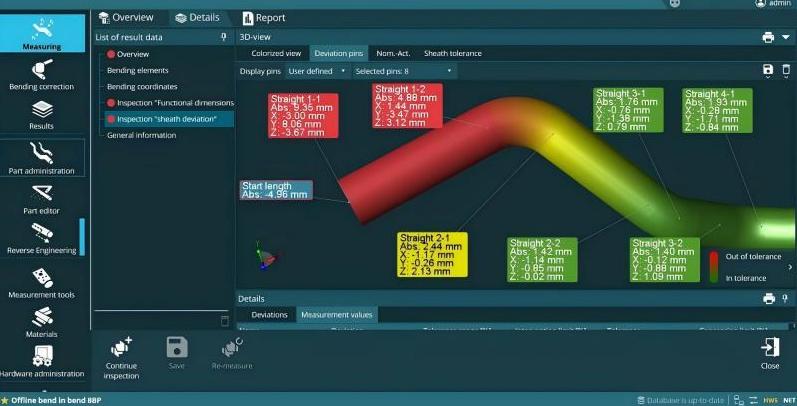
I. Real-time Monitoring: Machine Status Available at Any Time
CNC pipe bending machines are equipped with various sensors—servo motor load, hydraulic pressure, oil temperature, bending torque, and cycle count—which continuously generate data during production.
The remote maintenance system collects this data and transmits it to the maintenance team's backend via the network. Engineers don't need to be physically present at the machine to know its operating status at any time.
When parameters are within the normal range, the machine operates normally; when parameters begin to deviate from the normal range, the system automatically issues a warning. This warning system often detects anomalies earlier than on-site operators—because operators may not notice a 5% increase in motor load, but the system can.
II. Early Warning: Detecting Problems Before They Occur
Unexpected malfunctions rarely occur out of thin air. A gradual increase in motor load often signals poor guide rail lubrication or bearing wear; increased fluctuations in bending torque may indicate changes in spindle clearance or die wear.
Remote maintenance systems can recognize these trends. They don't wait for a malfunction to occur before issuing an alert; instead, they provide warnings before parameters deviate to dangerous values. Maintenance engineers can anticipate when inspections, replacements, and adjustments are needed.
This makes maintenance a planned activity, not an unexpected emergency. When operators encounter such situations, the machine can still operate normally, but they already know maintenance needs to be scheduled—thus avoiding losses from sudden downtime.
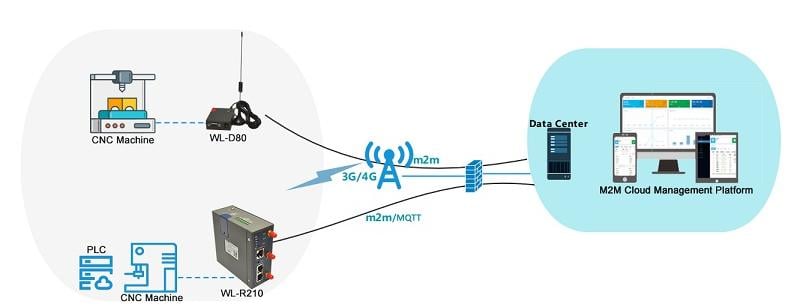
III. Remote Diagnostics: No More Passive Waiting for Troubleshooting
Even if a fault does occur, remote diagnostics can significantly reduce downtime.
Engineers can remotely connect to view alarm records, parameter change history, and operation logs. Many problems can be identified before even arriving on-site: Is it an electrical or mechanical issue? Is it a parameter setting problem or a component failure? What spare parts need to be brought to the site?
This process eliminates the waiting time for engineers to arrive on-site before starting troubleshooting. For some software parameter issues, they can even be corrected remotely without sending personnel to the site.
IV. Predictive Maintenance: No More Calendar-Based Part Replacement
Traditional maintenance is based on time: how many months of use does it take before the oil needs changing; how many years of use does it take before the bearings need replacing? This approach has obvious drawbacks—some parts are replaced when they're still usable, while others are used long overdue.
Remote maintenance systems determine maintenance times based on actual operating data. Bearings are replaced only when they've worn to a certain extent, rather than according to a fixed schedule. Oil changes are based on test indicators, not just on a set date.
This avoids the waste caused by premature replacement and the unexpected failures caused by delayed replacement.
V. Remote Software Support and Parameter Optimization
Many pipe bending machine malfunctions are not actually mechanical problems, but rather software logic or parameter setting issues. Program logic errors, accidental parameter modifications, and incompatible system software versions can all be handled remotely.
After remotely connecting, engineers can check the parameter configuration, confirm the problem, and directly modify or update it remotely without needing to go to the site. In such cases, downtime can be reduced from several hours to tens of minutes.
VI. Impact on Long-Term Reliability
By shifting from reactive to proactive equipment maintenance, the long-term stability of machine operation significantly improves. Wear parts are detected and addressed early, preventing serious malfunctions; continuous monitoring of lubrication status prevents dry running that can damage guide rails; and timely correction of parameter deviations prevents prolonged operation in abnormal conditions.
Extended equipment lifespan, reduced maintenance costs, and improved predictability of production plans—these are the long-term benefits of remote maintenance.
While remote maintenance cannot completely replace on-site repair, it significantly reduces the frequency and urgency of on-site repairs. It tells you when to go to the site, what to bring, and where the potential problems might lie before you go—information in itself is valuable in terms of time.
Have your pipe bending machines ever encountered situations where early warning signs were not detected in time, leading to sudden shutdowns? We welcome your feedback.