





प्रेस ब्रेक के शोर का कारण क्या है और प्रभावी समाधान
विषय-सूची
1. प्रेस ब्रेक के शोर के सामान्य कारण
2. क्षतिग्रस्त या ढीले यांत्रिक भाग
3. हाइड्रोलिक सिस्टम खराबी
4. टूलिंग और डाई की कमियाँ
5. प्रेस ब्रेक के शोर के लिए चरणबद्ध समाधान
6. मशीन घटकों को कसना और चिकनाई करना
7. हाइड्रोलिक प्रणाली के रखरखाव के दिशानिर्देश
8. टूलिंग और डाई के लिए सटीक समायोजन
9. भविष्य में शोर को समाप्त करने के लिए निवारक रखरखाव
10. नियमित मशीन निरीक्षण
11. व्यवस्थित चिकनाई और सफाई
12. पेशेवर ऑपरेटर प्रशिक्षण
13. अक्सर पूछे जाने वाले प्रश्न
○ मेरा प्रेस ब्रेक तेज़, उच्च-आवृत्ति की चीख क्यों निकालता है?
○ शोर को रोकने के लिए मुझे प्रेस ब्रेक को कितनी बार चिकनाना चाहिए?
○ असामान्य शोर क्या प्रेस ब्रेक की गंभीर खराबी का संकेत दे सकता है?
14. निष्कर्ष
प्रेस ब्रेक के संचालन के दौरान असामान्य या तेज़ शोर मशीन ऑपरेटरों के लिए एक प्रचलित चुनौती है, और ऐसा शोर उपकरण के प्रदर्शन, अंतिम उत्पाद की गुणवत्ता और कार्यशाला की समग्र उत्पादकता को काफी हद तक प्रभावित कर सकता है। इस गाइड में प्रेस ब्रेक के शोर के मूल कारणों, प्रत्येक समस्या को सटीक रूप से पहचानने के तरीकों और उसे दूर करने के व्यावहारिक कदमों का विवरण दिया गया है। चाहे आप एक अनुभवी प्रेस ब्रेक ऑपरेटर हों या इस उपकरण के साथ नए हों, इन ट्रबलशूटिंग और रखरखाव कौशल को सीखने से आप अपनी मशीन को शांत और कुशलतापूर्ण रूप से चलाने में सक्षम होंगे।
प्रेस ब्रेक के शोर के सामान्य कारण
ब्रेक के शोर का कारण घटकों से संबंधित विभिन्न समस्याएँ हो सकती हैं, जिनमें मुख्य रूप से यांत्रिक घिसावट, हाइड्रोलिक प्रणाली की खराबियाँ और नियमित रखरोट की कमी शामिल हैं। शोर के सटीक स्रोत को पहचानना समस्या को प्रभावी ढंग से हल करने के लिए महत्वपूर्ण पहला कदम है।
क्षतिग्रस्त या ढीले यांत्रिक भाग
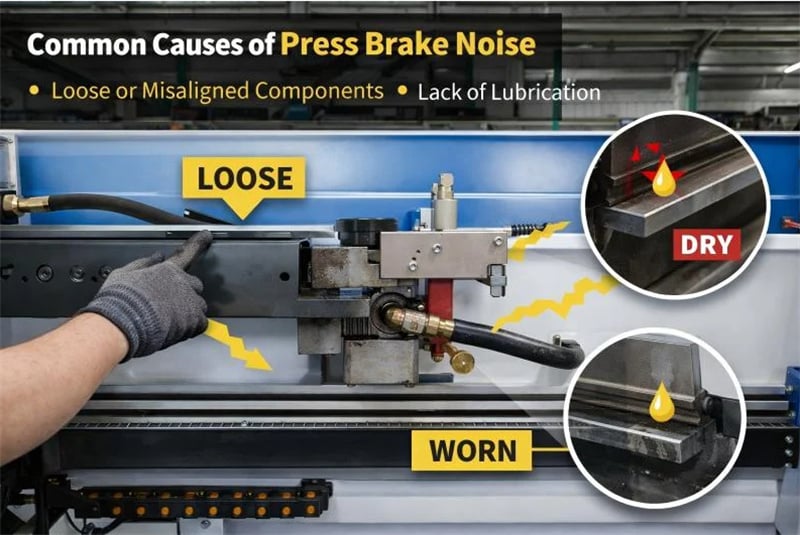
यांत्रिक घटकों की घिसावट दबाव ब्रेक के शोर का सबसे आम कारण है, जिसमें गाइड रेल, बॉल स्क्रू और रैम सबसे अधिक प्रभावित भाग हैं। लंबे समय तक उपयोग करने पर ये घटक ढीले हो सकते हैं या गलत संरेखित हो सकते हैं, जिससे अत्यधिक घर्षण और कंपन उत्पन्न होता है जो व्यवधानकारी शोर पैदा करता है। इसके अतिरिक्त, गतिशील यांत्रिक भागों का अपर्याप्त चिकनाईकरण इस समस्या को और भी बढ़ा देगा और घिसावट को तेजी से बढ़ाएगा।
हाइड्रोलिक प्रणाली में खराबी
हाइड्रोलिक प्रणाली दबाव ब्रेक के शोर का एक अन्य प्राथमिक स्रोत है। हाइड्रोलिक तेल के स्तर में कमी, हाइड्रोलिक द्रव में फँसे हुए वायु बुलबुले और हाइड्रोलिक पंप में क्षीणित सील्स जैसी समस्याएँ सभी प्रणाली के अक्षम संचालन का कारण बन सकती हैं। यह अक्षमता मशीन के संचालन के दौरान चीखने, गुर्राने या खड़खड़ाने की आवाज़ के रूप में प्रकट होती है, जो हाइड्रोलिक समस्याओं के अंतर्निहित होने का संकेत देती है।
उपकरण एवं डाई की कमियाँ
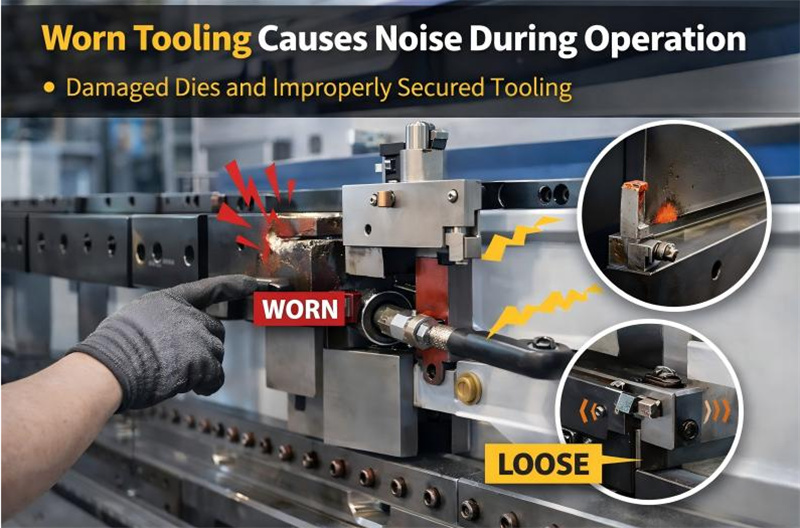
असंरेखित उपकरण, क्षीणित डाई या अनुचित रूप से लगाए गए उपकरण भी दबाव ब्रेक के शोर में बहुत योगदान देते हैं। जब उपकरण ठीक से फिट नहीं होते या क्षतिग्रस्त होते हैं, तो यह बेंडिंग प्रक्रिया के दौरान अनावश्यक कंपन और खटखट की आवाज़ पैदा करता है। यह केवल शोर उत्पन्न करता ही नहीं है, बल्कि धातु के बेंड की सटीकता को भी प्रभावित करता है और पूरी दबाव ब्रेक प्रणाली पर अनावश्यक क्षरण का कारण बनता है।
दबाव ब्रेक के शोर के चरणबद्ध समाधान
एक बार जब शोर का स्रोत पहचान लिया जाता है, तो लक्षित रखराप और समायोजन दबाव ब्रेक के शामित और कुशल संचालन को बहाल कर सकते हैं। नीचे प्रत्येक सामान्य शोर के कारण के लिए अनुकूलित समाधान दिए गए हैं।
मशीन के घटकों को कसना और स्नेहन करना
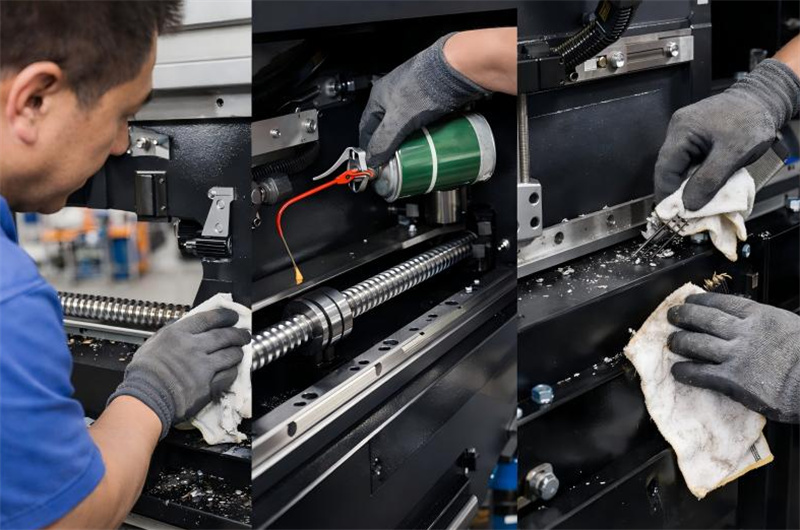
नियमित निवारक रखराप—जैसे कि ढीले यांत्रिक भागों को कसना और गतिशील घटकों को स्नेहन करना—धातु-पर-धातु घर्षण के कारण होने वाले शोर को रोकने के लिए मौलिक है। गाइड रेल, बॉल स्क्रू और रैम की घिसावट या विसंरेण के लक्षणों के लिए व्यापक जाँच करें और इन भागों पर निर्माता द्वारा अनुशंसित स्नेहक लगाएँ। यह न केवल घर्षण और शोर को कम करता है, बल्कि महत्वपूर्ण घटकों को होने वाले आगे के क्षति से भी बचाता है।
हाइड्रोलिक प्रणाली रखरखाव प्रोटोकॉल
हाइड्रोलिक प्रणाली से उत्पन्न शोर को दूर करने के लिए, सबसे पहले यह सुनिश्चित करें कि हाइड्रोलिक द्रव निर्दिष्ट स्तर पर है और निर्माता द्वारा सुझाए गए नियमित अंतराल पर द्रव को बदला जाए। हाइड्रोलिक प्रणाली को वायु निकास (ब्लीडिंग) करना फँसी हुई वायु के बुलबुलों को निकालने के लिए आवश्यक है, जिससे वायुरोध (एयरलॉक) की समस्याओं को दूर किया जा सकता है और प्रणाली की समग्र दक्षता में सुधार किया जा सकता है। इसके अतिरिक्त, सभी हाइड्रोलिक सील्स की पहन-पहन या क्षति की जाँच करें और किसी भी दोषपूर्ण सील को तुरंत बदल दें ताकि द्रव के रिसाव को रोका जा सके और हाइड्रोलिक प्रणाली की स्थिरता बनी रहे।
टूलिंग और डाई के लिए सटीक समायोजन
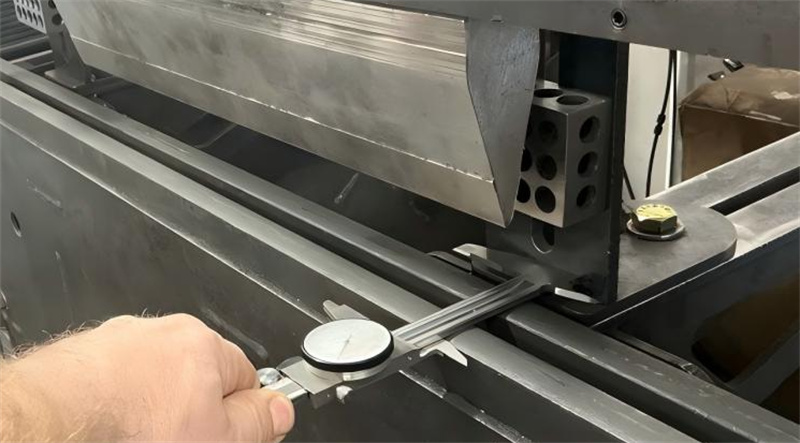
यदि शोर का स्रोत टूलिंग और डाई असेंबली में पाया जाता है, तो सभी टूल्स और डाई की विस्तृत संरेखण जाँच से प्रारंभ करें। सुनिश्चित करें कि सभी घटकों को सुदृढ़ रूप से माउंट किया गया है और उन पर कोई दृश्य क्षति नहीं है; किसी भी पहने हुए या विकृत डाई को तुरंत बदल दें ताकि मोड़ने की सटीकता पुनः प्राप्त की जा सके। टूलिंग और डाई की सतहों को धातु के छीलन और मलबे से मुक्त करने के लिए नियमित रूप से सफाई करना भी महत्वपूर्ण है—इससे संरेखण की सटीकता बनी रहती है और संचालन के दौरान कंपन-उत्पन्न शोर को कम किया जाता है।
भविष्य में शोर को दूर करने के लिए निवारक रखरखाव
सक्रिय निवारक रखरखाव एक प्रेस ब्रेक को सुचारू रूप से चलाए रखने और उसके जीवनकाल के दौरान शोर से संबंधित समस्याओं को न्यूनतम करने के लिए सबसे प्रभावी रणनीति है। निम्नलिखित प्रथाओं को लागू करने से अप्रत्याशित शोर और विफलताओं के जोखिम में कमी आएगी।
नियमित मशीन निरीक्षण
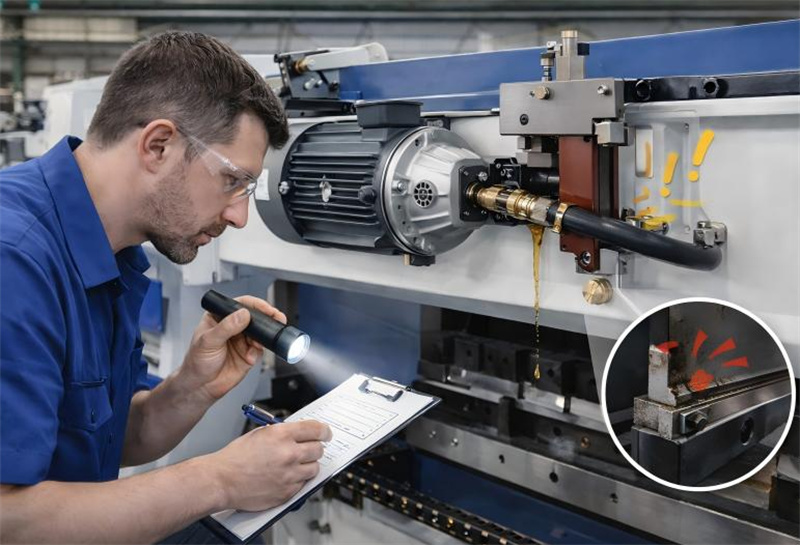
संभावित समस्याओं को जल्दी पहचानने के लिए, एक प्रेस ब्रेक के व्यापक निरीक्षण के लिए एक निश्चित अनुसूची स्थापित करें, ताकि वे बड़ी समस्याओं में बदलने से पहले ही पहचाने जा सकें। निरीक्षण के दौरान, हाइड्रोलिक प्रणाली, यांत्रिक घटकों और टूलिंग असेंबली की पहन, क्षति या विसंरेण के लिए ध्यानपूर्वक जाँच करें। हाइड्रोलिक तेल के रिसाव, ढीले फास्टनर्स या स्थानांतरित टूलिंग जैसे संकेतों पर सतर्क रहें—ये सभी आगामी शोर या खराबी के प्रारंभिक सूचक हैं।
व्यवस्थित चिकनाई और सफाई
प्रेस ब्रेक के इष्टतम प्रदर्शन को बनाए रखने के लिए सुसंगत स्नेहन और गहन सफाई अनिवार्य है। मशीन के आंतरिक और बाहरी घटकों से धातु के कण, धूल और अन्य अशुद्धियों को नियमित रूप से हटाएं; सभी गतिशील भागों को सही प्रकार के स्नेहक से निर्दिष्ट अंतराल पर स्नेहित करें। यह नियमित कार्य घटकों के अत्यधिक क्षरण और शोर का कारण बनने वाले घर्षण को रोकता है, जिससे मशीन के सेवा जीवन में वृद्धि होती है।
व्यावसायिक ऑपरेटर प्रशिक्षण
प्रेस ब्रेक के अनुचित संचालन से उत्पन्न शोर एक सामान्य और टाले जा सकने वाला कारण है, जिससे व्यावसायिक ऑपरेटर प्रशिक्षण आवश्यक हो जाता है। सुनिश्चित करें कि सभी प्रेस ब्रेक ऑपरेटरों को मशीन की सही सेटिंग समायोजन और घटकों के स्नेहन, फास्टनर की जाँच और प्रारंभिक शोर ट्राउबलशूटिंग जैसे मूल आंतरिक रखरखाव कार्यों के लिए पूर्ण प्रशिक्षण दिया गया हो। अच्छी तरह से प्रशिक्षित ऑपरेटर छोटी समस्याओं की पहचान कर सकते हैं और उनका शुरू में ही समाधान कर सकते हैं, जिससे वे महंगी मरम्मत या लंबे समय तक अवरोध का कारण नहीं बन पाती हैं।
अक्सर पूछे जाने वाले प्रश्न
मेरा प्रेस ब्रेक तीव्र उच्च-आवृत्ति की चिंघाड़ क्यों निकालता है?
तीव्र चिंघाड़ की आवाज़ लगभग हमेशा हाइड्रोलिक प्रणाली की समस्या का संकेत देती है, जिसमें सबसे आम कारण हाइड्रोलिक द्रव का स्तर कम होना या द्रव परिपथ में फँसी हुई वायु के बुलबुले होते हैं। इस समस्या को दूर करने के लिए, सबसे पहले हाइड्रोलिक द्रव के स्तर की जाँच करें और उसे सही स्तर तक भरें, फिर फँसी हुई वायु को निकालने के लिए प्रणाली को वायुमुक्त करें।
शोर को रोकने के लिए मुझे प्रेस ब्रेक को कितनी बार चिकनाई देनी चाहिए?
चिकनाई की आवृत्ति को प्रेस ब्रेक निर्माता के आधिकारिक दिशानिर्देशों के अनुसार सख्ती से अनुपालन करना चाहिए, जो आमतौर पर 500 घंटे के संचालन के बाद चिकनाई की सिफारिश करते हैं। इस अनुसूची का पालन करने से सभी गतिशील घटकों का चिकना और सुचारू रूप से काम करना सुनिश्चित होता है तथा घर्षण और क्षरण के कारण होने वाले शोर को कम किया जाता है।
असामान्य शोर का अर्थ क्या प्रेस ब्रेक की गंभीर खराबी हो सकती है?
हाँ, लगातार या बढ़ते हुए तेज़ असामान्य शोर को कभी भी अनदेखा नहीं किया जाना चाहिए—यह अक्सर गंभीर यांत्रिक या हाइड्रोलिक खराबियों का संकेत होता है। मशीन की नियमित जांच और शोर से संबंधित किसी भी समस्या के त्वरित समाधान की आवश्यकता होती है ताकि प्रमुख घटकों को होने वाले अतिरिक्त क्षति और महंगे अनियोजित वर्कशॉप डाउनटाइम से बचा जा सके।
निष्कर्ष
प्रेस ब्रेक का शोर एक व्यापक समस्या है जो विभिन्न कारणों से उत्पन्न होती है, जिनमें क्षयित यांत्रिक घटक, हाइड्रोलिक प्रणाली की खराबी और टूलिंग एवं डाई की कमियाँ शामिल हैं। शोर के स्रोत की सटीक पहचान करके और लक्षित रखरखाव एवं मरम्मत को लागू करके आप शोर की समस्या को हल कर सकते हैं और प्रेस ब्रेक को शांत, कुशल संचालन में पुनः स्थापित कर सकते हैं। निवारक रखरखाव उपाय—जैसे नियमित चिकनाई, फास्टनरों को कसना, हाइड्रोलिक प्रणाली की जांच और टूलिंग की संरेखण—शोर को कम करने और आपके प्रेस ब्रेक के दीर्घकालिक, विश्वसनीय प्रदर्शन सुनिश्चित करने का आधार हैं।
यदि आपका प्रेस ब्रेक इन रखरखाव प्रयासों के बावजूद लगातार शोर उत्पन्न करता रहता है, या यदि आप जटिल रखरखाव कार्यों पर व्यावसायिक मार्गदर्शन की आवश्यकता महसूस करते हैं, तो कृपया विशेषज्ञ सलाह और तकनीकी सहायता के लिए हमारी टीम से संपर्क करने में संकोच न करें।

