





Resolución de problemas na máquina de curvado de tubos
Durante o funcionamento a longo prazo, as máquinas de dobrado de tubos experimentan inevitabelmente diversas avarías. Localizar rapidamente e con precisión estas avarías e eliminálas de forma inmediata é fundamental para garantir a eficiencia produtiva e a calidade do dobrado de tubos. A continuación descríbense as causas e as estratexias de resolución de avarías comúns, como referencia para os técnicos no lugar.
1. Ángulo de dobrado inexacto ou rebote excesivo
Síntoma: O ángulo de dobrado real é menor que o valor establecido, ou o ángulo varía considerablemente dentro do mesmo lote de produtos.
Causas posibles:
Compensación insuficiente do rebote, especialmente en materiais como o acero de alta resistencia e o acero inoxidable.
O valor establecido para o ángulo de dobrado é demasiado pequeno.
Presión insuficiente do troquel de suxeición, provocando deslizamento do tubo.
Deriva do sinal do codificador ou do sensor de ángulo.
Suxerencias para a resolución de problemas:
Aumente o valor do ángulo de dobrado, probando cada peza ata que o ángulo se estabilice.
Comprobe se a presión do cilindro de suxeición alcanza o valor establecido e verifique se hai contaminación con aceite na superficie de traballo do troquel.
Calibre o punto cero do sensor de ángulo e comprobe se o acoplamento está floxo.
2. Arrugas ou colapso no punto de dobrado
Síntoma: Aparecen arrugas onduladas no lado interior da curvatura, ou a sección transversal está visiblemente aplanada ou colapsada cara ao interior.
Causas posibles:
O troquel antirrugas non está instalado ou hai unha fenda excesiva entre este e o troquel de dobrado.
Non se está utilizando o mandril, ou a súa extensión é insuficiente, ou a cabeza esférica está mal aliñada.
Radio de curvatura demasiado pequeno, superando o intervalo permitido para o tubo.
Espesor da parede do tubo demasiado fino ou material demasiado brando.
Suxerencias para a resolución de problemas:
Axuste a separación entre a matriz antirrugado e a matriz de curvatura para garantir que se axuste firmemente contra a matriz de curvatura sen trabar.
Verifique as especificacións do mandril para asegurar a súa compatibilidade; axuste a posición de extensión do mandril segundo o diámetro do tubo e o valor R (normalmente 0,5–1,5 mm antes da liña tanxente á matriz de curvatura).
Confirme que o valor R/D está por debaixo do límite inferior do proceso; aumente o radio de curvatura ou engada soporte con mandril se fose necesario.
3. Arranhóns ou indentacións na superficie do tubo
Síntomas: arranhóns, desgarros ou indentacións visibles na superficie do tubo despois da curvatura.
Causas posibles:
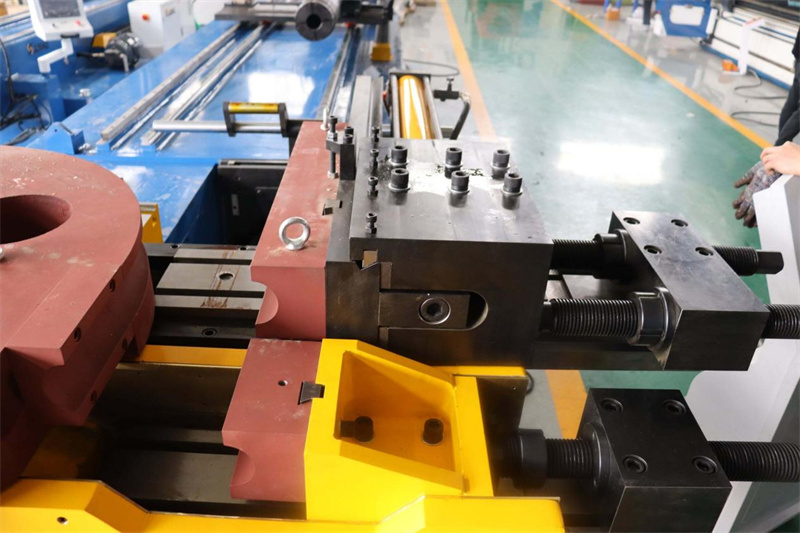
Desgaste, ferruxe ou acumulación de residuos na superficie de traballo da matriz.
Lubricación insuficiente; non se empregou aceite especializado para curvatura.
Queimaduras ou virutas metálicas na superficie do tubo.
Presión de suxeición excesiva, causando indentacións localizadas.
Recomendacións para a resolución de problemas:
Inspeccionar e limpar todas as superficies do molde en contacto co tubo; afilar ou substituír se fose necesario.
Aplicar unha cantidade suficiente de aceite de dobrado, prestando especial atención ás ranuras do molde de dobrado e á zona do mandril.
Reducir adequadamente a presión de suxeición, asegurando que o tubo non deslize.
Limpar a superficie da peza en bruto do tubo antes do dobrado, eliminando as rebarbas das extremidades.
4. Lonxitude de alimentación ou ángulo de rotación inexactos.
Síntomas: Desalinhamento espacial en produtos con múltiples dobrados, o que impide a súa montaxe; dimensións de lonxitude fóra da tolerancia admitida.
Causas posibles:
Avaría do motor servo de alimentación ou do codificador
Raíl guía linear desgastado, folga excesiva na fresa de bolas
Acoplamento de eixe rotativo floxo ou xogo mecánico acumulado
Configuración incorrecta do punto de referencia do programa
Suxerencias para a resolución de problemas:
Realice unha operación de homing e observe se os eixes de avance e rotación se reinician con precisión.
Verifique se hai danos na cuberta protectora do rail guía, limpe a superficie do rail guía e reaplique graxa.
Mida a repetibilidade do avance cun indicador de reloxo; se está fóra de tolerancia, verifique a precarga do parafuso ou a tensión do acoplamento.
Volva comprobar que a lonxitude de avance e o ángulo de rotación entre cada dobre no programa coincidan coas medidas dos planos.
5. Anomalías no sistema hidráulico (ruído, aumento de temperatura, acción lenta)
Síntomas: Ruído anormal da bomba hidráulica, subida rápida da temperatura do aceite, acción lenta ou nula dos cilindros.
Causas posibles:
Nivel baixo de aceite hidráulico ou aceite contaminado/emulsionado
Filtro de aspiración obstruído, causando cavitación na bomba
A presión de axuste da válvula de descarga é demasiado baixa ou o núcleo da válvula está trabado
Avaría do ventilador do radiador ou acumulación severa de po nas aletas do disipador de calor
Recomendacións para a resolución de problemas:
Comprobe o nivel de aceite; engada o mesmo tipo de aceite hidráulico se é insuficiente.
Observe a cor e o estado do aceite; substitúao por aceite novo e limpe o depósito de aceite se está gravemente contaminado ou emulsionado.
Substitúa os filtros de retorno e de aspiración.
Limpe a superficie do radiador e comprobe se o ventilador funciona normalmente.
Mida a presión do sistema cun manómetro para confirmar se se alcanzou o valor de axuste.
6. Alarma de sobrecalentamento ou sobrecarga do motor
Síntoma: A temperatura da carcasa do motor é demasiado alta; o sistema de control informa dun fallo de sobrecarga.
Causas posibles:
Funcionamento do equipo con sobrecarga; diámetro ou grosor da tubaxe que supera o rango nominal.
Aumento da resistencia mecánica (desgaste do redutor, rodamientos e compoñentes da transmisión).
Baixa tensión de alimentación ou desequilibrio trifásico.
Avaría do ventilador do motor ou mala ventilación.
Suxerencias para a resolución de problemas:
Confirme que as especificacións de curvatura do tubo están dentro da capacidade do equipo.
Faga funcionar o equipo sen carga para determinar se aínda hai unha carga significativa; comprobe os compoñentes mecánicos da transmisión.
Mida a tensión de alimentación e a corrente trifásica; comprobe se falta algúnha fase.
Limpe a cuberta de refrigeración do motor e as paletas do ventilador para garantir unha ventilación adecuada.
7. Alarma do sistema de control ou pantalla táctil non responde.
Síntomas: pantalla HMI en negro, bloqueo do sistema ou informe do sistema dun fallo do servo/PLC.
Causas posibles:
Avaría do módulo de potencia ou fusible fundido
Botón de parada de emerxencia non liberado ou circuito de seguridade desconectado
Alarma do accionamento servo (sobrevoltaxe, sobrecorrente, fallo do codificador)
Parámetros de programa incorrectos ou modificación accidental
Suxerencias para a resolución de problemas:
Comprobe o estado das luces indicadoras en cada módulo do armario de control para confirmar que a entrada de enerxía é normal
Confirme que o botón de parada de emerxencia está desactivado e que o interruptor da porta de seguridade está pechado
Anote o código de alarma do accionamento e verifíqueo co manual de instrucións
Se se modificaron os parámetros, restaure o programa de copia de seguridade ou póñase en contacto co soporte técnico do fabricante.
A clave para solucionar problemas nas máquinas de dobrado de tubos radica en «observar primeiro, analizar segundo e actuar terceiro». Comece polos síntomas e, en conxunto co estado de funcionamento do equipo, revise sistemáticamente cada compoñente —eléctrico, hidráulico, mecánico e relacionado co molde— evitando a desmontaxe e montaxe á cega. Establecer un sistema de inspección periódica e mantemento regular pode reducir eficazmente as avarías inesperadas e manter o equipo sempre en óptimas condicións de funcionamento.

