The pipe bending machine is installed, the wiring is connected, and the level has been adjusted; everything seems ready. However, the real test of installation quality isn't the moment the machine is powered on, but when it begins bending the first pipe.
Many installation errors are invisible when the machine is unloaded. Problems only surface when bending pipes under load. Trial production serves this purpose—it's the final comprehensive verification opportunity before the machine officially goes into production.
I. Confirm Several Things Before Trial Production
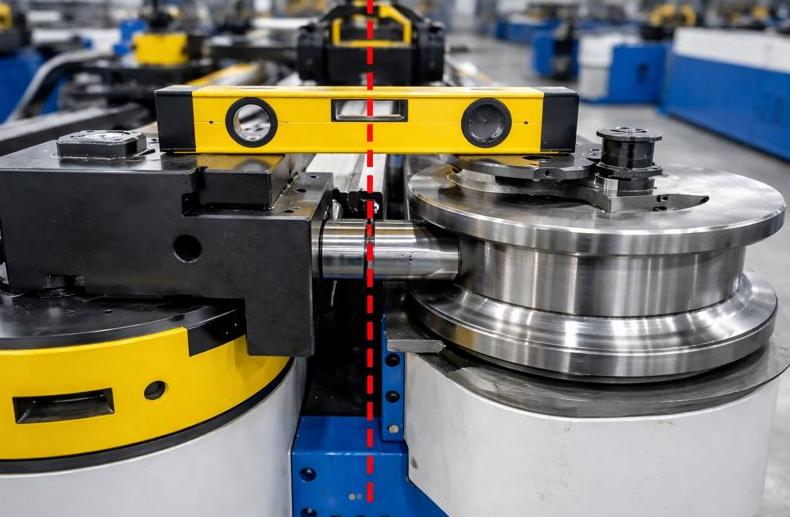
Machine leveling and anchoring are the first things to confirm. Even if leveling was done during installation, the level may have changed after handling, positioning, and tightening the anchor bolts. Before trial production, use a precision level to recheck and ensure the machine's level is within the allowable range. The anchor bolts must also be retightened to the specified torque; none should be loose.
Electrical and hydraulic connections must also be confirmed. Whether the power supply voltage and phase are consistent with the machine requirements, whether the grounding is reliable, whether there are leaks or loose joints in the hydraulic lines—these problems are not easy to detect when the machine is unloaded, but they will be exposed when the machine is under load.
II. Trial Production Step 1: No-Load Run
Without installing any pipes, let the machine run all the actions – bending arm rotation, clamping and releasing, mandrel forward and backward movement, and feeding movement. Listen for any abnormal sounds, check for smooth movement, and observe whether the sequence of actions of each axis is correct.
If there is vibration or abnormal noise during no-load operation, it is basically certain that there is a problem with the mechanical installation or electrical connection. Resolve this issue first; do not wait until after installing the pipes.
III. Trial Production Step 2: Simple Pipe Bending Test
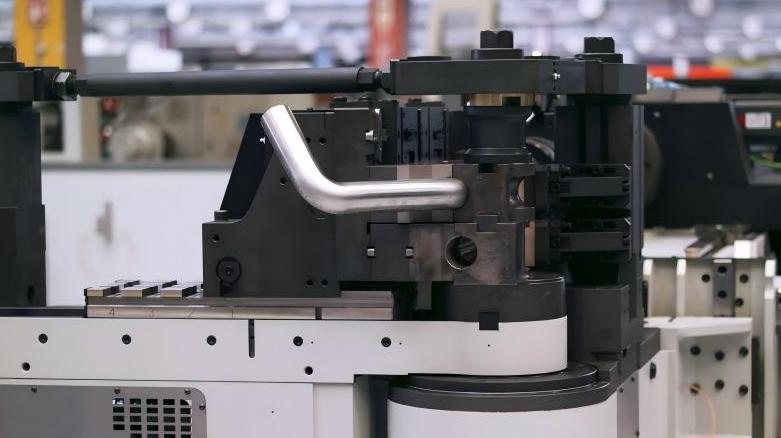
Start the first actual bending test using the simplest bending program – single bend, standard radius, short pipe length. Installation problems will manifest even in simple bending: angle deviation, surface scratches, unexpected springback, and flattened pipes are all warning signs.
If even simple bending cannot be performed correctly, it indicates a problem with the foundation; resolve this before proceeding.
IV. Repeatability Testing
Bending one pipe to a passing grade does not guarantee that all will be. Using the same procedure and the same pipe, bend five to ten pipes consecutively, measuring the angle and dimensions of each, and observing the differences.
If repeatability is poor, with angles fluctuating significantly, possible causes include: the machine not being fully leveled, mold installation errors, or stress on the machine frame during installation. These issues may not be apparent in a single bend but will be revealed through repeated testing.
V. Common Problems During Trial Production
If the angle deviation of the bent pipes is large, first check if the mold installation is correct, then check if the machine's level has changed. If the level is correct, consider whether the program parameters need fine-tuning.
If the pipe slips during bending, it is often due to insufficient clamping force or incorrect mandrel positioning. Insufficient clamping force may be due to a low hydraulic system pressure setting, while incorrect mandrel positioning may be due to improper adjustment during installation.
Vibration or abnormal noise can generally be attributed to loose anchors, loose foundation bolts, or gaps at mechanical connections.
VI. Parameter Fine-tuning
During the trial production phase, do not pursue the highest speed. Start with low speed and observe the machine's performance under load. Once you confirm that the movement of each axis is stable and the bending quality is acceptable, gradually increase the speed.
Adjust parameters such as bending pressure, clamping force, and bending speed gradually to a reasonable range during the trial production phase. After each adjustment, bend one pipe to check the effect. Only proceed after confirming stable quality.
VII. What constitutes a successful trial production?
Continuously bend multiple pipes, with fluctuations in angle and dimensions within the allowable range. The pipe surface should be free of scratches, wrinkles, flattening, or other defects. The machine should operate without abnormal vibration or noise. The sequence of axis movements should be correct, without jamming or delay.
Trial production may take several hours to a day. Don't rush to end it; expose and resolve any problems to ensure smooth formal production.
VIII. An Easily Overlooked Issue
Trial production must use the same batch of materials used in formal production. Different materials may have different bending characteristics, and the results obtained may not be reliable. Only data obtained from testing with actual materials is valid.
When you install new equipment in your factory, how long does trial production usually take? Have you ever encountered problems that only surfaced after formal production due to insufficient trial production? We welcome your feedback.