





Three-Roll CNC Plate Bending Machine
This machine features a symmetrical three-roll structure. The top roll is positioned centrally between the two bottom rolls; a hydraulic cylinder drives a piston to move the top roll vertically (up and down). Power is transmitted through the final gear stage of the main reducer to mesh the gears of the two bottom rolls, causing them to rotate and drive the plate-bending process.
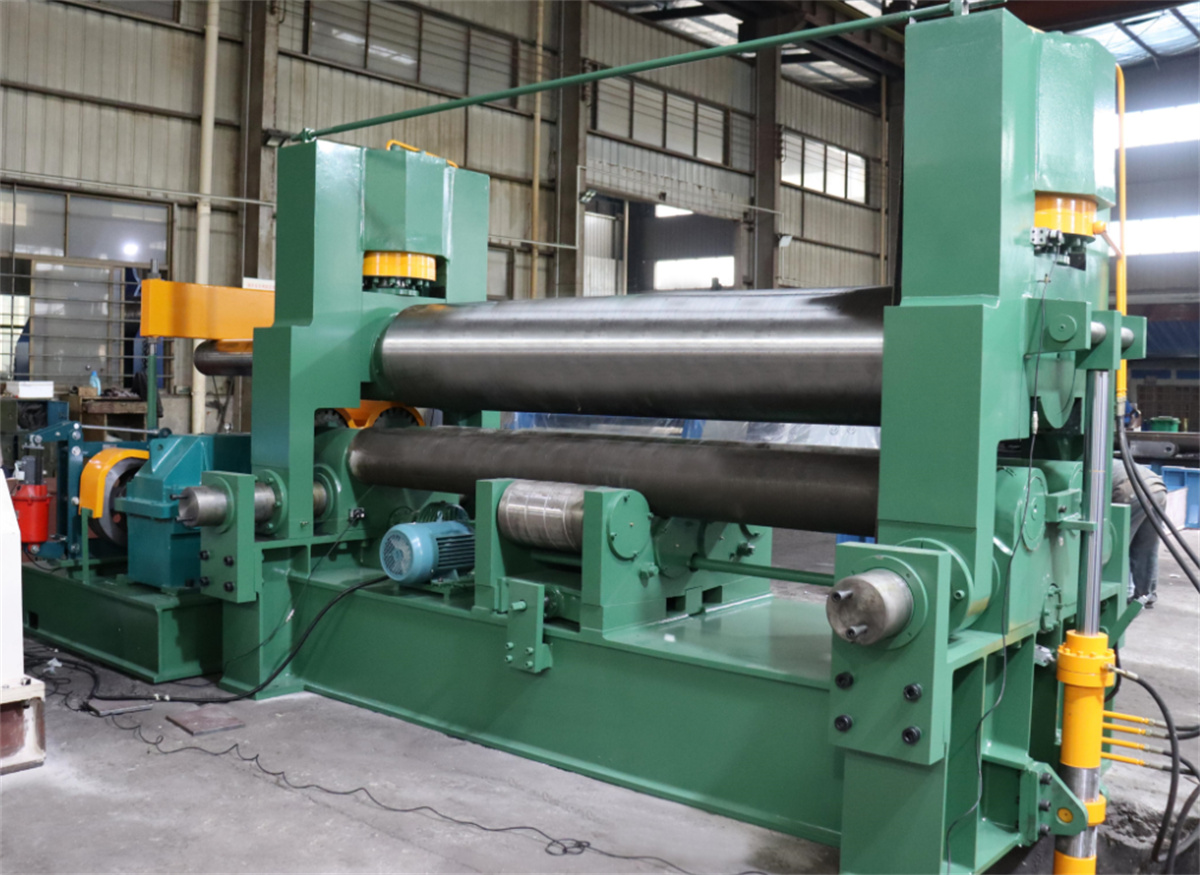
The working principle is as follows: a flat, ductile metal plate is placed between the machine's three working rolls (two bottom rolls and one top roll). Through the downward pressure of the top roll and the rotation of the bottom rolls, the plate undergoes repeated continuous bending. This induces permanent plastic deformation, ultimately forming the desired cylinder, cone, or partial cylindrical/conical shape.
A drawback of this hydraulic three-roll bending machine is that the ends of the plate require pre-bending using separate equipment.
Classified as a large-scale machine, it is suitable for bending plates with a thickness exceeding 50 mm. A row of fixed support rolls is installed beneath the two bottom rolls; this reduces the span between the bottom rolls, thereby improving the precision of the bent workpiece and enhancing the machine's overall performance.
Maintenance procedures for the three-roll bending machine are as follows:
1. Lubricate all oil cups, lubrication points, and areas requiring manual lubrication in accordance with the machine's lubrication diagram.
2. Operate the machine within specified parameters: plate thickness must not exceed 20 mm, length must not exceed 2500 mm, and the material's yield strength must be less than 250 MPa.
3. After connecting the power, operate the bottom rolls in both forward and reverse directions and move the top roll up and down to check for any abnormal jamming or binding.
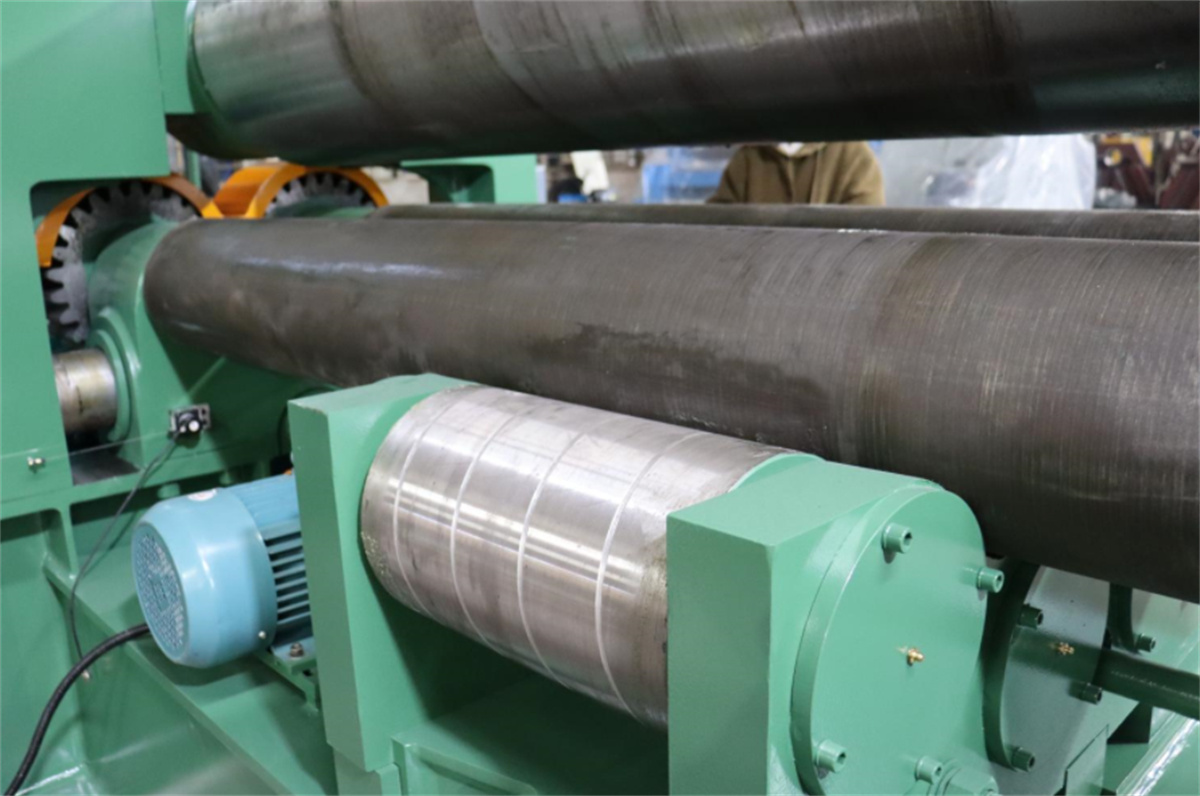
4. Strictly adhere to established processing procedures and operating methods; pay close attention to safe operation when the top roll reaches its highest or lowest position. 5. Operations such as raising or lowering the top roll, tilting and resetting the drop-end bearing, and tilting the top roll may only be performed after the main drive has stopped running.
6. If irregular noise, impact, or other abnormalities are detected while the machine is running, stop the machine immediately for inspection.
7. Personnel must coordinate with one another and follow the instructions of the person in charge of the plate rolling operation; the machine must not be started without a command from the person in charge.
8. During plate rolling operations, exercise extreme caution to prevent hands from being trapped by the steel plate and drawn into the machine along with it.
9. When using an overhead crane to lift steel plates or rolled cylinders, take care to avoid collisions with the machine.
Upon completion of the plate rolling work, ensure the workpiece is finished, materials are cleared away, and the work area is cleaned up; also, perform necessary equipment maintenance and promptly turn off the power supply.

