





Common Types of Sheet Metal Processing Equipment
Sheet metal processing mainly involves the following core equipment, which
play key roles in different processes, jointly completing the manufacturing
process from sheet metal to finished product.
• Laser Cutting Machine
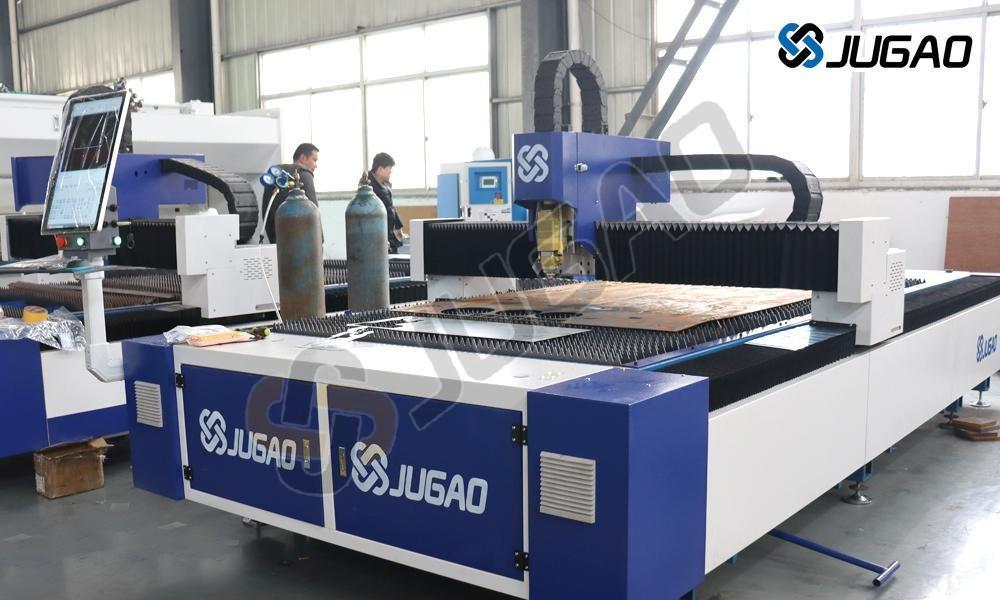
Laser cutting machines use a high-power laser beam to irradiate the surface of metal materials, causing localized melting. The molten metal is then blown away by airflow, achieving precise cutting. This equipment is particularly suitable for high-speed processing of contour cutting and oblong holes. However, for sheets with a large number of holes, the traditional process of multiple piercings increases processing time. In recent years, with the increase in laser equipment power, piercing and cutting speeds have been significantly improved, resulting in a marked improvement in processing efficiency. However, laser cutting itself cannot perform threaded hole processing, deburring, or other forming processes.
• Turret Punch Press
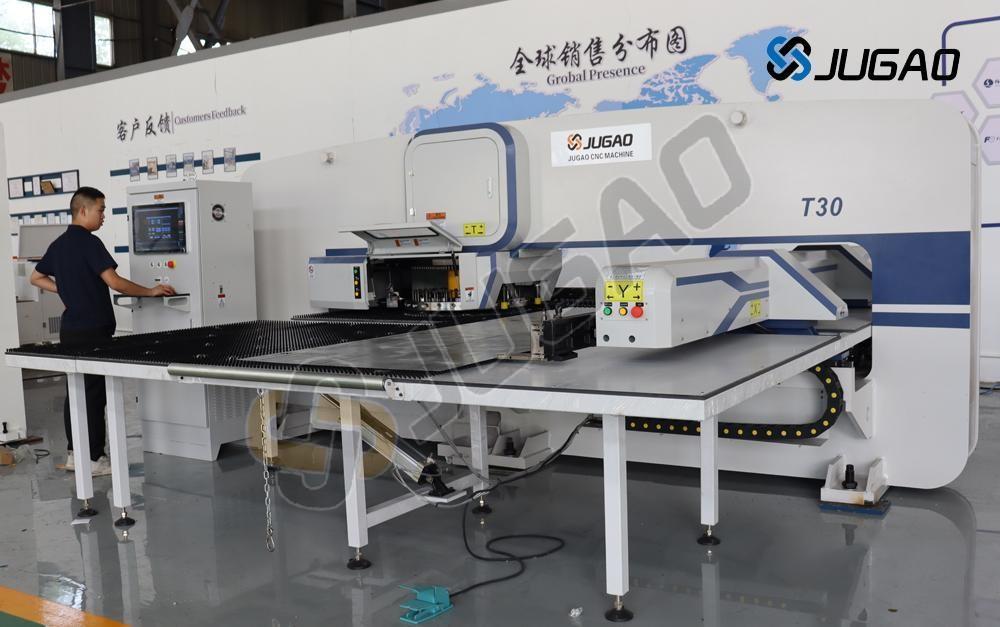
Turret punch presses use different dies on a rotating turret head to perform high-speed punching and punching of metal sheets. Due to the single-pass punching method, it is particularly suitable for the rapid processing of multi-hole parts and can complete various forming processes, such as tapping, deburring, countersinking, and louver forming. However, it requires multiple stamping operations when processing outlines and oblong holes, resulting in a relatively long processing time.
• Laser Stamping Composite Machine
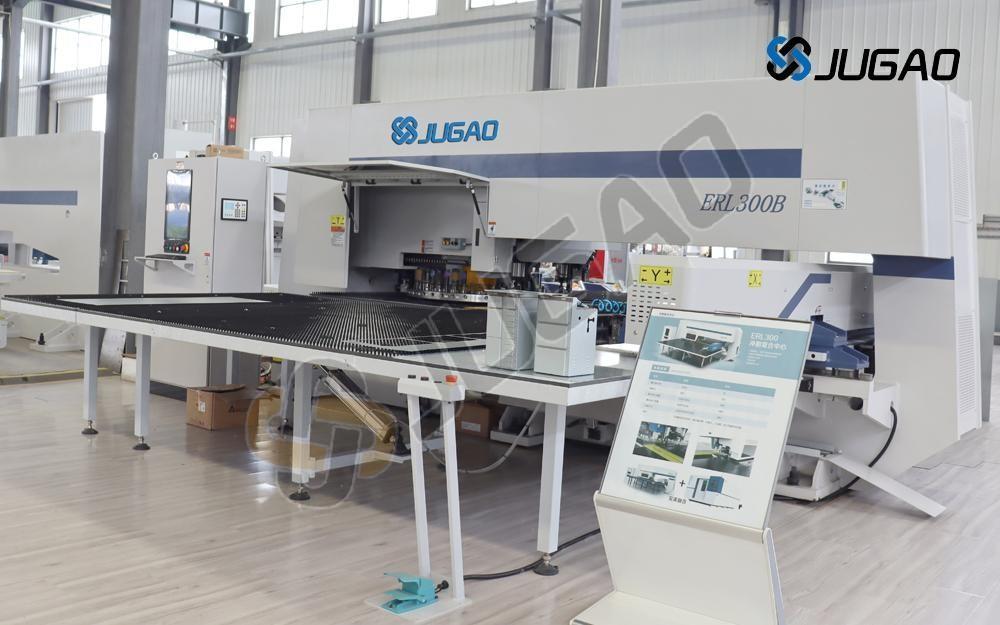
This equipment integrates laser cutting and stamping functions, allowing punching and forming to be completed in the same station. For example, laser processing can be used for time-consuming outlines and large holes, while the stamping section handles various hole and forming processes. The composite machine reduces workpiece repositioning issues caused by equipment changes, improving processing accuracy and production continuity.
• Deburring Machine
In the past, sheet metal workshops relied heavily on angle grinders or files for manual deburring. In recent years, automatic deburring machines have become increasingly common. This equipment uses a conveyor belt to fix the workpiece and a rotating brush equipped with sandpaper to evenly remove edge burrs, improving efficiency and ensuring more consistent processing quality.
• Bending Machine
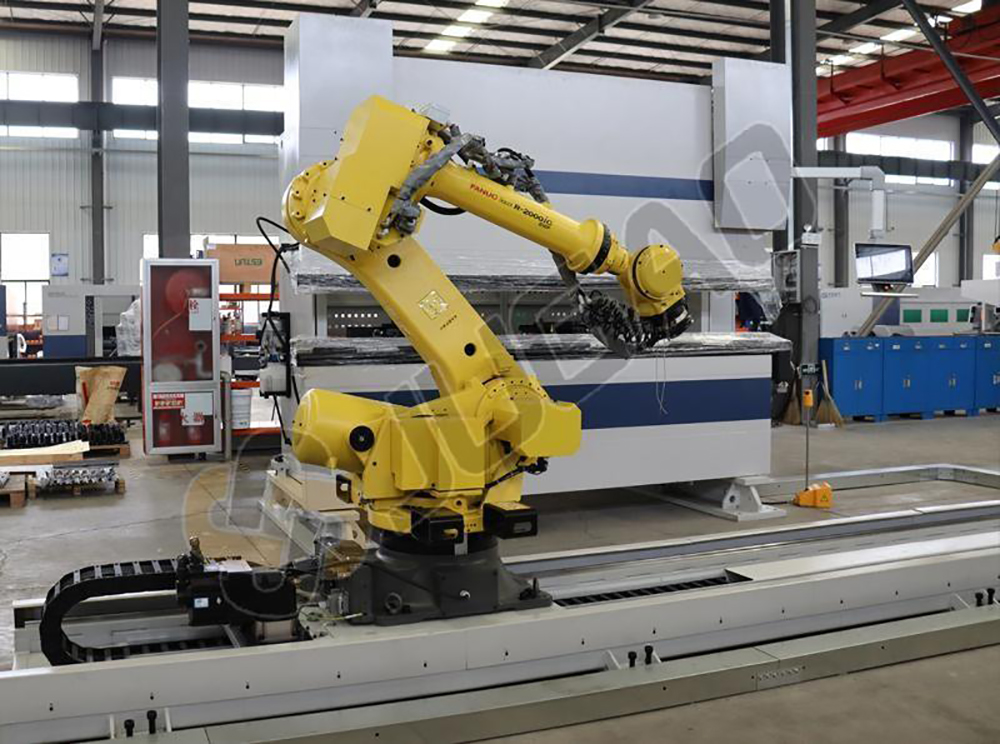
The bending machine applies pressure to the sheet metal to shape it through the cooperation of the upper die (punch) and the lower die (V-groove). Based on the pressure transmission method, bending machines can be divided into mechanical, hydraulic, and servo motor + ball screw types. Currently, the mainstream type is the one that can precisely control the pressure through a CNC system. In recent years, CNC bending machines with automatic back gauges (positioning devices) have been widely used, capable of precisely adjusting positioning according to the program, playing a crucial role in factories with high-precision bending requirements. The material, thickness, and length of the materials that can be processed are limited by the maximum pressure (tonnage) and the length that can be handled.
• Laser Welding Machines Laser welding is characterized by a small heat-affected zone, a large weld depth-to-width ratio, and low deformation, effectively controlling thermal strain. Early YAG laser welding machines were widely used due to their low deformation and aesthetically pleasing welds. Fiber laser welding machines, which appeared around 2015, significantly improved weld strength while maintaining the advantage of low deformation, quickly becoming a new favorite in the industry. The biggest advantage of laser welding is that it greatly reduces deformation even for thin plates, allowing tasks that previously required skilled technicians (such as TIG welders) to be performed by less experienced operators, making it particularly suitable for precision welding of ultra-thin plates. With the future trend of lightweight equipment and thinner sheet metal, laser welding will become more widespread.
In summary, sheet metal processing, as a flexible processing technology adaptable to small-batch, multi-variety production, still relies to some extent on the operator's experience and process intuition, making it a highly technical field. To master sheet metal processing, in addition to understanding the characteristics of the equipment, it is necessary to observe and learn how experienced technicians operate the equipment and why they operate it that way, thereby accumulating practical knowledge. If you need more information about bending machines or bending processes, please contact our JUGAO CNC machine tool team for professional support.

