





Choosing the right welding robot can double both welding quality and production capacity!
In today's increasingly competitive manufacturing industry, welding quality and production efficiency are key to a company's success. Among the many ways to improve these aspects, selecting a high-performance welding robot is undoubtedly the most direct and efficient method. **Choosing the right welding robot not only ensures consistent welding quality but also doubles production capacity!** This article will provide a detailed analysis of how to choose the right welding robot and the practical value it brings.
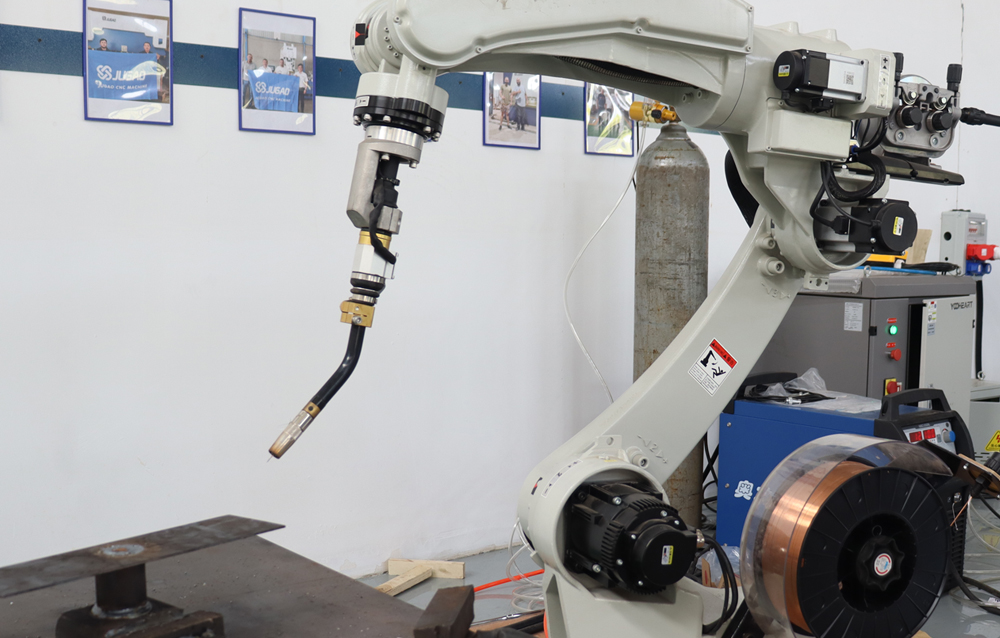
The Quality Revolution Brought About by Welding Robots
Traditional manual welding is easily affected by factors such as skill level, emotional fluctuations, and fatigue, resulting in inconsistent weld quality and a high rework rate. Welding robots, on the other hand, are known for their precise repetition and stable output, effectively avoiding human error and ensuring that every weld meets high standards.
The advantages of welding robots include:
High-precision trajectory control, ensuring consistent welding position
Constant welding parameter output, avoiding fluctuations during the welding process
Automatic compensation for minor errors, improving overall yield
By using high-performance welding robots, companies can significantly reduce scrap and rework rates caused by welding defects, ultimately significantly improving overall product quality.
The secret to doubling production capacity: stable, continuous, and high-speed operation
Manual welding is limited by working hours and physical strength, easily leading to decreased efficiency. Welding robots, on the other hand, can operate continuously 24 hours a day, and their operating speed far exceeds that of humans.
The key to increasing production capacity with welding robots lies in:
No rest required, enabling efficient operation around the clock
Standardized operating procedures, reducing process changeover time
One robot can handle multiple workstations, significantly saving human resources
In practical applications, many companies have achieved production efficiency increases of over 50% by introducing welding robots, and in some batch production projects, doubling production capacity is no longer a dream.
Three Key Considerations for Choosing the Right Welding Robot
Not all welding robots are suitable for every company. To maximize their effectiveness, proper selection is crucial.
Key selection criteria include:
Matching welding process requirements
Different materials, plate thicknesses, and welding methods (MIG, TIG, laser welding, etc.) place different performance requirements on the robot.
Focusing on the robot's repeatability
Accuracy is crucial for welding quality; typically, repeatability is required to be within ±0.05mm.
Choosing a reliable brand and service system
The stability of a welding robot is closely related to its maintenance. Choosing a reputable brand with comprehensive after-sales support can reduce potential problems during use.
The overall value of welding robots far exceeds expectations
Choosing the right welding robot is not just about improving welding quality and production capacity. More importantly, it brings a series of positive effects, such as reduced labor costs, standardized workshop management, and shorter product delivery cycles. For manufacturing companies hoping to stand out in a competitive market, welding robots are no longer an option but a core competitive advantage that must be invested in.

