





Key Drivers of Punching Machine Power Consumption & How to Reduce Them
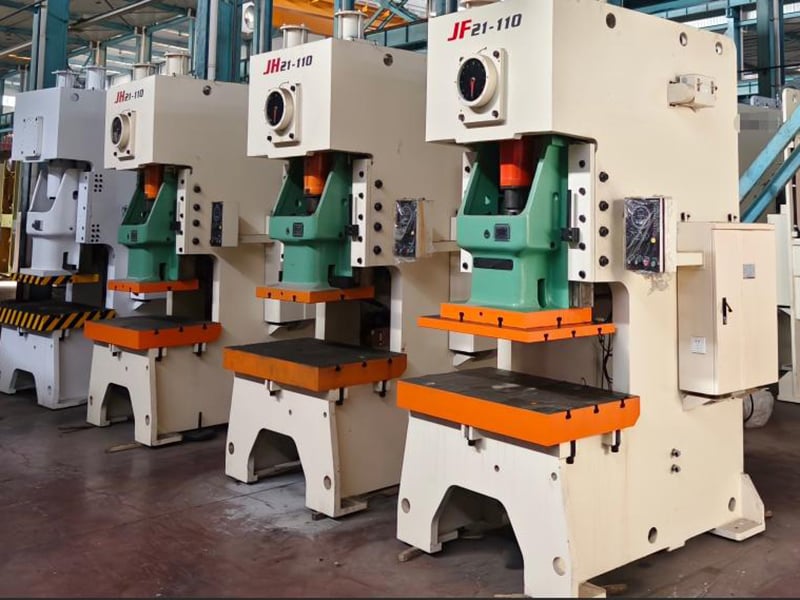
Evaluating presses on a busy fabrication floor quickly reveals that electrical draw is a silent overhead expense—often overlooked during daily production until monthly utility statements arrive. Understanding why two presses with comparable tonnage ratings exhibit dramatically different kilowatt-hour profiles is essential for protecting profit margins. In this technical guide, we examine the mechanical and operational factors behind punching machine energy demand, explain how to track power metrics effectively, and outline proven field methods to lower electricity consumption without compromising cycle speed or part precision.
1. Core Machine Architecture Governing Electricity Draw
Drive Motor Capacity, Efficiency Ratings, and Powertrain Topology
The primary drive motor accounts for the largest share of a press's electrical load. Modern direct-drive servo motors typically consume 10% to 25% less electricity than traditional hydraulic power units. Prioritizing motors certified to IE3 or IE4 efficiency standards—paired with regenerative drives that capture braking energy and feed it back into the DC bus—substantially reduces net power draw.
Flywheel Inertia and Clutch-Brake Energy Losses
Legacy mechanical punch presses depend on heavy rotating flywheels to accumulate kinetic energy, yet significant power is lost as friction and heat every time the clutch cycles. Contemporary pneumatic or hydraulic clutch-brake assemblies governed by smart logic minimize idle flywheel spin, curbing parasitic electricity waste between hits.
Hydraulic Pump Pressure and Flow Regulation
Conventional hydraulic punching presses keep fixed-displacement pumps running at peak system pressure continuously, even when the ram is stationary. Integrating variable-frequency drives (VFDs) or closed-loop servo-hydraulics synchronizes pump output with instantaneous forming demand, sharply lowering motor amperage during partial-load or standby intervals.
CNC Controller Intelligence and Motion Algorithms
Advanced CNC controls that calculate shortest-path tool routing, eliminate redundant air hits, and cluster adjacent perforations reduce both table travel time and total watt-hours per finished blank. Regularly updating controller firmware is an effortless optimization, as newer software releases frequently introduce refined acceleration profiles and power-management routines.
2. Workpiece and Process Parameters Shaping Power Load
Sheet Gauge and Tensile Strength
Shearing thicker plates or high-yield alloys such as stainless steel demands higher punching force, which translates directly into elevated motor current. Calculating required shearing tonnage per sheet prior to job quoting ensures accurate energy cost estimation before production begins.
Tooling Sharpness and Die Clearance Geometry
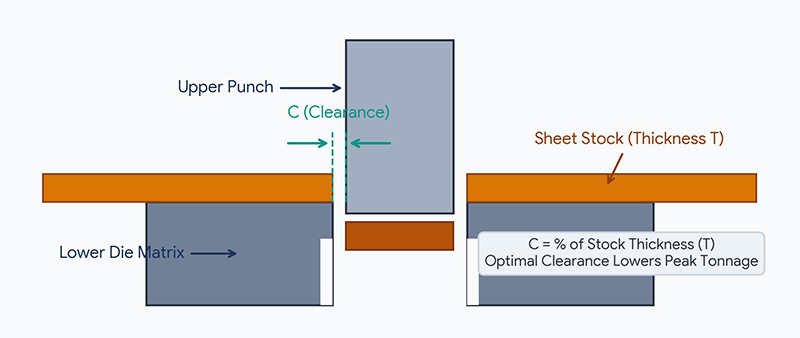
Worn punch edges or improperly matched die clearances multiply the force needed to fracture the metal, pushing the drive motor into higher current draw. Maintaining a disciplined regrinding schedule and selecting optimal clearance ratios can lower peak electrical amperage by up to 15% while extending tool life.
Ram Stroke Travel and Bottom-Dead-Center Dwell
Over-stroking the ram wastes electrical energy on unnecessary vertical travel. Programming the upper reversal point just high enough to clear the sheet surface—and trimming excess dwell time at bottom dead center—simultaneously boosts hit rates and conserves power.
3. Shop-Floor Operating Habits to Trim Kilowatt-Hours
Shifting Heavy-Tonnage Runs to Off-Peak Utility Windows
Commercial electricity tariffs frequently drop substantially during overnight hours and weekends. Scheduling thick-plate punching or extended batch runs during off-peak billing tiers can trim monthly facility electricity expenses by roughly 15% to 20%.
Streamlining Nesting and Tool-Path Sequences
Sequencing hits by geometric proximity prevents servo axes from repeatedly accelerating and decelerating across the worktable. Enabling energy-conscious nesting modes inside your CAM software and tuning acceleration ramps to match press dynamics keeps axis power spikes to a minimum.
Activating Standby and Automated Sleep Functions
Modern CNC punching centers incorporate eco-standby modes that de-energize hydraulic pumps and servo drives during idle pauses. Even brief 30-second loading delays accumulate into substantial wasted energy across thousands of shifts, making operator discipline around standby activation vital.
4. Preventive Maintenance and Hardware Retrofits for Long-Term Savings
Deploying Condition-Based Predictive Maintenance
Continuous monitoring of hydraulic fluid temperature, motor phase current, and frame vibration exposes mechanical drag or valve leakage long before catastrophic faults drive up power consumption. Logging these baseline metrics weekly lets maintenance teams intervene proactively.
Installing Variable-Frequency Drives (VFDs) on Legacy Presses
For older punch presses driven by constant-speed induction motors, retrofitting a VFD offers one of the fastest capital returns—commonly achieving payback in under 24 months on machines experiencing fluctuating duty cycles.
Upgrading to Direct-Drive Servo-Electric Punching Systems
All-electric servo punching presses completely remove hydraulic oil circuits, eliminating both continuous pump losses and chiller cooling loads. Replacing an aging hydraulic press with a modern servo-electric system routinely delivers 30% to 40% energy reductions while cutting annual maintenance costs in half.
5. Frequently Asked Questions (FAQs)
Q1: How can a fabrication shop accurately measure punching machine power consumption?
Install a dedicated inline sub-meter or clamp-on power logger on the press's main electrical feeder to record kWh per shift and per part batch. Comparing energy logs across different alloys and thicknesses quickly highlights inefficient setups.
Q2: How much does compressed air contribute to a punch press's total energy footprint?
Pneumatic circuits used for slug evacuation, tool lubrication misting, and part blow-off typically account for 5% to 10% of total machine energy use. Repairing manifold leaks and regulating air pressure to the lowest effective PSI prevents continuous compressor waste.
Q3: Do energy-efficient punching machines justify their higher initial purchase price?
For medium-to-high-volume fabricators, the answer is a clear yes. When industrial electricity rates exceed $0.10 per kWh, lower utility bills and reduced hydraulic maintenance typically recover the upfront price difference within 18 to 36 months.
6. Conclusion & Partnering with JUGAO
Lowering the electrical footprint of sheet metal punching requires a balanced combination of high-efficiency drive hardware, intelligent CAM programming, and disciplined tooling maintenance. By modernizing motors and drives, refining hit sequences, and keeping cutting edges sharp, your facility can substantially reduce kilowatt-hour expenses without sacrificing throughput or edge quality. Ready to benchmark your current press line or explore next-generation servo-electric solutions? Contact the JUGAO engineering team today—we will help you identify immediate energy-saving wins and high-ROI upgrades tailored to your production goals.

