Many people don't take temperature control of pipe bending machines seriously. They install the machine, adjust the program, and start mass production. But as they work, they find that: the first batch of pipes has the correct angle, but the second batch starts to deviate; pipes bent in the morning are noticeably different from those bent in the afternoon; and the same program yields significantly different results in summer and winter.
The problem lies in temperature. The machine changes, the pipes change, but you don't.
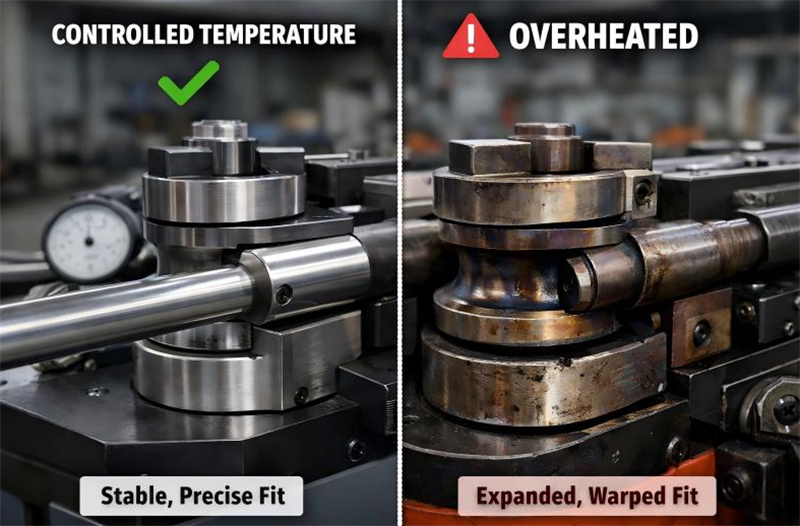
I. Thermal Expansion: Components are Growing Subtly
Pipe bending machines are made of metal, and metal expands when heated. The frame, bending arm, mandrel, and die—all these components slowly heat up during machine operation. Each component may expand by only a fraction of a millimeter, but for the bending angle, a change of a fraction of a millimeter can translate to half a degree or even more in angle.
When the machine is first turned on, it's cold; after running continuously for several hours, all components are hot. With the same bending angle setting, the actual angle of the pipes bent in a cold machine is different from that in a hot machine. It's not that the machine is broken; it's thermal expansion and contraction at work.
II. Hydraulic Oil Temperature: A Barometer of Pressure
Hydraulic oil is the power transmission medium of a hydraulic pipe bending machine, and its viscosity changes significantly with temperature.
When the oil temperature is too low, the oil thickens, resulting in poor flowability and a slower system response. The bending arm's movement may be sluggish or uneven, leading to insufficient bend angles or surface wrinkling in the bent pipe.
When the oil temperature is too high, the oil thins, increasing internal leakage and making it difficult to maintain pressure. Insufficient clamping force will cause the pipe to slip, and insufficient bending force will result in a smaller bend angle. Furthermore, prolonged high-temperature operation will accelerate the aging of seals and oil oxidation and deterioration, all of which further affect accuracy.
Maintaining the oil temperature within the recommended range is crucial for stable system pressure and response. Oil change intervals, cooler status, and the proper functioning of the cooling fan all affect oil temperature.
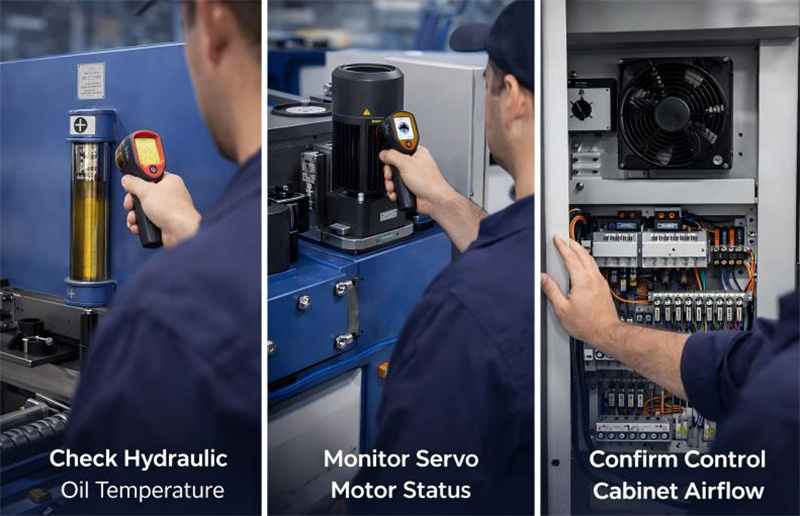
III. Servo Motor and Electrical System: High Temperatures Easily Trigger Protection
The servo motors and drivers of CNC pipe bending machines also have temperature requirements. High temperatures may cause the servo system to reduce speed or trigger an alarm and shut down. If ventilation and heat dissipation are poor inside the electrical cabinet, the temperature will continue to rise, shortening the lifespan of electronic components in the controller and drives, and increasing the failure rate.
Some problems that appear to be inaccurate positioning or abnormal operation are ultimately found to be caused by excessively high temperatures in the electrical cabinet.
IV. Ambient Temperature: Fluctuations in Workshop Temperatures Can Also Affect Bending Accuracy
Low workshop temperatures in winter and high temperatures in summer create seasonal temperature variations that impact bending accuracy.
During cold starts in winter, the hydraulic oil may be too thick, and the clearances between machine components are smaller due to the low temperature. If mass production begins immediately after startup, the quality of the first few pipes may differ from later ones.
The solution to ambient temperature variations is simple: run the machine unloaded for a period after each startup to allow the machine's temperature to stabilize before starting production. This preheating process avoids quality differences between cold and hot machine conditions.
V. Die Temperature: Directly Affects the Contact Surface Condition
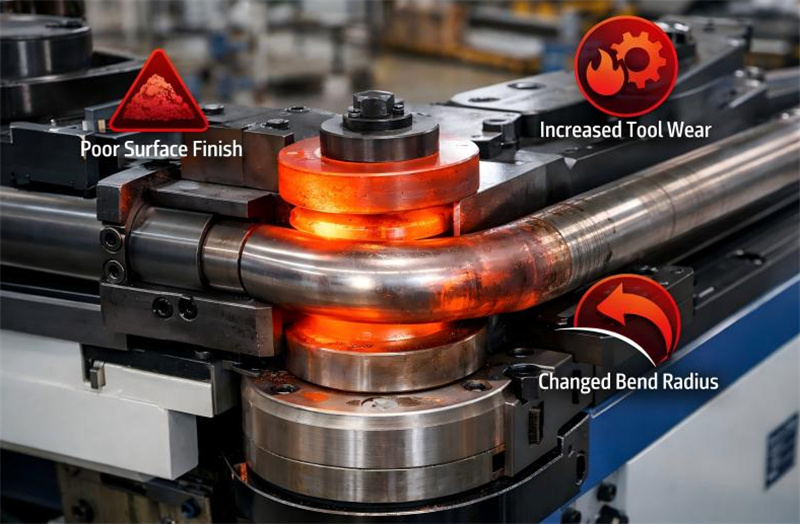
During bending, friction between the die and the pipe generates heat. If the die temperature rises too high, the lubrication effect of the bending oil decreases, potentially causing scratches or minor material adhesion on the pipe surface.
When the die temperature is too high, the oil film on the contact surface cannot be maintained, leading to direct metal-to-metal contact and a decline in surface quality. Properly controlling the bending speed and maintaining a sufficient supply of bending oil can reduce frictional heat. If the batch size is large and the machine runs continuously for a long time, briefly stopping the machine to cool it down will prevent the mold temperature from accumulating to an excessively high level.
VI. How to Schedule Daily Temperature Checks
There are several temperature points to monitor during the operation of a pipe bending machine: the temperature of the hydraulic oil tank, the internal temperature of the electrical cabinet, the surface temperature of the servo motor, and the temperature of the contact area between the mold and the pipe during bending.
An oil temperature gauge is a very direct reference tool. Combined with the load data for each axis displayed on the touchscreen, a basic temperature monitoring routine can be established. If a certain temperature value remains consistently high, the cooling system, lubrication system, and ventilation should be checked for proper functioning, rather than waiting until the temperature reaches an alarm level before taking action. Most pipe bending machines display real-time values on their oil temperature gauges or touchscreens; the key is to develop the habit of checking and interpreting these values.
Have you ever encountered situations where temperature changes caused fluctuations in the quality of bent pipes during production? We welcome your feedback.