





What are the key points to consider regarding electrical connections for pipe-bending machines?
When a pipe-bending machine triggers alarms, operates unstably, or fails to start altogether after installation, many people’s first instinct is to suspect a mechanical or system-level issue. However, in my experience troubleshooting such problems on-site, a significant number of cases ultimately trace back to improper electrical connections. While wiring may seem straightforward, it actually involves numerous details; a single loose terminal or a misrouted wire can lead to recurring alarms and frequent machine downtime.
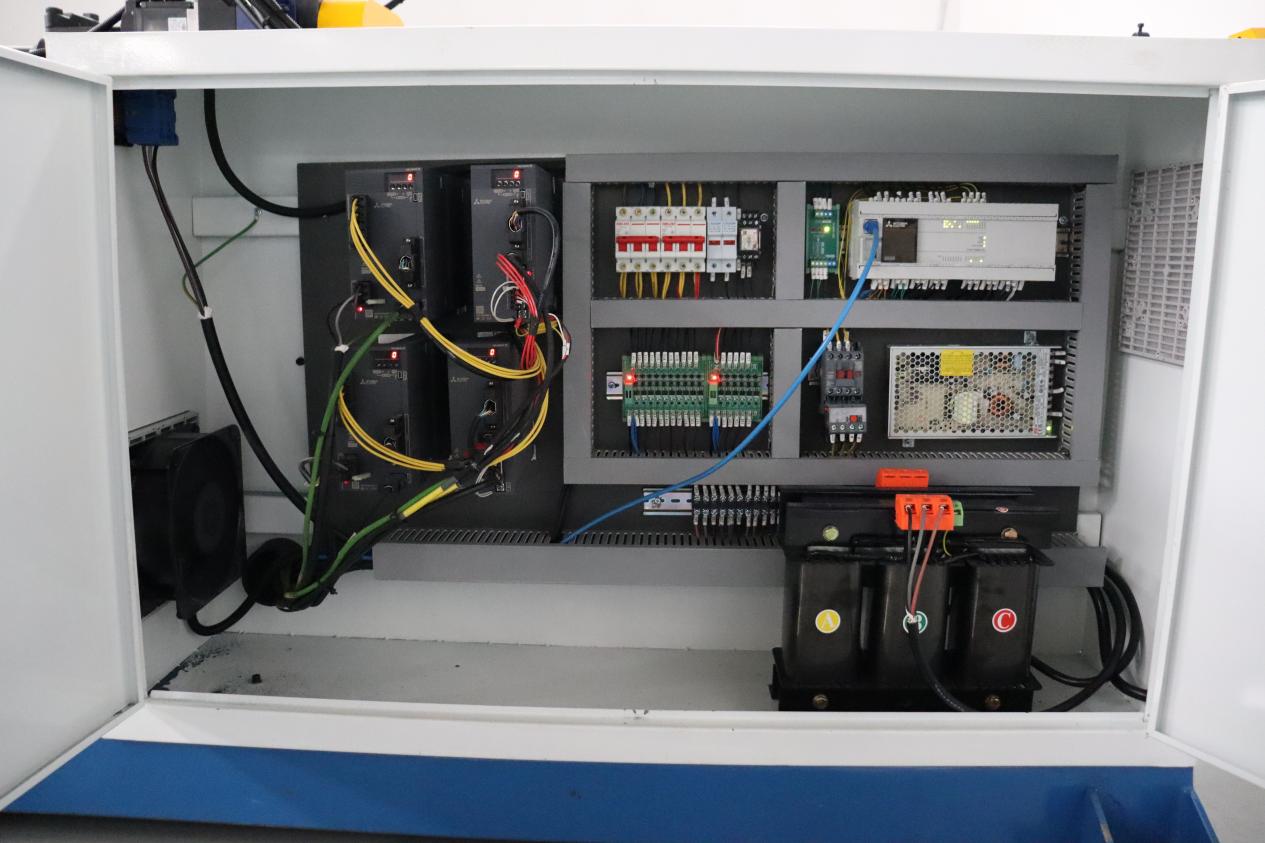
I. Power Supply Matching: The First Step
Before wiring, verify that the voltage and frequency of the workshop power supply match the specifications listed on the machine’s nameplate. Common configurations for pipe-bending machines include 380V/50Hz or 460V/60Hz. Connecting the machine to the wrong voltage can trigger alarms at best, or cause the drive units to burn out at worst.
Select the cable cross-sectional area based on the machine’s rated current, while ensuring an adequate safety margin. If the cables are too thin, the voltage may drop during high-load bending operations, leading to unstable servo performance or frequent circuit breaker trips. You must also account for peak current rather than relying solely on the nominal operating current.
II. Reliable Grounding Is Essential
Grounding is one of the most overlooked yet critical aspects of an electrical installation. Proper grounding ensures operator safety and minimizes electrical noise within the CNC system and servo drives. Inadequate grounding can lead to erratic issues, such as random alarms, communication errors, or unstable axis positioning.
The grounding terminal must be connected to a dedicated, low-resistance grounding electrode. Do not share a grounding connection with high-power equipment, such as welding machines; the resulting interference can severely destabilize the pipe-bending machine’s control system.
III. Separate Power Cables from Signal Cables
Wiring inside an electrical cabinet requires careful planning. Power cables generate electromagnetic interference; if they are bundled together with encoder or communication cables, the signals are highly susceptible to interference. Any instability in the encoder feedback can cause the bending angle to drift.
I generally require power cables and control cables to be routed through separate conduits or cable trays; if space is limited, they must at least be kept at a sufficient distance from one another. Use shielded cables for signal lines, and ensure the shield is grounded at one end according to standard specifications. Neat wiring is not just for aesthetics—it also makes troubleshooting much easier.
IV. Terminal Tightening and Labeling
Loose terminal connections are a common cause of electrical faults. Vibrations during equipment operation can cause terminals to gradually loosen, leading to increased contact resistance, which results in overheating, arcing, and intermittent signal loss. During installation, verify that every terminal is securely tightened.
Clearly label every wire—identify whether it is a power or signal line, and indicate which terminal it connects to. These labels will save a significant amount of time during future troubleshooting and help prevent wiring errors.
V. Never Skip Protective Devices
The ratings for protective devices—such as circuit breakers and thermal overload relays—must match the machine’s electrical specifications. Once installed, test these devices to ensure they function reliably. In the event of a short circuit or overcurrent, the protective device must trip as intended; there is no room for compromise here.
Emergency stop circuits must be wired correctly and tested individually. Pressing an emergency stop button should cause all motion to cease immediately, without any delay. Also, verify that safety circuits—including those for safety gates, light curtains, and limit switches—are functioning properly.
VI. Pre-Power-Up Checks
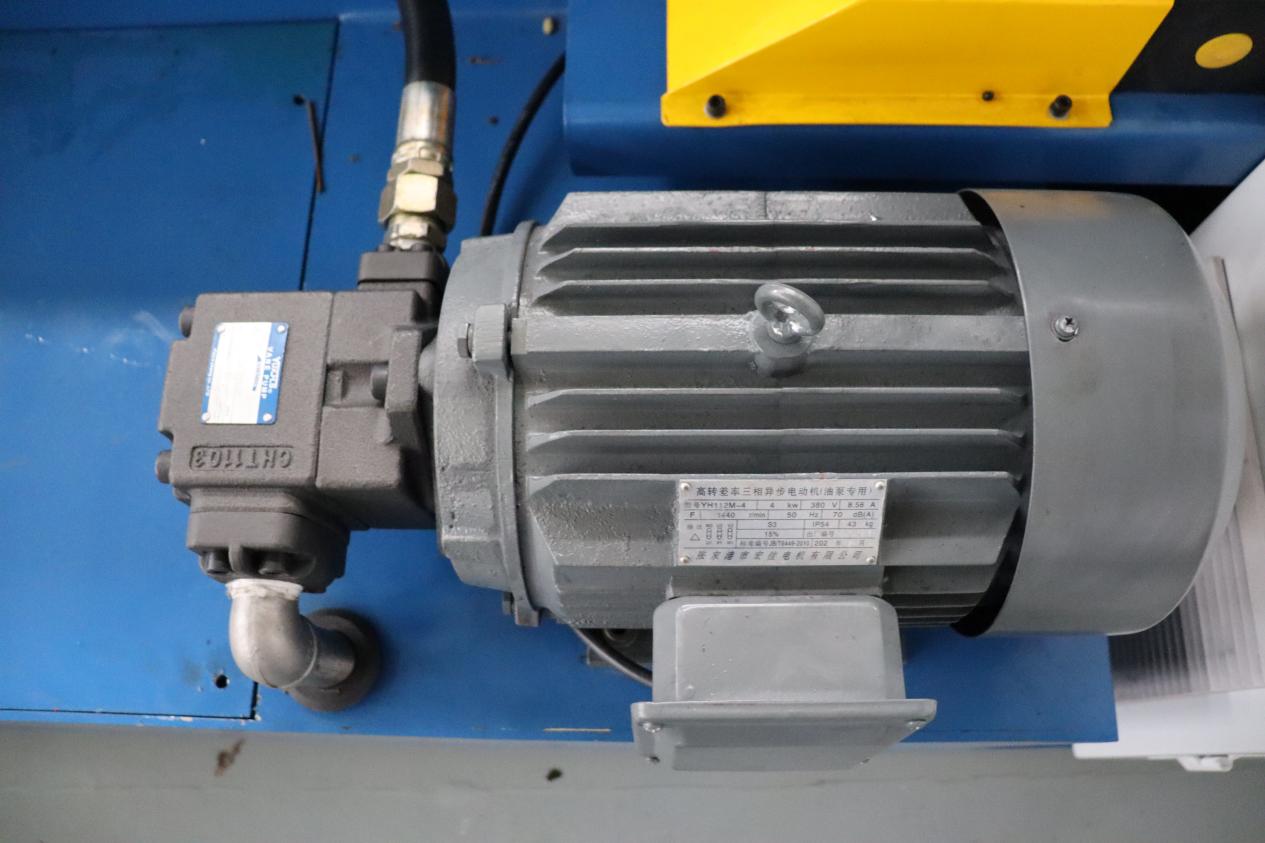
Verify the phase sequence. If the phases are connected incorrectly, the motor and hydraulic pump will rotate in reverse; this prevents the pump from building pressure and, on some machine models, creates a risk of the bending arm dropping unexpectedly. Perform a "jog" test to check the direction of rotation—comparing it against the arrow indicator on the hydraulic pump—to quickly confirm the correct setup.
Measure the insulation resistance to ensure that all cables and components are in good condition. The voltage must be stable under no-load conditions before proceeding to the commissioning phase.
VII. Common Errors
Sharing a power supply between a pipe-bending machine and other heavy equipment can lead to significant voltage fluctuations and unstable operation. Every piece of equipment has specific electrical requirements; ignoring the manufacturer’s specifications will inevitably result in recurring alarms and a shortened service life for components. If the original factory cables meet all requirements—in terms of specifications, insulation rating, and physical condition—they may be used; otherwise, replace them with new ones. Do not simply "make do" with substandard wiring.
The quality of electrical connections in a pipe-bending machine directly impacts its safety, stability, and long-term reliability. By ensuring that aspects such as power supply matching, cable selection, reliable grounding, separation of high- and low-voltage circuits, secure terminal connections, protective device installation, and pre-power-up inspections are all properly addressed, many common electrical issues can be avoided.

