





Výhody konfigurácie vstupno-výstupných signálov série ET pre plne elektrické servoodohýbače
Obsah
1. Postupné nastavenie uzlov vstupno-výstupných (I/O) signálov série ET
1.1 Prístup k rozhraniu informácií o vstupoch a výstupoch
1.2 Výber cieľového vstupného alebo výstupného uzla
1.3 Nastavenie pracovného stavu uzlov I/O
1.4 Potvrdenie a dokončenie celého procesu konfigurácie
2. Kľúčové výhody štandardizovanej konfigurácie vstupno-výstupných (I/O) signálov série ET
3. Často kladené otázky (FAQ)
3.1 Ako štandardizovaná konfigurácia I/O signálov zvyšuje správnosť obrábania na zariadeniach?
3.2 Čo presne je konfigurácia vstupno-výstupných signálov série ET?
3.3 Prečo je zvýšená prevádzková účinnosť kritická pre plne elektrické servozohybové stroje?
4. Záver
Pre tých, ktorí sa snažia optimalizovať prevádzkový výkon plne elektrických servozohybových strojov, je ovládanie konfigurácie vstupno-výstupných signálov série ET základnou požiadavkou. Tento článok podrobne analyzuje viaceré výhody, ktoré táto metóda konfigurácie prináša, a ukazuje, ako optimalizuje pracovné postupy a zvyšuje prevádzkovú účinnosť číselovo riadených systémov. Či už je vaším cieľom zvýšiť správnosť obrábania zariadenia alebo zjednodušiť jeho uvádzanie do prevádzky, tento sprievodca vám poskytne profesionálne poznatky, ktoré vám pomôžu prijímať vedecky zdôvodnené rozhodnutia a využiť celý výkonnostný potenciál vášho plne elektrického servozohybového stroja.
Postupná konfigurácia uzlov vstupno-výstupných signálov série ET
Správne uvedenie do prevádzky uzlov signálov vstupu/výstupu (I/O) série ET je kľúčové pre zabezpečenie optimálnej prevádzky plne elektrických servozohybovacích strojov. Systém používa štandardný režim konfigurácie I24 O16 a podrobné kroky prevádzkovania sú uvedené nižšie, pričom vás krok za krokom prevedú celým procesom konfigurácie.
1.1 Prístup k rozhraniu informácií o vstupoch a výstupoch
Stlačte funkčné tlačidlo informácií o vstupoch/výstupoch (I/O), aby ste vstúpili do špeciálneho rozhrania nastavenia I/O, ktoré predstavuje základný operačný panel na správu všetkých informácií o vstupoch/výstupoch a nastavenie ich pracovných stavov. Úspešný prístup k tomuto rozhraniu je nevyhnutnou podmienkou pre racionálnu konfiguráciu všetkých uzlov signálov vstupu/výstupu.
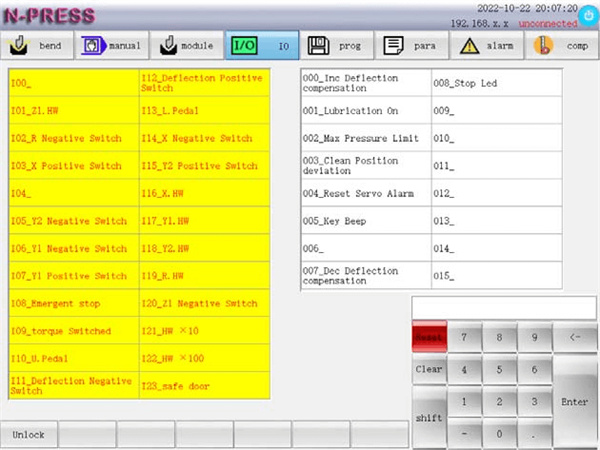
V rozhraní displeja vstupu/výstupu (I/O) môžu používatelia po dokončení dešifrovacej operácie (heslo na dešifrovanie je exkluzívny zákaznícky kód) nakonfigurovať kolík zodpovedajúci každému uzlu vstupu/výstupu (I/O) a normálne otvorený alebo normálne uzavretý pracovný stav vstupného (I) uzla. Štandardná konfigurácia celého systému je pevne stanovená ako I24 O16 a poskytuje stabilný hardvérový základ pre prenos a spracovanie signálov.
1.2 Výber cieľového vstupného alebo výstupného uzla
Po úspešnom vstupe do rozhrania nastavenia vstupu/výstupu (I/O) je prvým krokom operácie výber konkrétneho vstupného alebo výstupného uzla, ktorý sa má nakonfigurovať. Je nevyhnutné presne vybrať príslušný uzol, pretože to priamo určuje, či bude plne elektrický servopohánaný ohýbací stroj schopný realizovať v nasledujúcom pracovnom procese presnú a efektívnu prevádzku.
1.3 Nastavenie pracovného stavu uzlov I/O
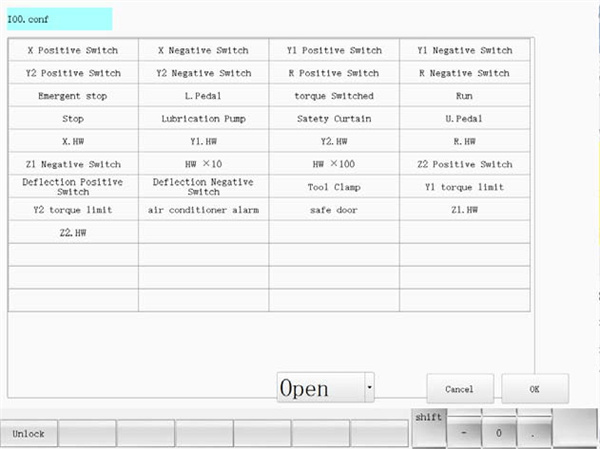
Po určení cieľového vstupno-výstupného uzla je ďalším krokom nastaviť jeho pracovný stav na normálne otvorený alebo normálne uzavretý podľa skutočných výrobných požiadaviek. Toto nastavenie priamo ovplyvňuje, ako stroj identifikuje a reaguje na signál odoslaný uzlom, čím zakladá pevný základ pre flexibilné a presné vykonávanie rôznych obrábacích operácií zariadenia.
1.4 Potvrdenie a dokončenie celého procesu konfigurácie
Pred oficiálnym uložením konfiguračných nastavení musia používatelia dešifrovať povolenie na nastavenie používateľských parametrov pomocou zákazníckeho kódu – tento krok je kľúčový pre umožnenie personalizovanej konfigurácie systému, aby sa prispôsobil rôznym výrobným scenárom. Po úspešnej dešifrácii kliknite na potvrdzovacie tlačidlo, aby ste uložili všetky nastavené parametre, a celý proces konfigurácie vstupno-výstupných signálov série ET je tým dokončený.
Kľúčové výhody štandardizovanej konfigurácie vstupno-výstupných signálov série ET
Dôkladné pochopenie a presná konfigurácia vstupno-výstupných signálov série ET môže významne zvýšiť prevádzkový výkon plne elektrických servozohybovacích strojov. Tento optimalizovaný režim konfigurácie prináša do výrobného procesu široké spektrum prevádzkových výhod a je preto nevyhnutným a dôležitým prvkom každodennej správy a údržby zariadenia.
Zvýšená presnosť obrábania zariadenia
Štandardizovaná konfigurácia vstupno-výstupných signálov série ET výrazne zvyšuje presnosť operácií pri zohybovaní. Každý vstupný a výstupný signál je presne priradený a zhodnotený, čo zabezpečuje, že stroj vykonáva každú zohybovaciu operáciu v striktnej súlade s prednastavenými technickými špecifikáciami. Táto presná zhoda vstupno-výstupných signálov je základnou zárukou udržiavania vysokokvalitných výrobných výsledkov, zníženia výskytu chýb pri obrábaní a zabezpečenia, že každý zohybovací proces plne spĺňa prísne technické požiadavky skutočných výrobných aplikácií.
Zjednodušený proces uvádzania vybavenia do prevádzky
Jednou z najvýraznejších výhod štandardizovanej konfigurácie signálov I/O série ET je výrazné zjednodušenie procesu uvádzania stroja do prevádzky pre rôzne prevádzkové úlohy a výmeny súčiastok. Vymedzením prenosovej cesty každého signálu sa efektívne zníži zložitosť tradičného procesu konfigurácie ohýbacích strojov. Táto optimalizácia nielenže ušetrí veľa cenného času potrebného na prípravu výroby, ale tiež zníži pravdepodobnosť ľudských chýb počas uvádzania do prevádzky, čím zabezpečí hladký prechod pri zmene výrobných úloh alebo úprave prevádzkových nastavení stroja.
Zlepšená celková prevádzková účinnosť
Prevádzková účinnosť plne elektrických servozohýbacích strojov sa môže výrazne zvýšiť vhodnou konfiguráciou vstupno-výstupných signálov série ET. Rozumný spôsob konfigurácie zabezpečuje hladkú a nepretržitú komunikáciu informácií medzi číselne riadeným systémom a fyzickými komponentmi stroja. Optimalizovaná schopnosť rozpoznávania a spracovania signálov umožňuje lepšiu koordináciu a spoluprácu všetkých komponentov systému, čím sa komplexne zvyšuje účinnosť vykonávania a rýchlosť spracovania zohýbacích operácií. Správna konfigurácia signálov robí stroj flexibilnejším a reaktívnejším, čo mu umožňuje ľahko zvládať zložité a rozmanité výrobné požiadavky v reálnej výrobe.
Často kladené otázky (FAQ)
3.1 Ako štandardizovaná konfigurácia I/O signálov zvyšuje správnosť obrábania na zariadeniach?
Presná konfigurácia vstupno-výstupných signálov série ET zabezpečuje, že každá obrábací operácia a každý ohybový proces zariadenia sa vykonáva v plnej súlade s prednastavenými presnými špecifikáciami. Toto vysokej presnosti zarovnanie signálov účinne zníži výskyt chýb pri obrábaní, zlepší celkovú kvalitu vyrábaných výrobkov a zaručí konzistentné a vysokopresné výsledky obrábania pri sériovej výrobe.
3.2 Čo presne je konfigurácia vstupno-výstupných signálov série ET?
Konfigurácia vstupno-výstupných signálov série ET je profesionálny uvádzací proces pre plne elektrické servoodohybové stroje, ktorý sa používa na nastavenie a úpravu parametrov vstupných a výstupných signálov zariadenia. Prostredníctvom tejto konfigurácie stroj dokáže presne identifikovať a spracovať rôzne pracovné signály, čím zabezpečuje optimálny prevádzkový stav zariadenia a nakoniec dosahuje dvojnásobné zlepšenie presnosti obrábania aj prevádzkovej efektívnosti.
3.3 Prečo je zvýšená prevádzková účinnosť kritická pre plne elektrické servozohybové stroje?
Zlepšená prevádzková účinnosť zaisťuje bezproblémovú výmenu informácií medzi ohýbacím strojom, jeho číselne riadeným systémom a všetkými funkčnými komponentmi, čím sa účinne zvyšuje reálna reaktivita a celkový výrobný výkon zariadenia. Táto vysoká účinnosť sa priamo prejavuje kratšími výrobnými cyklami a umožňuje zariadeniu ľahko plniť zložité a náročné úlohy ohýbacieho spracovania, čo je kľúčové pre prispôsobenie sa požiadavkám moderného výrobného procesu s vysokou účinnosťou a vysokou presnosťou.
Záver
Zhrnutie: Konfigurácia vstupno-výstupných signálov série ET je základnou a kľúčovou súčasťou optimalizácie prevádzkovej výkonnosti a funkčnej účinnosti plne elektrických servozohínacích strojov. Presná a štandardizovaná konfigurácia týchto vstupno-výstupných signálov efektívne zvyšuje správnosť obrábania zariadenia, zjednodušuje proces uvádzania do prevádzky výroby a výrazne zvyšuje celkovú prevádzkovú účinnosť stroja. Tieto zlepšenia spoločne zabezpečujú, že celý výrobný proces je efektívny aj vysokej kvality, čím plne zodpovedá skutočným výrobným cieľom a rozvojovým potrebám podnikov.
Na úplné využitie a využitie rôznych výhod, ktoré prináša konfigurácia vstupno-výstupných signálov série ET, je nevyhnutné striktne a dôsledne dodržiavať kroky prevádzkového postupu uvedené v tomto návode pre konfiguráciu. Ak si želáte hlbšie pochopiť túto technológiu konfigurácie alebo potrebujete personalizované odborné poradenstvo v súvislosti s vašimi skutočnými výrobnými operáciami, môžete sa kedykoľvek obrátiť na odborný technický tím spoločnosti HARSLE. Náš tím je pripravený poskytnúť vám podrobnú a profesionálnu technickú podporu a odpovedať na všetky vaše otázky týkajúce sa konfigurácie a používania zariadenia. Okrem toho si môžete na našej oficiálnej webovej stránke prehliadať aj ďalšie relevantné odborné dokumenty a technické zdroje, aby ste získali komplexnejšie a hlbšie odborné poznatky.

