





Kunci untuk Merevolusionerkan Kualitas Pengelasan Mur dengan Robot Pengelasan
Robot pengelasan semakin luas digunakan dalam manufaktur modern, khususnya dalam pengelasan mur. Robot ini secara efektif mengurangi cacat pengelasan dengan meningkatkan presisi dan konsistensi pengelasan. Artikel ini akan membahas keunggulan robot pengelasan dalam mengurangi cacat pengelasan mur serta alasan di baliknya.
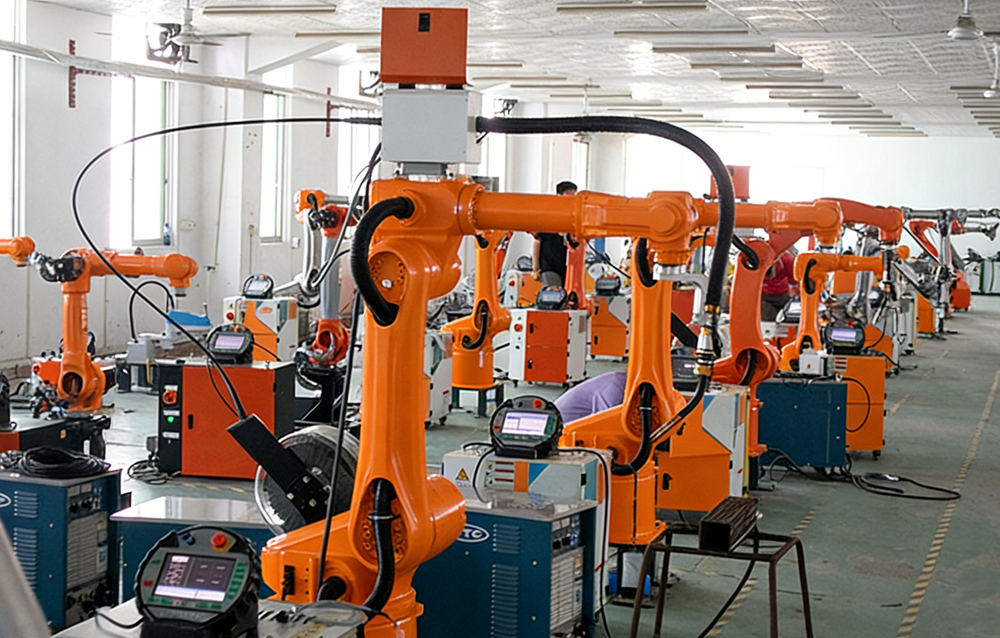
Keunggulan Inti Robot Pengelasan
Robot pengelasan memberikan peningkatan revolusioner terhadap pengelasan mur melalui presisi tinggi dan kemampuan pengulangan yang andal.
1. Pengendalian Presisi
Robot pengelasan mampu mengendalikan parameter pengelasan secara presisi, seperti kecepatan pengelasan, sudut, dan jarak, guna memastikan kualitas las.
2. Pengulangan dan Konsistensi
Dibandingkan dengan pengelasan manual, robot pengelasan dapat terus-menerus melakukan operasi yang sama, sehingga menjamin pengulangan dan konsistensi proses pengelasan.
Alasan Pengurangan Cacat pada Pengelasan Mur
Penggunaan robot pengelasan secara signifikan mengurangi cacat pada pengelasan mur, terutama karena:
1. Pengurangan Kesalahan Manusia
Karena operasi robot pengelasan diprogram, kesalahan akibat faktor manusia—seperti guncangan tangan atau posisi pengelasan yang tidak tepat—dapat dikurangi.
2. Kemampuan beradaptasi dengan lingkungan
Robot pengelasan mampu beroperasi secara stabil di berbagai lingkungan, mempertahankan hasil pengelasan berkualitas tinggi bahkan dalam kondisi ekstrem atau tidak mendukung.
3. Pemantauan dan Penyesuaian Secara Real-Time
Banyak sistem robot pengelasan canggih dilengkapi sensor dan sistem visi, yang memungkinkannya memantau proses pengelasan secara real-time serta menyesuaikan parameter secara otomatis untuk mengatasi perubahan pada bahan atau lingkungan.
4. Peningkatan Efisiensi Produksi
Robot pengelasan meningkatkan efisiensi pengelasan, mengurangi pekerjaan ulang dan limbah akibat cacat, sehingga menghemat biaya.
Prospek Penerapan Masa Depan Robot Pengelasan
Dengan kemajuan teknologi yang terus-menerus, robot pengelasan akan memainkan peran yang jauh lebih besar dalam meningkatkan kualitas pengelasan baut.
1. Integrasi Teknologi yang Lebih Canggih
Robot pengelasan masa depan mungkin akan mengintegrasikan teknologi kecerdasan buatan dan pembelajaran mesin yang lebih canggih guna mengoptimalkan proses pengelasan secara lebih lanjut serta meningkatkan kemampuan adaptasinya.
2. Penerapan Luas di Berbagai Industri
Seiring meningkatnya tuntutan industri manufaktur terhadap kualitas pengelasan yang lebih tinggi, robot pengelasan akan digunakan secara luas di lebih banyak sektor industri.
3. Otomatisasi Lini Produksi
Robot pengelasan merupakan komponen kunci dalam mewujudkan otomatisasi penuh lini produksi, sehingga meningkatkan efisiensi produksi keseluruhan serta tingkat pengendalian kualitas.
Pentingnya Robot Pengelasan dalam Manufaktur
Robot pengelasan memainkan peran penting dalam mengurangi cacat pada pengelasan baut; robot ini tidak hanya meningkatkan kualitas pengelasan, tetapi juga meningkatkan efisiensi produksi dan keselamatan kerja. Dengan kemajuan teknologi, robot pengelasan akan terus menjadi pendorong utama otomatisasi dan inovasi di sektor manufaktur.
Peluang Baru dari Perkembangan Teknologi
Di masa depan, dengan kemajuan teknologi yang lebih lanjut, robot pengelasan dapat dilengkapi dengan sensor yang lebih canggih, kemampuan komputasi yang lebih kuat, serta sistem kontrol yang lebih presisi. Kemajuan-kemajuan ini akan memungkinkan robot pengelasan menangani tugas-tugas yang lebih kompleks serta mencapai pengelasan yang presisi dan efisien dalam berbagai aplikasi yang lebih luas.
Meningkatkan Keberlanjutan Produksi
Selain meningkatkan kualitas dan efisiensi pengelasan, robot pengelasan juga membantu mengurangi konsumsi energi dan pemborosan bahan baku, sehingga mendorong industri manufaktur menuju arah yang lebih berkelanjutan dan ramah lingkungan.
Mengatasi Tantangan dan Memperluas Aplikasi
Seiring meningkatnya tantangan yang dihadapi industri manufaktur, robot pengelas akan memainkan peran yang lebih besar dalam meningkatkan kemampuan adaptasi produksi, menekan biaya operasional, serta merespons perubahan pasar yang cepat. Robot-robot ini akan menjadi alat kunci untuk mewujudkan produksi yang efisien, fleksibel, dan berkelanjutan.
Kesimpulan: Prospek Masa Depan Robot Pengelas
Robot pengelas kini menjadi teknologi kunci yang mendorong modernisasi industri manufaktur. Melalui inovasi teknologi yang berkelanjutan serta optimalisasi penerapan, robot pengelas tidak hanya akan mengurangi cacat pada pengelasan baut, tetapi juga membantu perusahaan mencapai tingkat otomatisasi yang lebih tinggi, sehingga meningkatkan efisiensi produksi secara keseluruhan serta daya saing industri.

