





Differences Between Swing-Beam and Guillotine Shears
I. Hydraulic guillotine shears offer higher cutting precision than hydraulic swing-beam shears:
(1) Taking 16x3200mm hydraulic swing-beam and guillotine shears as examples: while both designs feature a nominal blade clearance of less than 0.06mm, the swing-beam model suffers from unavoidable bearing play between the swing arm and the frame. The cumulative error from this play and the blade clearance typically exceeds 0.10mm. In contrast, the guillotine shear’s blade carrier is supported by four large bearings on the rear guide rail and held against the front guide rail by two spring-loaded bearings, eliminating play on both rails. This keeps the combined error from play and blade clearance below 0.04mm, resulting in smoother cuts free of burrs.
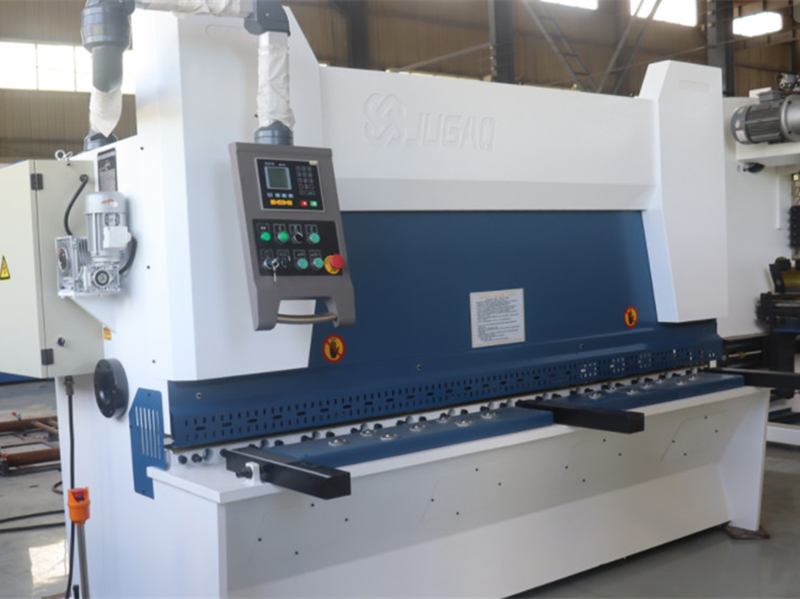
(2) The swing-beam shear utilizes an arc-shaped blade carrier, relying on point contact along an arc to ensure straightness. Conversely, the guillotine shear’s blade carrier moves vertically relative to the lower blade, minimizing plate distortion and ensuring superior straightness.
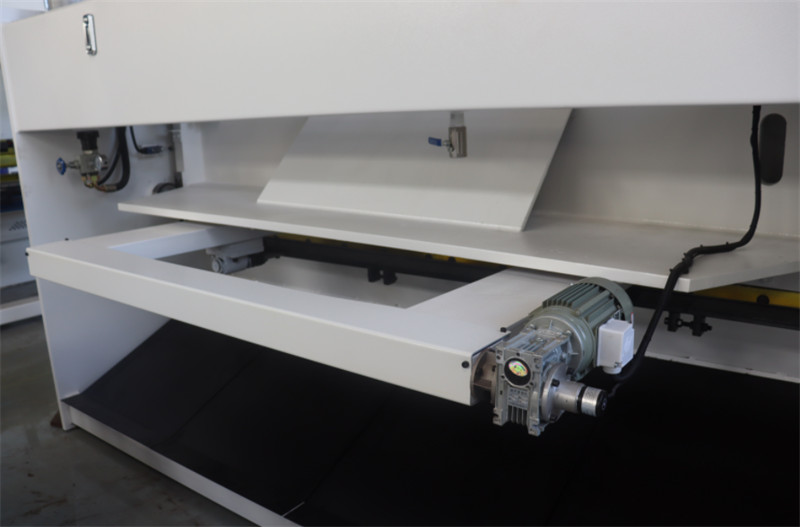
(3) In swing-beam shears, the force application point and the cutting edge are offset by a significant distance; prolonged operation leads to fatigue and deformation of the blade carrier. This causes significant "blade gap opening" (deflection), resulting in burrs on parts of the cut edge. Guillotine shears, however, align the hydraulic cylinders, blade carrier, and cutting edge along a single vertical axis, making them resistant to deformation.
II. Adjustable cutting angle
(1) Swing-beam shears operate at a fixed cutting angle, and the cutting speed cannot be adjusted.
(2) Guillotine shears allow for rapid angle adjustment by regulating the oil volume within the closed chambers of two series-connected hydraulic cylinders. Increasing the cutting angle boosts cutting capacity, while decreasing the angle accelerates cutting speed—saving energy and time while effectively reducing plate distortion.
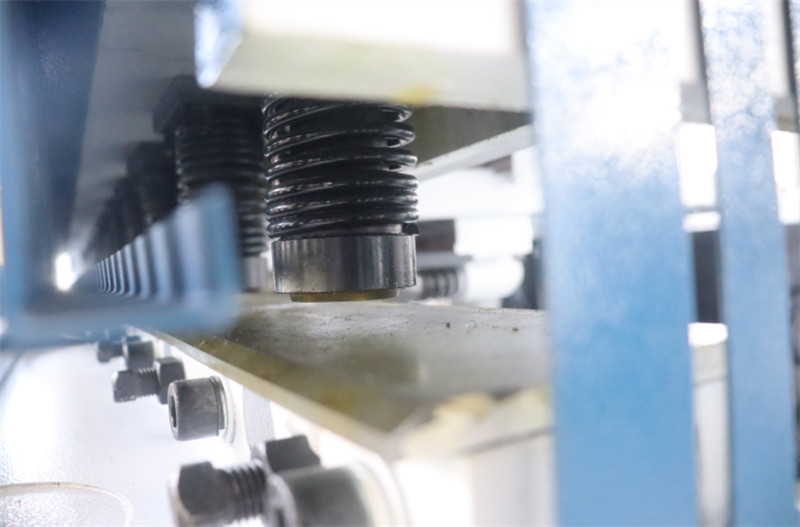
Advantages of the Rectangular Blades on the QC11Y Hydraulic Guillotine Shear
(1) Since the blade carrier of a swing-beam shear moves along an arc, only rhombic blades with two cutting edges can be used; in contrast, the blade carrier of a guillotine shear moves vertically relative to the lower blade, allowing for the use of rectangular blades with four cutting edges, thereby doubling the service life of the blades.
(2) Rhombic blades tend to cause twisting (warping) in the sheared sheet metal—a problem that worsens as the cut strip becomes narrower—whereas rectangular blades avoid this defect.
III. Hydraulic Cylinder Service Life:
The internal semi-circular blocks used in the cylinders of swing-beam shears are difficult to lubricate and repair. Conversely, the industrial-grade cylinders used in guillotine shears do not require separate lubrication, as the oil filling the upper and lower chambers provides the necessary lubrication, significantly extending their service life.
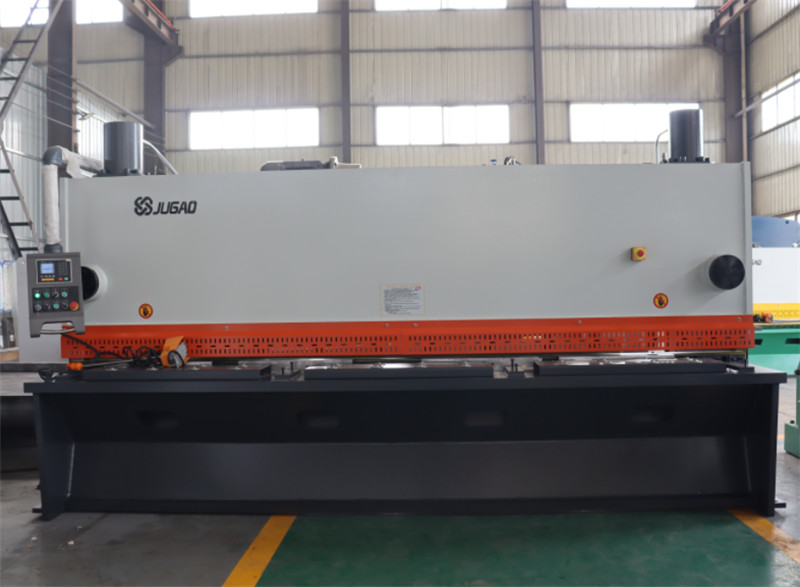
Structural Features and Performance of the QC11Y Hydraulic Guillotine Shear:
1. All-steel welded structure; internal stress is eliminated through comprehensive treatments (vibratory stress relief and heat treatment), ensuring excellent rigidity and stability.
2. Utilizes an advanced integrated hydraulic system for high reliability.
3. Employs a three-point rolling guide rail system to eliminate clearance and improve shearing quality.
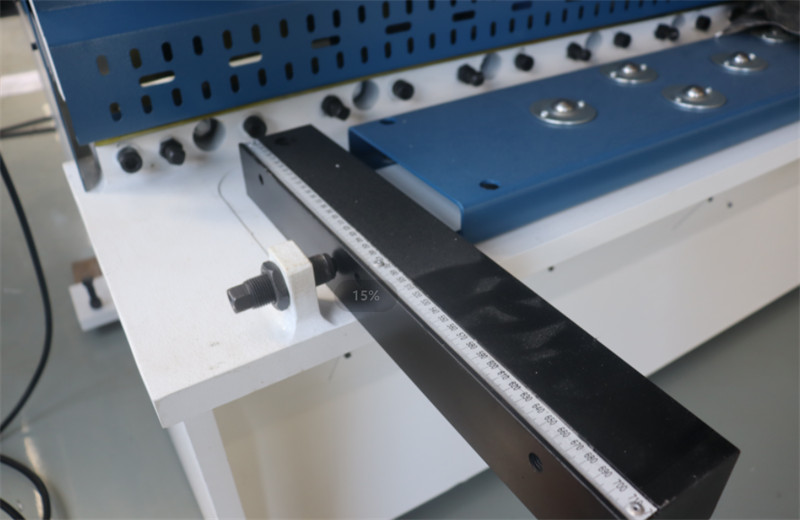
4. Features a motorized backgauge with manual fine-adjustment and digital display.
5. Blade clearance is adjustable via a handwheel, offering a quick and convenient setup.
6. Rectangular blades allow all four cutting edges to be utilized, ensuring a long service life.
7. Adjustable shearing angle minimizes sheet metal twisting and deformation.
8. The upper blade carrier features an inward-tilting design, facilitating material discharge and enhancing shearing precision.
9. Equipped with sectional shearing and shadow-line lighting functions.

