
Gdy chodzi o połączenia elektryczne maszyn do gięcia rur, widziałem zbyt wiele przypadków: maszyna jest zmontowana, części mechaniczne są w porządku, ale już przy pierwszym włączeniu sygnalizuje błąd, serwonapęd drga nieregularnie albo nawet spala płytę sterującą. Ostatecznie problem zawsze okazuje się leżeć w połączeniach elektrycznych. Okablowanie wydaje się proste, ale liczy się nieskończona liczba szczegółów.
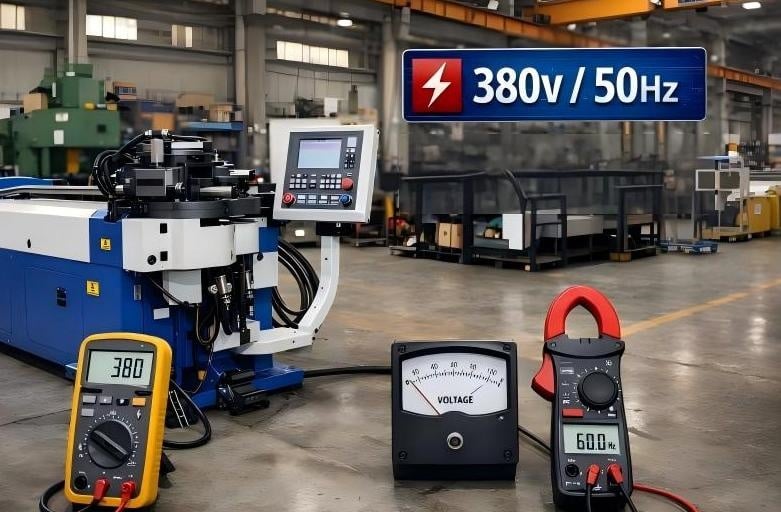
Dopasowanie zasilania i kolejność faz są najważniejsze.
Przed podłączeniem zasilania należy najpierw upewnić się, że napięcie i częstotliwość w warsztacie odpowiadają wartościom podanym na tabliczce znamionowej urządzenia. Urządzenie przeznaczone do napięcia 380 V po podłączeniu do sieci 220 V po prostu nie uruchomi się, a urządzenie przeznaczone do napięcia 460 V po podłączeniu do sieci 380 V może wywołać alarm napędu z powodu niskiego napięcia. W przypadku niezgodności napięcia późniejsza jego korekta nie przyniesie skutku.
Kolejność faz jest często pomijana. Jeśli kolejność faz silnika trójfazowego zostanie odwrócona, pompa oleju będzie obracać się w przeciwnym kierunku, a układ hydrauliczny nie wytworzy ciśnienia. W modelach ramy gięcia rur zagrożonych osiadaniem pod wpływem siły grawitacji odwrócenie obrotów może spowodować nagłe opadnięcie ramy gięcia pod wpływem grawitacji, co stanowi zagrożenie bezpieczeństwa. Przed uruchomieniem próbnym urządzenia w trybie „jogging” należy upewnić się, że kierunek obrotów jest zgodny ze strzałką na pompie oleju; zajmuje to mniej niż pół minuty.
Specyfikacje kabli: nie wystarczy jedynie zwracać uwagę na ich wymiary
Przekrój przewodu zasilającego należy dobrać na podstawie prądu znamionowego maszyny, z pewnym zapasem. Cieńsze przewody powodują spadki napięcia przy dużym obciążeniu, co skutkuje słabymi ruchami ramienia gięcia oraz niestabilnymi kątami. Niektóre warsztaty dla wygody używają dowolnych dostępnych przewodów, co prowadzi do przegrzewania, starzenia się izolacji oraz znacznego wzrostu liczby awarii po pewnym czasie pracy.
Kable sterujące i linie sygnałowe należy prowadzić osobno od przewodów zasilających i nie wolno ich wiązać razem. Jeśli linie sygnałowe silnika serwonapędu i enkodera biegną równolegle do przewodów zasilających o dużym prądzie na długim odcinku, zakłócenia są nieuniknione. Zakłócenia sygnału zwrotnego kąta powodują wahania kąta wygięcia rury.
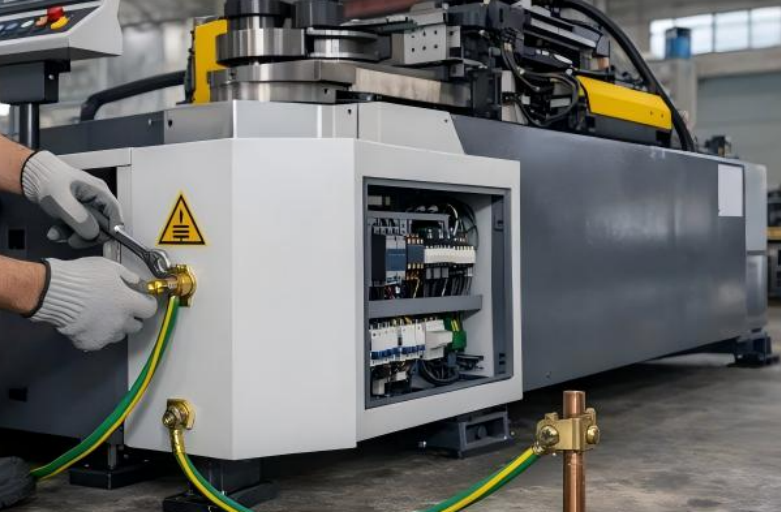
Uziemienie nie może być nadmiernie podkreślane.
Słabe uziemienie jest główną przyczyną wielu niezrozumiałych awarii. Alarmy napędu serwo, fluktuacje sygnału enkodera, przerwania komunikacji z ekranem dotykowym oraz przypadkowe awarie — wiele problemów po szczegółowej analizie okazuje się wynikać z nieprawidłowego uziemienia.
Uziemienie powinno być wykonane oddzielnie, bez współdzielenia elektrody uziemiającej z maszynami spawalniczymi lub silnymi silnikami. Opór uziemienia powinien być jak najniższy, a przewód uziemiający powinien być wystarczająco gruby przewód miedziany. Jeśli warunki uziemienia w systemie zasilania warsztatu są niewystarczające, należy rozważyć instalację osobnego palika uziemiającego. Poprawne uziemienie naturalnie eliminuje wiele usterek elektrycznych.
Obwody stopu awaryjnego i obwody bezpieczeństwa muszą zostać poddane rygorystycznym testom.
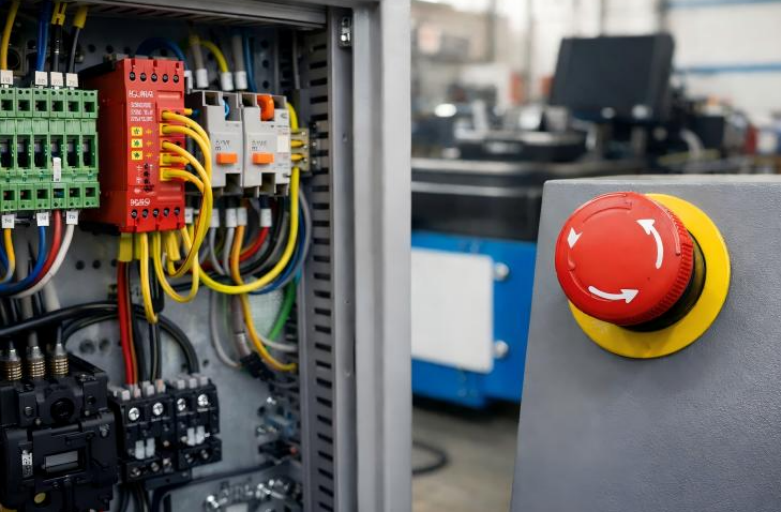
Obwód awaryjnego zatrzymania nie polega jedynie na połączeniu przewodów; każdy komponent musi zostać sprawdzony osobno. Naciśnięcie przycisku awaryjnego zatrzymania na panelu sterowania powinno natychmiast zatrzymać cały ruch bez opóźnienia, a żadna oś nie powinna pozostawać w ruchu. Przełączniki drzwi bezpieczeństwa oraz wyłączniki krańcowe również muszą zostać zweryfikowane – maszyna powinna automatycznie się zatrzymać lub pozostawać nieruchoma po otwarciu drzwi.
Poprawne testowanie w tym obszarze zapewnia bezpieczeństwo operatora. Nie lekceważ czasu poświęconego na testowanie awaryjnego zatrzymania – jest to bardzo istotne.
Dokręcanie i oznaczanie zacisków przewodów.
W środowiskach poddawanych wibracjom zaciski przewodów mogą stopniowo się poluzować. Poluzowane zaciski zwiększają opór kontaktowy, co prowadzi do przegrzewania się, iskrzenia oraz niestabilnych sygnałów. Podczas dokręcania należy stosować odpowiedni moment obrotowy; nadmierne dokręcanie może uszkodzić zaciski.
Każdy przewód należy wyraźnie oznaczyć: który przewód jest zasilający, który przesyła sygnał i do którego zacisku prowadzi. Będzie to kluczowe podczas diagnozowania usterek.
Lista kontrolna przed włączeniem zasilania
Czy potwierdzono kolejność faz? Czy przewód uziemiający jest prawidłowo podłączony? Czy wszystkie zaciski zostały dokręcone? Czy przeprowadzono testy awaryjnego zatrzymania i obwodów bezpieczeństwa? Po zakończeniu tych czynności włączenie urządzenia praktycznie wyklucza awarie uruchomieniowe spowodowane błędami w okablowaniu.
Standaryzacja połączeń elektrycznych w dużym stopniu decyduje o stabilności działania urządzenia oraz o jego wskaźniku awaryjności w późniejszym użytkowaniu. Czy w Państwa warsztacie wystąpiły już problemy spowodowane niedbałością przy montażu okablowania?