
How to improve the efficiency of pipe bending machines in handrail manufacturing?

I. How Pipe Bending Machines Improve Handrail Manufacturing Efficiency
1. Standardized Upgrade of Bending Process
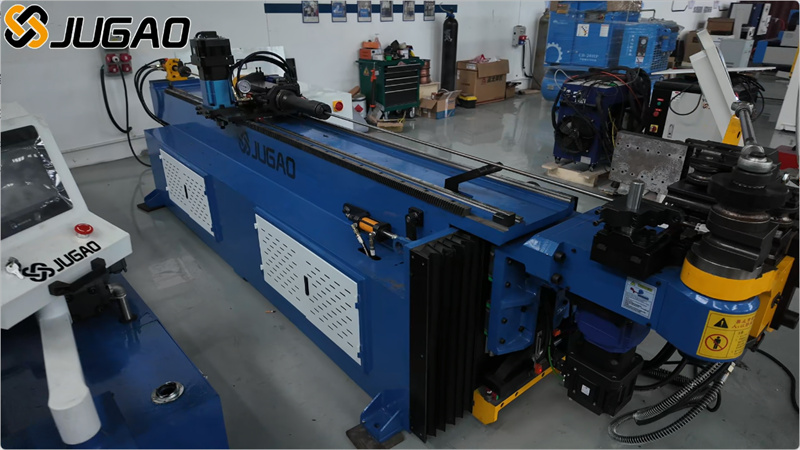
Traditional handrail production relies on manual operation or simple tooling for pipe bending, often resulting in inconsistent curvature and high material waste. Introducing automated pipe bending equipment has brought about a qualitative leap in the manufacturing process. The CNC system allows operators to precisely set bending angle and radius parameters, ensuring that each component strictly conforms to the design drawings. This standardized production not only significantly reduces debugging time but also fundamentally eliminates rework, achieving a dual saving of time and resources.
2. Dual Guarantee of Precision and Consistency
Handrail products must meet stringent quality and safety standards, especially in applications such as building engineering and industrial facilities. Pipe bending machines can ensure a high degree of uniformity in the geometric parameters of handrails produced in batches, which is particularly crucial for large projects such as stairs, balcony railings, and guardrails. Advanced equipment, through precise control of servo motors or hydraulic systems, maintains stable force and positioning accuracy throughout the bending process, minimizing pipe deformation and ensuring that dimensional tolerances are controlled within the ideal range.

3. Maximizing Material Utilization
Manual pipe bending operations suffer from high material scrap rates due to alignment deviations or angular errors. Automated pipe bending machines, through optimized bending path algorithms and equipped with material springback compensation functions, effectively prevent flattening or wrinkling at the bend. This high-precision control minimizes the scrap rate, especially when processing decorative stainless steel or aluminum alloy pipes, accumulating significant cost savings over the long term.
II. Core Technical Features of Modern Handrail Pipe Bending Equipment
1. CNC System and Servo Control Technology
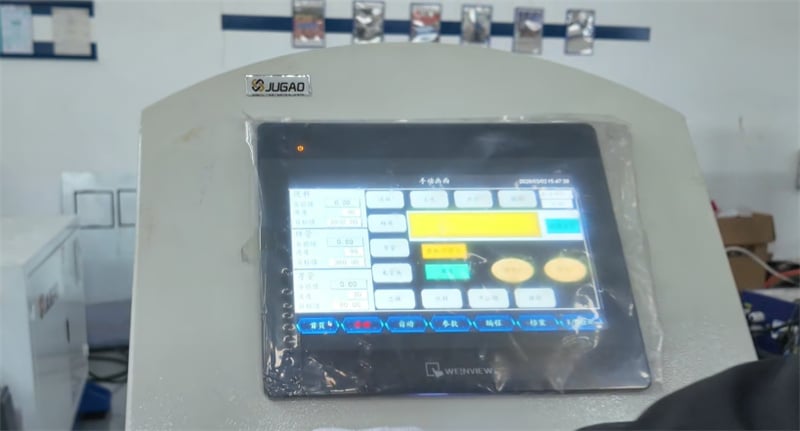
High-performance CNC pipe bending machines integrate intelligent programming modules, allowing operators to store multiple bending schemes for quick recall during recurring orders. The servo drive system provides precise control over bending speed and torque, ensuring smooth operation and consistent quality even with complex handrail components.

2. Composite Bending Capability
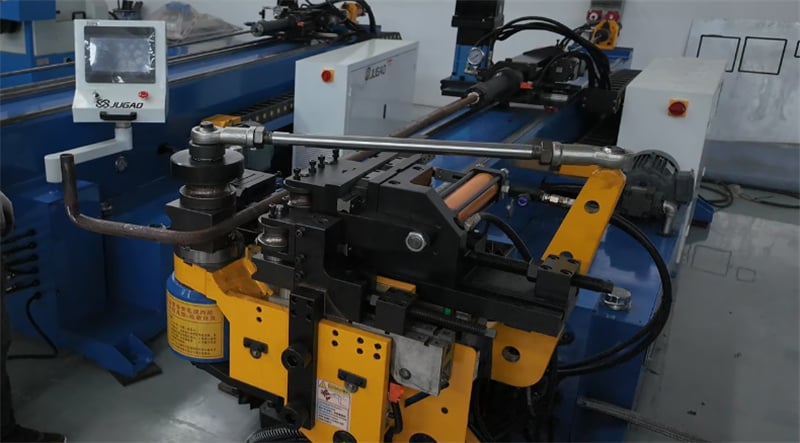
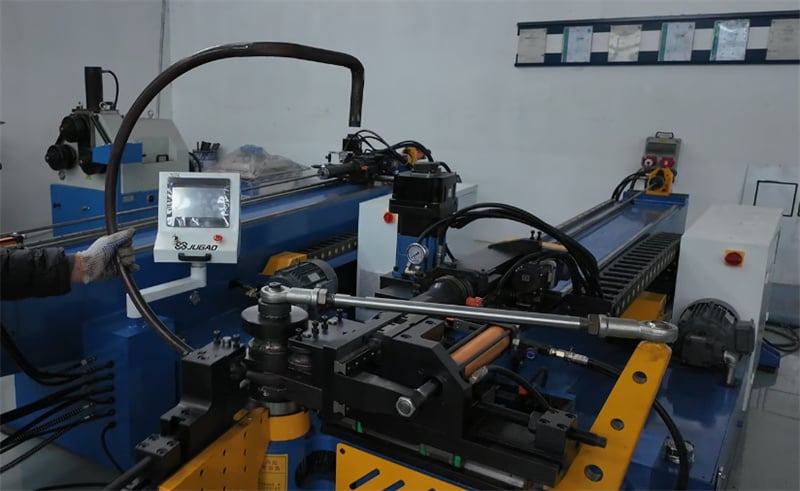
New pipe bending equipment supports multi-radius, multi-plane three-dimensional bending in a single clamping operation, enabling manufacturers to produce curved handrails with smooth transition lines and three-dimensional shapes. This characteristic is particularly important in customized construction projects—when aesthetic expression and structural strength need to be balanced, the equipment's multi-dimensional processing capabilities become a technological guarantee.
3. Rapid Mold Change and Flexible Switching
The latest generation of pipe bending machines adopts a modular quick-change tooling design, coupled with a graphical user interface, allowing operators to quickly switch between production of different pipe diameters or materials. This design effectively reduces equipment downtime and improves the overall utilization rate of the equipment.
III. Typical Challenges and Solutions in Handrail Pipe Bending Process
1. Springback Effect Control Strategy
The elastic recovery of pipes after bending is a common technical challenge in handrail manufacturing. CNC pipe bending equipment, based on a built-in material property database, automatically calculates springback compensation values and corrects motion parameters to ensure that the final formed contour precisely matches the design model.
2. Surface Quality Protection Measures
When bending polished stainless steel or anodized aluminum pipes, surface damage is a key quality risk that needs to be controlled. Modern equipment, equipped with high-precision mandrels and scratch-resistant molds, optimizes the sliding conditions of the contact surface to ensure the tube surface maintains a mirror-like finish after forming—crucial for the appearance quality of exposed components such as handrails.
3. Maintaining Precision for Long Components
Maintaining dimensional stability throughout the entire process is a technical challenge for handrail structures with large spans and numerous bending points. Tube bending equipment equipped with real-time monitoring systems and displacement sensors can continuously track the angle and position data of each bending segment, ensuring that after long periods of continuous production, the product parameters remain stable within the preset tolerance zone.

Conclusion
Tube bending equipment has evolved from a simple forming tool into a core technological node in the handrail manufacturing system. Its comprehensive advantages in precision control, efficiency improvement, and material saving are redefining the process standards of modern handrail production. For manufacturing enterprises pursuing a balance between quality and cost, a deep understanding and rational application of this technology will become a key path to building core competitiveness.