





Kuidas lahendada töödeldava detaili libisemist JUGAO presspurki
Sisukord
• Töödeldava detaili libisemise põhjused JUGAO paindepressil
• Samm-sammult toimuv veatuvastus JUGAO paindepressil töödeldava detaili libisemise korral
v. Kontrollige paindetööriistade olekut
b. Puhastage metalllehtede pind
c. Kinnitage paindepressi tonnažiparameeter
d. Reguleerige tagasenäitaja asukohta ja toetust
e. Optimeerige paindeminekut ja töötamismeetodeid
• Lisameetmed töödeldava detaili libisemise ennetamiseks
• Tavaliselt esinevad küsimused
○ Mis on töödeldava detaili libisemise peamine põhjus JUGAO pressipuuri juures?
○ Kas tõstetava tööriista valik mõjutab töödeldava detaili libisemist painutamisel?
○ Kas pressipuuri tonnaaži suurendamine on tõhus meetod libisemise peatamiseks?
○ Kuidas vältida libisemist suurte lehtmetallide painutamisel?
• Kohustuslik väljaandmine
Igäpäevases lehtmetallitöötlemises on töödeldava detaili libisemine pressipuurioperaatoritele sageli tülikas probleem. Kui metallleht painutamise ajal liigub, viib see otse mittesobivate paindenurkade, ebavõrdsete külgede suuruste ja isegi valmisdetailide prügiks minemiseni. Head uudised on selles, et see probleem tuleneb enamasti kontrollitavatest teguritest, sealhulgas kulunud tööriistadest, piisamatu kinnitussurvest, ebaotstarbekast masina seadistusest ja pinnale kogunenud mustusest. See juhend analüüsib JUGAO pressipuuri juures töödeldava detaili libisemise juurpõhjusi ning jagab praktilisi väljatöötatud veaparandusmeetodeid, et taastada painutustäpsus ja tootmise stabiilsus.

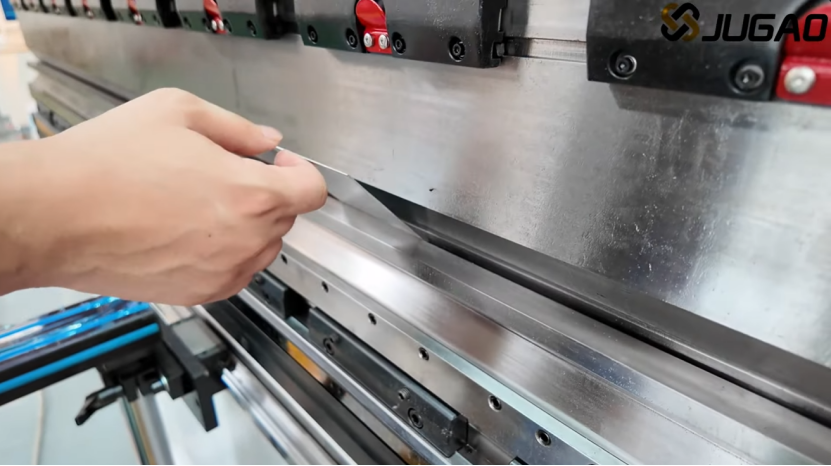
Töödeldava detaili libisemise põhjused JUGAO paindepressil
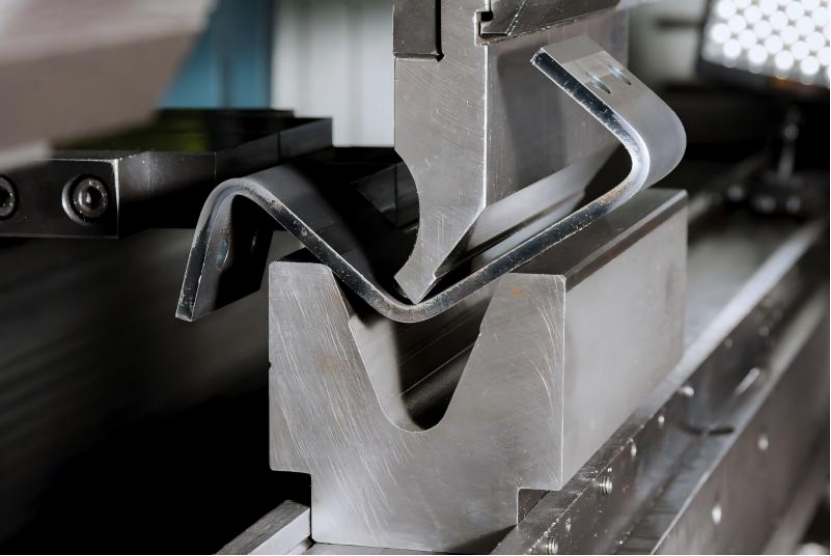
Enne libisemisprobleemi lahendamist peame kõigepealt leidma selle põhjuse. Töödeldava detaili libisemine JUGAO pressipuuri puhul toimub peamiselt seetõttu, et metalllehe ja paindemehhanismi vahelise hõõrdumise tase ei ole piisavalt kõrge, et leht painumise ajal stabiilselt kinni püsiks.
Peamised põhjustavad tegurid on järgmised:
• Puurija, matritsi ja metalllehe vaheline liiga väike hõõrdumine
• Pressipuuri rõhu või tonnaaži seadistus on ebaühtlane
• Paindemehhanismi valik on ebasobiv
• Töödeldava detaili pinnal on õlisälg või mustus
• Tagasenurga regulaatorit on valesti seadistatud
• Operatsioon ei vasta standarditele või operaatoreid ei toetata piisavalt lehega
Kui põhjus on kindlaks tehtud, saab probleemi sihipäraselt ja tõhusalt lahendada.
Samm-sammult toimuv veatuvastus JUGAO paindepressil töödeldava detaili libisemise korral
Kui ma töötlen JUGAO pressipuuri töödeldava detaili libisemise rikkeid, kasutan tavaliselt järgmisi samm-sammult rakendatavaid meetodeid probleemi kiireks kõrvaldamiseks.
1. Kontrollige paindemisriistade olekut
Esimene kontrollietapp on löögi- ja tõmbepuksiiri kulutuse seisundi kontrollimine. Liiga sileda või kulunud riistapinna puhul väheneb hõõrdetegur oluliselt.
Pöörake tähelepanu järgmistele ebatavalistele märkidele:
• Tõmbepuksiiri liiga poliit pind
• Löögi serv on nukkunud või kulunud
• Riistadesse kinnitunud mustus või õlirestid
Kui tuvastatakse ilmne kulutus, tuleb riistad esmalt puhastada; tugevalt kulunud riistad tuleb otse asendada. Sageli libisevate olukordade puhul võib sõrmikukujuliste libisemisvastaste riistadega üleminek efektiivselt parandada fikseerimise tulemusi.
2. Puhastage metalllehtede pind
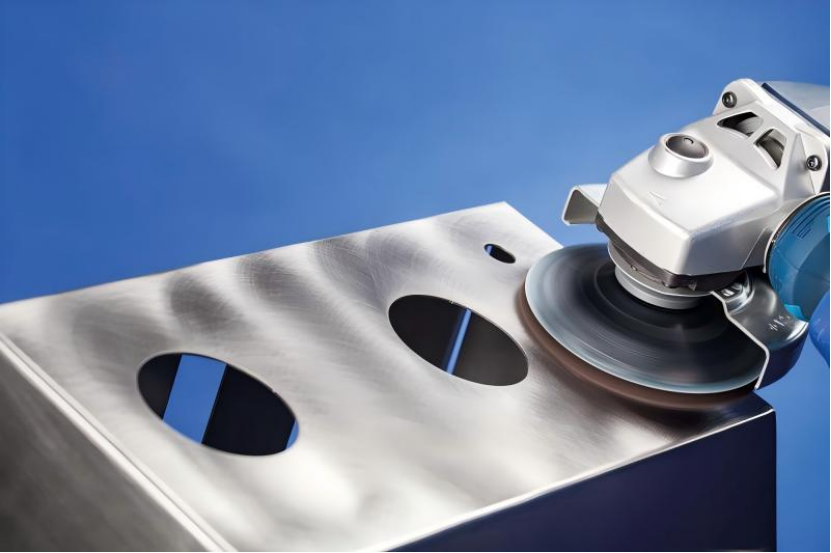
Lehtmetalli pinnale jäänud õli või lubrikant on üks levinumaid libisemise põhjuseid.
Varajastes protsessides, näiteks laserlõikes ja tõmbepressimises, kantakse sageli metalllehtedele roostevastane või kaitseõli, mis painutamisel moodustab madala hõõrdeteguriga kihi ja põhjustab lehtmetalli lihtsat libisemist.
Sihtsuunatud lahendused on:
• Puhastage lehe pind põhjalikult enne painutamist
• Eemaldage üleliigne jahutusvedelik või lubrikaadiõli
• Hoidke punchi ja matrissi kontakttasapind puhtana
Lihtne pinnapuhastus võib oluliselt vähendada töödeldava detaili libisemist massitootmisel.
3. Kontrollige pressipainutuse tonnaažparameetrit
Kui painutuspinge on liiga väike, ei suuda metallleht fikseerida kindlalt punchi ja matrissi vahel, mis põhjustab asukohakõrvalekaldumist.
JUGAO pressipainutuse seadistamisel kontrollin alati, kas väljundtonnaaž vastab materjali paksusele ja painutuspikkusele.
Kontrollimiseks olulised parameetrid:
• Lehtmetalli paksus ja tõmbetugevus
• V-kujulise matrissi avause suurus
• Teoreetiline tonnaaž, mis on vajalik painutamiseks
Tonni suurendamine sobivas ulatuses ohutu koormuspiiri piires lahendab tavaliselt lehtmetalli liikumise probleemi täielikult.
4. Reguleerige tagasenäitaja asukohta ja toetust
Tagasenäitaja süsteem mängib olulist rolli lehtmetalli stabiilsuse tagamisel painutamise ajal.
Kui tagasenäitaja sõrmed on valesti paigutatud, liigub lehtmetall kohe, kui löökpind puudutab materjali. 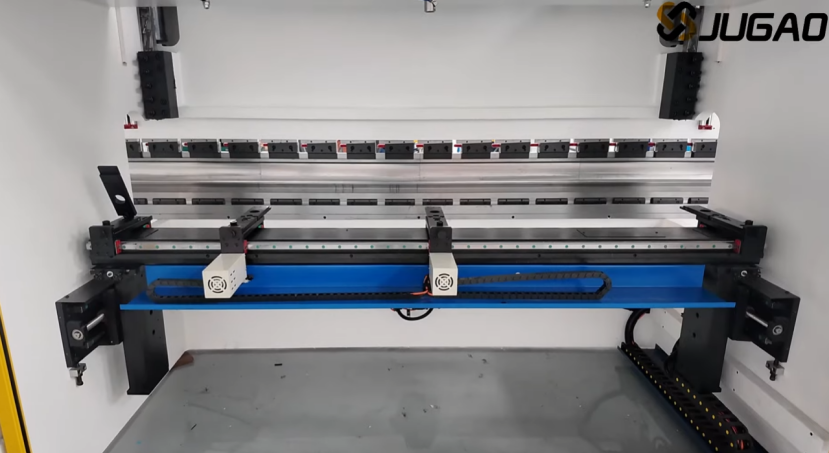
Reguleerimise põhipunktid on:
• Tagasenäitaja peab tagama lehtmetalli täieliku toetuse
• Sõrmede asukoht peab olema täpselt joondatud painutusjoonega
• Enne tegelikku painutamist tuleb positsioneerimise täpsus kalibreerida
Õigesti seadistatud tagasenäitaja ei takista mitte ainult töödeldava detaili libisemist, vaid parandab ka painutatavate osade korduvkäidvust.
5. Paindekiiruse ja töömeetodite optimeerimine
Mõnikord on libisemine seotud masina töökiirusega ja personali tööoskustega.
Paindepresi liikumine allapoole kiirendatud kiirusega teeb hetkeline põrkumine, mis võib lehelt lihtsalt nihutada.
Parandusmeetmed hõlmavad:
• Liikumiskiiruse kiirendatud faasis vähendamine
• Suurte lehtede puhul abitugipõrkedete või käsitsi toetuse kasutamine
• Töötaja lehe kinnitamise ja asetamise tegevuste standardiseerimine
Need väikesed kohandused võivad oluliselt parandada kõrgtäpsusega paindetööd.
Lisameetmed töödeldava detaili libisemise ennetamiseks
Lisaks reaalajas probleemide lahendamisele soovitan koostada pikaajalise ennetusmehhanismi, et vähendada töödeldava detaili libisemise tõenäosust JUGAO paindepresil.
Tõhusad ennetusmeetmed hõlmavad:
• Teha painde tööriistade regulaarne kontroll ja hooldus
• Hoida tõmbepuuri ja matrissi pind puhtana ja õlitu
• Valida lehe paksusele vastav matrissi avause
• Suurte paneelide jaoks varustada lehe abitugedega
• Täiendada operaatoreid standardiseeritud paigutus- ja kasutusmeetodite osas
Ennetav haldus võimaldab mitte ainult painde kvaliteedi stabiilsust tagada, vaid ka kogu tootmisefektiivsust parandada ja prügimäära vähendada.
Tavaliselt esinevad küsimused
Mis on töödeldava detaili libisemise peamine põhjus JUGAO pressipuuri juures?
Kohapealse kogemuse põhjal on enim esinev põhjus lehe pinnale jäänud õli või kulunud tööriistade pinnalt põhjustatud liiga väike hõõrdumine.
Kas tõstetava tööriista valik mõjutab töödeldava detaili libisemist painutamisel?
Jah. Sobimatute matrissi avausmõõtude või liiga siledate tööriistadega kasutamine vähendab oluliselt hõõrdumist ja põhjustab lehe libisemist.
Kas pressipuuri tonnaaži suurendamine on tõhus meetod libisemise peatamiseks?
Enamasti jah. Sobiva paindejõu suurendamine tugevdab tõmbepuuri ja matrissi vahelist kinnitumisjõudu ning piirab lehe liikumist.
Kuidas vältida libisemist suurte lehtmetallide painutamisel?
Tõhusad meetodid on lehe tugikäed, tagasemõõturi täpselt joondamine ja standardiseeritud operaatrite kasutusmeetodite rakendamine.
Kohustuslik väljaandmine
JUGAO press brake töödeldava osa libisemise probleemi lahendamiseks on oluline leida põhjus ja kohandada olulisi linki, sealhulgas tara olekut, pinnatäielikku puhtust, tonnaaži seadistust ja tagasenihiku asukohta. Praktilise töökoha kogemuse põhjal saab enamikku libisemise rikest kiiresti kõrvaldada tara puhastamisega, masina parameetrite kohandamisega ja lehe toetuse tugevdamisega.
JUGAO press brake standardse seadistuse järgimine ja teaduslikud kasutusjuhised vähendavad libisemisprobleeme oluliselt ning tagavad stabiilsed ja kõrgelt täpsed paindemäärad. Kui teile tekib püsiv libisemisviga või vajate press brake parameetrite seadistamiseks professionaalset juhendamist, võtke ühendust tehnilise meeskonnaga sihipärase veatuvastuse ja toe saamiseks.

